Summary:
You already know the drill. Vacuum the living room, unplug, carry the unit to the stairs, haul it up, plug in again, repeat. If you’ve got multiple floors in your Nassau County home, that routine gets old fast. And if someone in your family deals with allergies or asthma, you’ve probably noticed that vacuuming sometimes makes the air feel worse, not better. A central vacuum in home solves both problems. It’s a permanent cleaning system built right into your house—more powerful than any portable unit, quieter, and designed to actually remove allergens instead of recirculating them. Here’s what that looks like in practice.
How a Central Vacuum in Home Actually Works
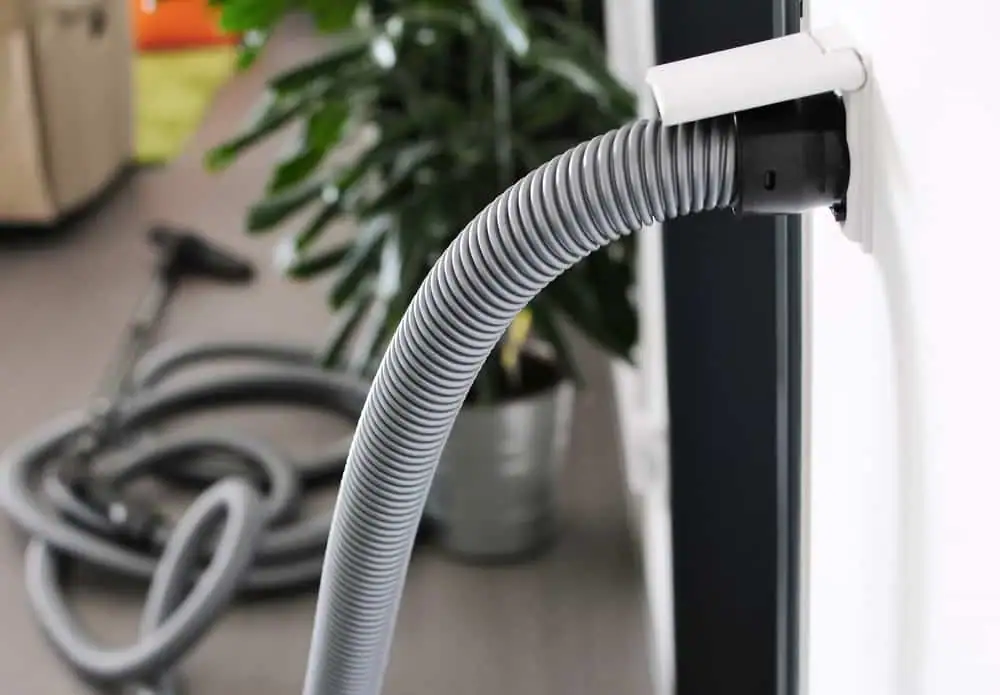
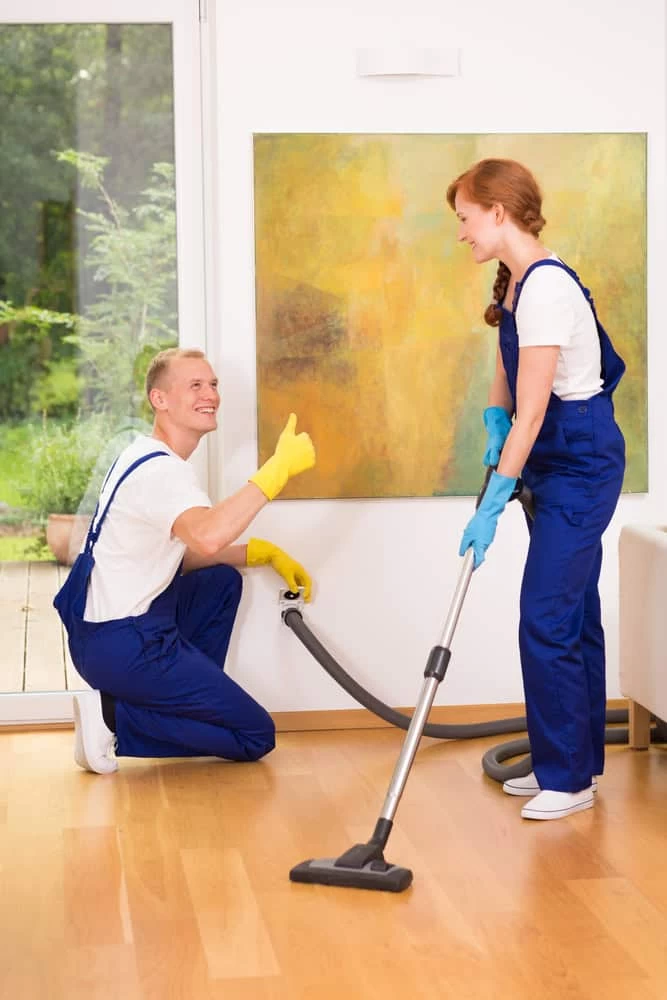
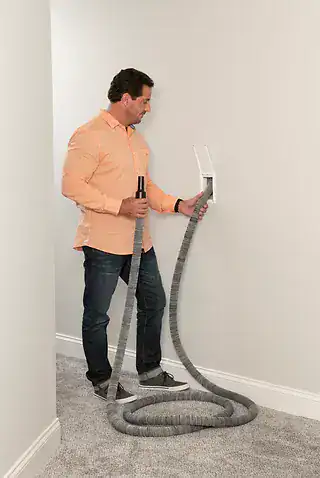
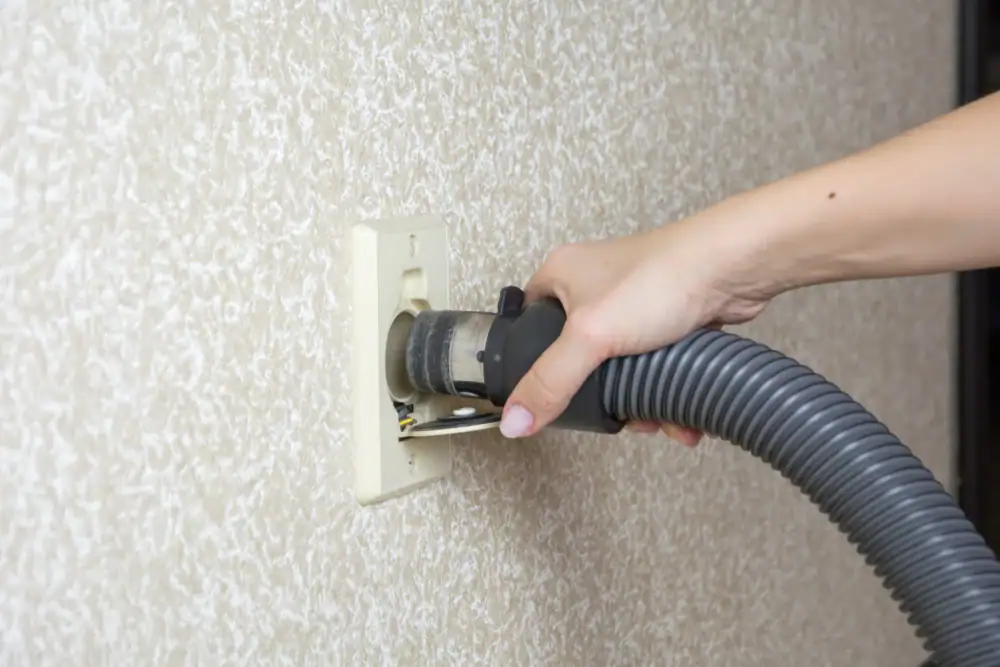
The concept is straightforward. A central vacuum system consists of a power unit installed in your garage, basement, or utility area. That unit connects to PVC tubing running through your walls, with inlet valves installed in convenient locations throughout your home. When you’re ready to vacuum, you plug a lightweight hose into one of those wall inlets. The system turns on automatically.
Dirt and debris travel through the hose, into the tubing, and straight to the collection canister in the power unit. Because the motor and filtration happen outside your living space, you’re not blowing dust back into the room you just cleaned. That’s the key difference between this and a portable vacuum, and it’s why central systems are recommended for households dealing with respiratory sensitivities.
Why an Internal House Vacuum System Outperforms Portable Units
Portable vacuums have one major limitation: the motor has to fit inside a unit you can carry. That means less power, shorter lifespan, and constant trade-offs between suction strength and weight. A central vacuum doesn’t have that problem. The motor can be as large and powerful as needed because it’s permanently mounted in a remote location.
That power difference is measurable. Central vacuum motors can be up to three times stronger than portable units. They pull deeper dirt from carpet fibers, handle larger debris without clogging, and maintain consistent suction even as the canister fills. You’ll notice the difference immediately on high-traffic areas, pet hair, and embedded grit that wears down flooring over time.
The other advantage is durability. Portable vacuums typically last five to eight years before the motor burns out or plastic components crack. An internal house vacuum system is built to last twenty years or more. The power unit is stationary, the motor stays cooler, and there’s no wear from being dragged across floors or knocked into furniture. Maintenance is minimal—empty the canister a few times a year, and you’re done.
For Nassau County homeowners with larger properties, multi-story layouts, or families that vacuum frequently, the math makes sense. You’re not replacing a $300 vacuum every few years. You’re installing a system once and using it for decades. That’s a better long-term investment, especially when you factor in the performance gap.
Central Vacuum Installation in Existing Homes
One of the biggest misconceptions about central vacuums is that you need to install them during new construction. That’s not true. Nearly a third of all central vacuum systems sold in the U.S. are retrofitted into existing homes, and the process doesn’t require tearing out walls or major renovation work.
We route the PVC tubing through spaces that are already accessible—attics, basements, crawlspaces, or even alongside existing ductwork. Wall inlets are installed by cutting a small opening (similar to an electrical outlet) and running low-voltage wire to activate the system. The power unit mounts in your garage or basement. Most installations are completed in a single day.
The key is planning the layout strategically. We evaluate your home’s structure, identify the best routes for tubing, and position inlets so a 30- to 50-foot hose can reach every area you need to clean. For a typical Long Island home, that usually means two to four inlets per floor. The goal is full coverage without excessive inlet placement, which keeps installation costs reasonable and maximizes suction power.
If you’re renovating, that’s an ideal time to add a central vacuum. But even if you’re not, retrofitting is straightforward. Homes with basements or attics have the easiest installations because there’s clear access for running tubing horizontally. Multi-story homes can route tubing vertically through closets, chases, or behind built-in cabinetry. We know how to work with Nassau County’s mix of older and newer construction styles without causing damage or disruption.
The cost for a complete retrofit installation typically ranges from $1,500 to $2,500, depending on home size and system features. That’s comparable to a high-end portable vacuum—except the central system will outlast four or five portable units and deliver better performance the entire time.
Air Quality Improvements and Health Benefits
If someone in your household has allergies, asthma, or respiratory sensitivity, this is where central vacuums make the biggest difference. Portable vacuums pull dirt into a bag or canister, then push air back out through a filter. Even with HEPA filtration, some particles escape. That recirculated air carries dust, pollen, pet dander, and other allergens right back into the room.
Central vacuum systems don’t recirculate air into your living space. The exhaust vents outside the home or into a garage, so allergens are removed completely. A study conducted at UC Davis found that people with documented dust allergies experienced measurable improvements in sleep quality, nasal symptoms, eye irritation, and overall activity levels when using a central vacuum instead of a portable unit. The system was superior across seven different health evaluation categories.
Why Nassau County Homeowners Prioritize Indoor Air Quality

Indoor air quality isn’t just a health buzzword—it’s a real concern for Long Island families. Nassau County experiences seasonal pollen from trees, grasses, and ragweed. Homes near the coast deal with humidity and potential mold growth. Older homes may have dust accumulation in ductwork or behind walls. And if you have pets, dander is a constant issue.
Traditional cleaning methods can make these problems worse. Sweeping kicks dust into the air. Portable vacuums blow fine particles around. Even dusting with a cloth just moves allergens from one surface to another. A central vacuum in home addresses the root issue by removing contaminants entirely, not just relocating them.
For families with young children, elderly relatives, or anyone managing chronic respiratory conditions, cleaner indoor air isn’t a luxury—it’s a necessity. Central vacuums are endorsed by the EPA for allergy reduction. They qualify for LEED and NAHB green building points because they improve indoor environmental quality. And they’re one of the few home upgrades that delivers both immediate comfort and long-term health benefits.
Nassau County homeowners are also increasingly aware that indoor air can be more polluted than outdoor air. Volatile organic compounds from cleaning products, off-gassing from furniture and carpets, and everyday dust accumulation all contribute to poor air quality. A central vacuum doesn’t solve every air quality issue, but it removes a significant portion of particulate matter that would otherwise circulate through your HVAC system or settle back onto surfaces.
Quiet Operation and Convenience Features
Noise is another factor that makes central vacuums appealing, especially in multi-story homes. Portable vacuums generate 70 to 80 decibels right next to you—loud enough to disrupt conversations, wake sleeping children, or stress out pets. With a central system, the motor is in the garage or basement. You hear the airflow through the hose, but the loudest component is far from living areas.
That makes it possible to vacuum early in the morning or late at night without disturbing anyone. If you work from home, you can clean during the day without interrupting calls. If you have a baby who naps on a schedule, you’re not stuck waiting until they wake up to vacuum the nursery.
Beyond noise reduction, central vacuums offer features that make cleaning faster and less of a chore. Retractable hose systems like Hide-A-Hose store the hose inside the wall. You pull out as much as you need, clean the area, and release—it retracts automatically. No more coiling hoses or finding storage space. Some systems include automatic dustpans installed in kitchen toe-kicks or near entryways. You sweep debris toward the inlet, tap it open with your foot, and the vacuum pulls everything in. No bending, no dustpan, no mess.
These aren’t gimmicks. They’re practical solutions that save time and reduce physical strain. For homeowners who vacuum frequently—especially those with pets, kids, or high-traffic areas—convenience features like these add up to hours saved over the course of a year.
Home Value, Longevity, and Long-Term Savings
A central vacuum system is considered a permanent fixture, similar to plumbing or electrical systems. That means it adds to your home’s appraised value. Real estate professionals often highlight central vacuums as a premium feature during showings, and buyers recognize the convenience and health benefits. Industry estimates suggest a central vacuum can increase resale value by approximately $2,000—enough to offset a significant portion of the installation cost.
But the real financial advantage is longevity. Portable vacuums wear out. Motors fail, belts break, plastic housings crack. If you’re replacing a vacuum every five years at $300 to $500 each, you’re spending $1,500 to $2,500 over two decades. A central vacuum installed once will outlast all of them, often with a 20-year or lifetime warranty on the power unit.