Summary:
Your clothes are taking two cycles to dry. The laundry room feels like a sauna. And somewhere in the back of your mind, you’re remembering that statistic about dryer fires. You’re not being paranoid. When summer heat combines with clogged dryer vents, you’re looking at a real problem that gets worse every time you run a load. Professional dryer vent cleaning isn’t just about efficiency anymore—it’s about keeping your Nassau County home safe when your dryer’s working its hardest. Here’s what actually happens when heat makes everything worse, and what you can do about it before the next load goes in.
Why Summer Heat Turns Your Dryer Into a Fire Risk
Most people don’t think about dryer fires in July. Pool safety, sure. Sunscreen, absolutely. But the appliance that’s running three times a day to handle beach towels and swimsuits? That one sneaks up on you.
Here’s what’s actually happening. When outdoor temperatures hit 90 degrees, your dryer’s already fighting an uphill battle. It has to work harder to overcome the heat and humidity in the air. Internal temperatures inside the dryer and vents spike way beyond normal operating levels. Now add the lint that’s been building up since last summer—or maybe longer—and you’ve got highly flammable material sitting in an overheated environment.
That’s why summer is peak season for dryer fires, even though most Nassau County homeowners have never made that connection. The U.S. Fire Administration reports nearly 3,000 dryer fires annually, and 34% of them trace back to one preventable cause: nobody cleaned the vent. Not once a year. Not ever.
How Lint Buildup Creates the Perfect Conditions for Ignition
Your lint trap catches about 60-90% of the fibers that come off your clothes. The rest? It travels through the exhaust system and settles in the vent. Over time, that adds up—especially when you’re running heavy loads of towels, sheets, and everything else that comes with summer.
Lint is extremely flammable. More flammable than most people realize. When it accumulates in your dryer vent, it restricts airflow. Your dryer can’t push hot air out like it’s supposed to, so heat builds up inside the machine and the ductwork. Temperatures rise. The dryer runs longer. And at some point, all that trapped heat meets all that trapped lint.
That’s when things go wrong. The National Fire Protection Association found that 27% of dryer fires ignited when dust, fiber, or lint combusted. Another 33% happened because of failure to clean. These aren’t complicated mechanical failures or freak accidents. They’re predictable outcomes of a maintenance task that got skipped.
And here’s the part that catches people off guard: your dryer doesn’t warn you until it’s too late. It just keeps running. Cycle after cycle. Getting hotter. Working harder. Building up more lint. Until one day, your clothes smell like burning, or the laundry room fills with smoke, or worse.
Professional dryer vent cleaning removes all of that buildup—not just the lint you can see at the opening, but the accumulation deep inside the ductwork where DIY tools can’t reach. A thorough cleaning restores proper airflow, brings temperatures back to safe levels, and eliminates the fuel source that could turn your next load of laundry into an emergency.
Warning Signs Your Nassau County Home Needs Dryer Vent Cleaning Now
Your dryer tells you when something’s wrong. You just have to know what you’re looking at. Longer drying times are usually the first clue. If your clothes aren’t dry after one normal cycle, that’s not a coincidence. It means air isn’t moving through your system the way it should. The moisture has nowhere to go, so your clothes just tumble in humid heat until you run another cycle. And another.
Next, pay attention to temperature. Touch the outside of your dryer after a cycle. If it’s uncomfortably hot—hotter than usual—that heat is trapped inside instead of venting outside. Same thing if your clothes feel excessively hot when you pull them out, or if the laundry room itself feels like you’re standing in front of an oven. That’s not normal summer warmth. That’s restricted airflow.
Then there’s the smell. A musty odor means moisture is building up somewhere it shouldn’t be. A burning smell is even worse—that’s lint getting too close to your heating element. Don’t ignore it. Don’t convince yourself it’s nothing. That’s the smell of a problem that needs immediate attention.
Look around your dryer too. Excess lint collecting around the machine, behind it, or near the vent opening tells you that lint is escaping where it shouldn’t. And if you’re noticing less lint on your lint screen after a cycle—or none at all—that doesn’t mean your dryer is suddenly cleaner. It means the lint is bypassing the trap entirely and going straight into your vent system.
Any of these signs mean it’s time to call someone. Not next month. Not when you get around to it. Now. Because the risk doesn’t stay the same—it gets worse every time you run another load. Professional inspection and cleaning can identify exactly what’s going on, clear out the buildup, and get your system back to safe operation before the problem escalates into something you can’t fix with a phone call.
Professional Dryer Vent Cleaning vs. DIY: What Actually Works
You can buy a dryer vent cleaning kit at any hardware store for $15 to $50. It’ll have a brush, maybe some flexible rods, and instructions that make it sound simple. And for some homeowners, that feels like the practical choice. Why pay someone $100 to $200 when you can handle it yourself?
Here’s the reality. Those DIY kits work fine for short, straight vents with easy access. If your dryer is right next to an exterior wall and your vent runs less than 10 feet with no turns, you might get decent results. But most Nassau County homes aren’t built that way. Vents run through walls, make 90-degree turns, stretch 15 to 25 feet or more, and terminate on the roof or a second-story exterior wall.
DIY tools can’t reach that far. They can’t navigate sharp bends without getting stuck. They can’t generate enough force to dislodge compacted lint deep in the system. And they definitely can’t tell you if your vent is damaged, improperly installed, or violating local building codes. You might clean out the first few feet and think you’re done, but the real problem is still sitting there, 20 feet back, where you can’t see it and your brush can’t touch it.
What Professional Dryer Vent Cleaning Actually Involves
Professional dryer vent cleaning starts with an inspection. We don’t just show up and start brushing. We assess your entire system—where it’s located, how it’s routed, what type of ductwork you have, how long it’s been since the last cleaning, and whether there are any visible problems with the installation.
Then we use specialized equipment that homeowners don’t have access to. High-powered vacuums, rotary brush systems, and inspection cameras that can travel the full length of your vent. We can clean from both ends if needed—inside from the dryer connection and outside from the termination point. We can remove compacted lint, bird nests, and other obstructions that DIY kits can’t handle.
We also check things you wouldn’t think to look for. Is your vent made of proper rigid or semi-rigid metal ductwork, or is it that old flexible foil stuff that traps lint in every fold? Are there disconnected sections? Crushed areas? Improper terminations? Screens that shouldn’t be there under New York code? We catch those issues and can fix them on the spot or tell you exactly what needs to be addressed.
The whole process usually takes 30 to 60 minutes for a standard residential system. Longer if the vent is particularly long, has multiple bends, or hasn’t been cleaned in years. But when it’s done, you get measurable results. Airflow is restored. Temperatures drop back to normal. Drying times improve immediately. And you walk away with documentation that the work was completed properly—something that matters if you ever need to file an insurance claim or prove code compliance.
Most importantly, you get peace of mind. We can tell you with certainty that your vent is clean, safe, and functioning correctly. DIY cleaning can’t give you that. You’re just hoping you got it all, hoping you didn’t miss anything, hoping the problem you couldn’t see isn’t still sitting there waiting to cause trouble.
How Often Nassau County Homeowners Should Schedule Professional Cleaning
The standard recommendation is once a year. That’s what the U.S. Fire Administration suggests. That’s what dryer manufacturers recommend. That’s what most insurance companies expect to see if you ever need to make a claim related to dryer damage or fire.
But once a year is a baseline, not a rule. If you’re running your dryer more than twice a week, you probably need cleaning every six to eight months. Large families, households with pets, people who do a lot of laundry—those situations generate more lint, which means faster buildup and more frequent maintenance.
Summer usage patterns matter too. If you’re running three or four loads a day because of beach trips, sports camps, and kids home from school, you’re pushing your system harder than it runs the rest of the year. That accelerated use means accelerated lint accumulation. A vent that was fine in March might be dangerously clogged by August.
Location plays a role as well. Roof vents and long duct runs need more frequent attention because they’re harder for hot air to navigate and easier for lint to settle in. If your laundry room is on an interior wall far from the exterior, or if your vent makes multiple turns, you’re dealing with a system that’s already working at a disadvantage. Regular cleaning keeps it functioning safely despite the challenging configuration.
The smartest approach is to schedule annual cleaning as a minimum, then stay alert to the warning signs we covered earlier. If you notice longer drying times, excess heat, or any of the other red flags before your next scheduled cleaning, don’t wait. Call someone. An extra cleaning costs a fraction of what you’d pay for dryer repairs, higher energy bills, or fire damage. And it’s a whole lot cheaper than replacing your house.
Protecting Your Nassau County Home Starts With One Call
Dryer vent cleaning isn’t the kind of home maintenance that feels urgent—until suddenly it is. You can’t see the lint building up inside your ductwork. You can’t feel the temperature creeping higher inside your dryer. You just notice that laundry takes longer, costs more, and somewhere in the back of your mind, you wonder if you should probably do something about it.
You should. The statistics are clear. The risks are real. And the solution is straightforward. Professional cleaning removes the buildup that causes fires, restores your dryer’s efficiency, and gives you one less thing to worry about when you’re juggling everything else that comes with summer in Nassau County.
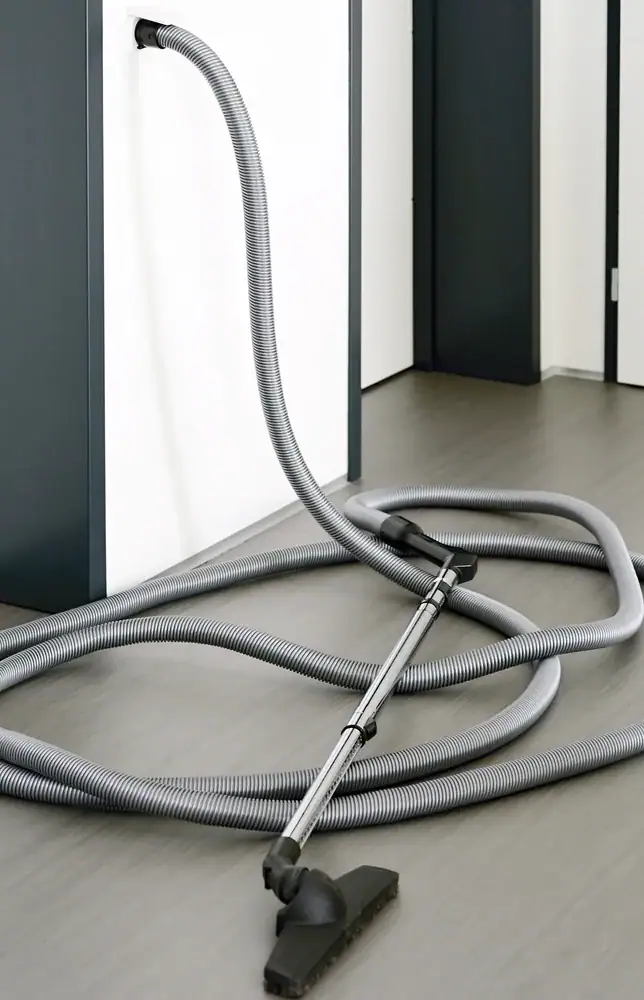
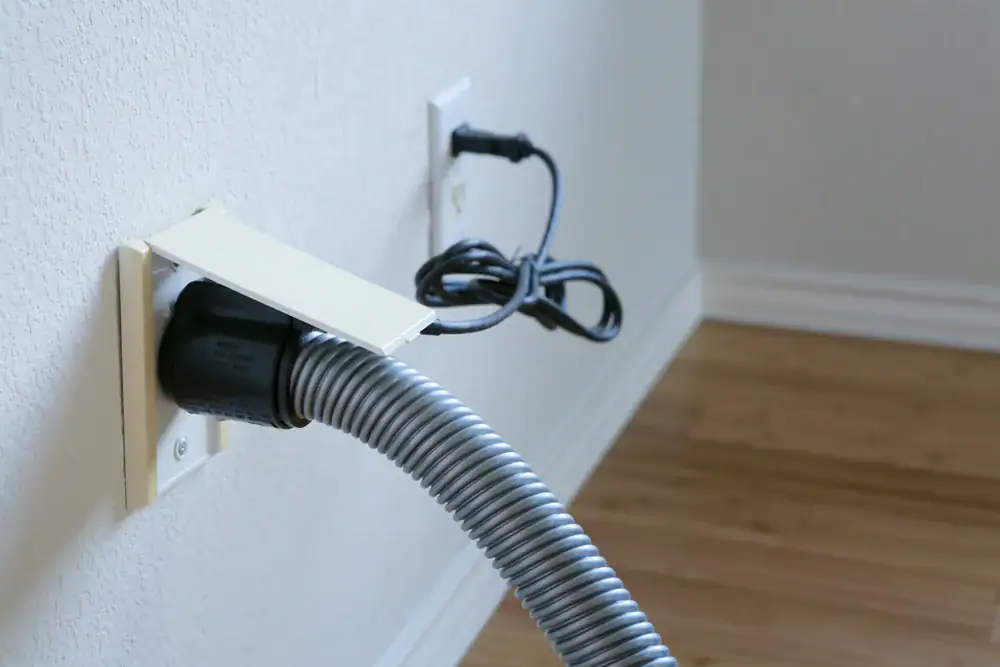
While you’re improving your home’s safety and indoor air quality with professional dryer vent cleaning, it’s also worth considering a Retractable Central Vacuum System. These built-in systems make cleaning easier, reduce airborne dust, and help maintain a cleaner, healthier home with less effort.
We’ve been serving Long Island homeowners for over 50 years with the kind of local expertise that comes from decades of working in these homes, understanding these systems, and helping families stay safe. If it’s been more than a year since your last cleaning—or if you’ve never had it done—now’s the time to take care of it.