Summary:
You’ve decided a central vacuum for your house makes sense. The allergy relief, the convenience, the long-term value—all of it checks out. But now you’re staring at a dozen brand names, conflicting specifications, and marketing claims that all sound the same.
Here’s what actually matters: not every central vacuum brand performs equally when installed in a Long Island home. Some excel at handling beach sand and seasonal pollen. Others prioritize quiet operation for work-from-home households. A few offer filtration that genuinely helps allergy sufferers breathe easier.
This comparison cuts through the noise. You’ll see how the best whole house vacuum systems stack up on the factors that affect your daily life—suction power, reliability, filtration quality, and whether they’re built to handle what Nassau County homes deal with year-round.
Best Whole House Vacuum System Options for 2026
The central vacuum market has matured significantly. What used to be a luxury addition is now recognized as a practical investment in air quality and home value. For 2026, the standout brands share a few things in common: powerful motors that maintain suction across your entire home, filtration systems that actually capture allergens instead of recirculating them, and construction quality that supports decades of use.
DrainVac, Beam, and NuTone consistently rank among the most trusted names, but for different reasons. DrainVac systems are known for raw power and advanced filtration—ideal if you’re dealing with pets or severe allergies. Beam focuses on whisper-quiet operation and energy efficiency, which matters when you’re vacuuming during work calls or while kids are studying. NuTone offers solid performance at more accessible price points, making them popular for first-time central vacuum buyers.
The best whole house vacuum system for your specific situation depends on your home’s square footage, your family’s health needs, and whether you’re prioritizing maximum power or minimum noise. We’ve learned through a href=”https://www.duravac.com/installations/existing-homes/”>Vacuum System at Long Island installations that coastal homes benefit from corrosion-resistant components, while multi-story homes need systems that maintain strong suction at every inlet regardless of distance from the main unit.
What Makes DrainVac Stand Out Among Central Vacuum Brands
DrainVac has built its reputation on solving the problems that frustrate homeowners most. Their Cobra and Viper models deliver 800 air watts of suction power, which translates to noticeably better performance on thick carpets and embedded dirt. That’s roughly three times what you’d get from a premium portable vacuum.
The filtration technology sets DrainVac apart for allergy sufferers. Their hybrid systems work with or without disposable bags, but when you pair them with HEPA bags, you’re capturing 99.97% of particles down to 0.3 microns. That includes pollen, pet dander, dust mites, and mold spores—the exact triggers that make Long Island springs miserable for sensitive individuals.
What you’ll appreciate during installation: DrainVac units are designed with ABS construction that resists corrosion. In Nassau County, where coastal humidity and salt air affect everything, this durability matters. The motors are also engineered with noise-blocking foam and integrated mufflers, keeping operation around 60-65 decibels even when running at full power.
Coverage is another practical consideration. The Cobra handles homes up to 6,500 square feet, while the Viper extends that to 9,000 square feet. For most Nassau County properties, this means you can cover your entire home with strategically placed inlets without worrying about weak suction in distant rooms.
The warranty coverage reflects confidence in the product. DrainVac backs their systems with lifetime warranties on motors and casings, which is meaningful when you’re making a multi-thousand-dollar investment. You’re not just buying cleaning power—you’re buying equipment designed to outlast multiple generations of portable vacuums.
Maintenance stays minimal. The large dirt capacity means you’re emptying the canister 2-4 times per year instead of weekly. Filters are washable and last years with proper care. This low-maintenance reality is what makes central vacuum systems practical for busy families who want cleaner air without adding another chore to their routine.
How Beam and NuTone Compare for Nassau County Homes
Beam central vacuum systems have earned their following through consistently quiet performance. Their 475A model operates so quietly that you can vacuum the living room while someone takes a video call in the home office. That’s not marketing speak—it’s a genuine advantage in the work-from-home era that defines how many Long Island families now live.
The Beam approach prioritizes efficiency alongside power. Their motors deliver 550-600 air watts, which is plenty for homes up to 5,000 square feet. You’re getting thorough cleaning without the energy consumption of higher-powered units. The systems also feature sealed HEPA filtration as standard, not an upgrade, which means cleaner exhaust air from day one.
Installation flexibility makes Beam popular for retrofit projects. Their compact power units fit in tight spaces, and the modular design allows installers to work around existing home layouts without extensive modifications. For Nassau County homeowners in older homes with finished basements or limited utility space, this adaptability solves real problems.
NuTone takes a different approach. Their PurePower Series focuses on delivering reliable performance at price points that make central vacuum systems accessible to more homeowners. You’re looking at systems in the $1,200-$1,800 range for the power unit, compared to $2,000-$3,000 for premium DrainVac or Beam models.
The trade-off isn’t quality—it’s features. NuTone systems deliver solid 550 air watts of suction with ULTRASILENT technology that keeps noise levels competitive. They use sealed HEPA filtration and vent outside your living space, providing the same core health benefits as pricier brands. What you might not get are some of the advanced features like hybrid filtration options or the absolute quietest operation.
For first-time central vacuum buyers, NuTone offers a smart entry point. You’re getting a system that will last 15-20 years with proper maintenance, deliver genuine allergy relief, and perform the daily cleaning tasks that matter. The brand’s long history in the home improvement market also means parts availability and service support are reliable.
The warranty structure differs between brands. Beam typically offers 7-year or 750-hour product warranties, while NuTone provides solid coverage but with slightly shorter terms. DrainVac’s lifetime motor warranty represents the premium end. Your decision should factor in how long you plan to stay in your home and whether you value maximum longevity or upfront cost savings.
Climate considerations matter in Nassau County. All three brands handle humidity well, but DrainVac’s corrosion-resistant construction offers extra protection near coastal areas. Beam’s energy efficiency helps during Long Island’s hot summers when you’re running air conditioning alongside other systems. NuTone’s proven reliability means you’re not sacrificing durability for affordability.
Central Vacuum Brands: Performance and Reliability Factors
Suction power gets measured in air watts, and this number matters more than any other specification. A system rated at 700 air watts will outperform a 550 air watt model on thick carpets, pet hair, and embedded dirt. But here’s what the numbers don’t tell you: how well that power translates to actual cleaning depends on your home’s piping layout, the number of inlets, and the distance from the power unit.
Long Island homes present specific challenges. Multi-story layouts mean longer pipe runs. Older construction might limit routing options. Beach sand is heavier and more abrasive than typical household dirt. These factors affect which central vacuum brands perform best in real-world conditions versus controlled testing environments.
Filtration technology separates good systems from great ones. Cyclonic systems use centrifugal force to separate dirt from air, depositing debris into a collection bin without bags. They’re low-maintenance but don’t offer the same level of fine particle capture as filtered or bagged systems. Filtered systems with HEPA capture microscopic allergens but require periodic filter replacement. Bagged systems provide the most hygienic disposal and excellent filtration when using quality bags.
Choosing Between Cyclonic, Filtered, and Bagged Systems
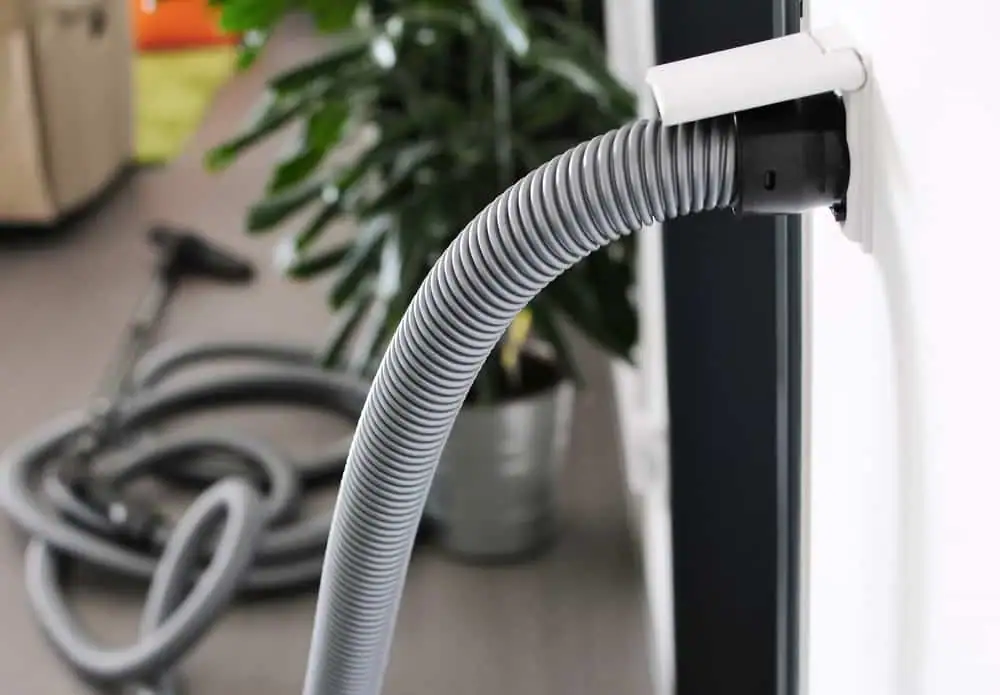
Cyclonic central vacuum systems appeal to homeowners who want minimal maintenance. You’re emptying a canister a few times per year, with no bags to buy or filters to replace frequently. Brands like VacuFlo built their reputation on true cyclonic technology that maintains consistent suction as dirt accumulates.
The limitation shows up in air quality impact. Cyclonic systems excel at separating large particles but don’t capture fine allergens as effectively as HEPA filtration. If you’re installing a central vacuum primarily for allergy relief, this matters. You’re still getting better air quality than portable vacuums because exhaust vents outside, but you’re not maximizing the health benefits.
Filtered systems with HEPA technology capture 99.97% of particles at 0.3 microns. That’s the size range where pollen, pet dander, and dust mite waste live. DrainVac and Beam both offer filtered systems, and the difference in indoor air quality is measurable. Families with asthma or severe allergies consistently report better symptom control with HEPA-filtered central vacuums.
The maintenance requirement is reasonable. HEPA filters need replacement every 2-3 years depending on use, costing $30-$60. Some systems use washable pre-filters that extend HEPA filter life. You’re adding a maintenance task, but it’s infrequent enough that most homeowners find it worthwhile for the air quality improvement.
Bagged systems represent the most hygienic option. Dirt goes into a disposable bag, and when full, you remove and discard it without exposure to dust. This matters if you have mold allergies or respiratory sensitivity. The sealed bag disposal means allergens stay contained instead of becoming airborne during canister emptying.
NuTone and some DrainVac models offer bagged configurations. You’re buying bags (typically $15-$25 for a pack of three), but they last 6-12 months for average households. The ongoing cost is minimal compared to the health and convenience benefits. Bagged systems also tend to be quieter since the bag provides additional sound dampening.
Hybrid systems give you options. DrainVac’s hybrid models work with or without bags, letting you choose based on what you’re vacuuming. Use bags for allergy season when pollen counts spike. Go bagless for routine cleaning. This flexibility appeals to homeowners who want to optimize for different situations.
Your choice should align with your priorities. Maximum allergy relief? Go HEPA filtered or bagged. Lowest maintenance? Choose cyclonic. Want options? Hybrid systems cost slightly more upfront but deliver long-term versatility. Long Island’s seasonal allergen challenges typically push homeowners toward filtered or bagged systems despite the slightly higher maintenance.
Motor Power, Coverage Area, and Noise Levels Explained
Air watts measure actual cleaning power at the hose end, not just motor strength. This distinction matters because a powerful motor means nothing if your piping design loses suction before reaching the inlet. Quality central vacuum brands publish air watt ratings that reflect real-world performance, not theoretical maximums.
For Nassau County homes, here’s what works: 550-600 air watts handles homes up to 5,000 square feet effectively. You’ll clean carpets, hard floors, and upholstery without issues. If you have thick carpeting, multiple pets, or a home exceeding 5,000 square feet, look at 700+ air watt systems. The extra power ensures strong suction at every inlet even in larger layouts.
Coverage area ratings assume optimal conditions. A system rated for 7,500 square feet might struggle in a poorly designed installation with excessive pipe length or too many 90-degree bends. Professional installation matters here. We route piping to minimize resistance, maintaining suction throughout your home.
Noise levels vary significantly between brands. Beam’s focus on quiet operation delivers systems running at 55-60 decibels, roughly the volume of normal conversation. DrainVac systems with noise suppression foam operate around 60-65 decibels. Budget-friendly options might reach 70+ decibels, which is noticeably louder but still quieter than portable vacuums that run 80+ decibels.
The noise difference matters in daily use. At 55-60 decibels with the motor in your garage, you can vacuum any room without disturbing others. At 70+ decibels, the sound carries more, though it’s still isolated from living spaces. If you have a home office, frequently take calls, or have young children who nap, the quieter systems justify their premium pricing.
Motor longevity connects to build quality. Ametek Lamb motors power many premium systems and are known for 20+ year lifespans. Cheaper systems might use less durable motors that require replacement after 10-15 years. Since motor replacement costs $400-$800 including labor, the initial investment in quality pays off.
Warranty coverage reveals manufacturer confidence. Lifetime motor warranties (DrainVac) indicate expectation of decades-long performance. Seven-year warranties (Beam) still represent solid coverage. Anything less than five years suggests you’re buying equipment not built for the long term.
Energy consumption rarely factors into brand decisions but probably should. Central vacuum systems use less electricity than repeatedly charging cordless vacuums or running multiple portable units. Beam’s energy-efficient designs consume roughly 1,400-1,600 watts during operation. Over 20 years, this efficiency saves money and reduces environmental impact.
Installation requirements differ slightly between brands. Compact power units (Beam, some NuTone models) fit in tighter spaces, making them ideal for homes with limited utility room space. Larger units (some DrainVac models) need more clearance but often include bigger dirt capacity, reducing emptying frequency. Your home’s layout should influence which brand you choose.
Finding the Right Central Vacuum for Your House
The best central vacuum brands share core strengths: powerful suction that outperforms portable vacuums, filtration that genuinely improves indoor air quality, and construction designed for decades of use. Where they differ—noise levels, filtration options, price points, and feature sets—is where your specific needs determine the right choice.
For Nassau County homes dealing with allergies, seasonal pollen, and the physical challenge of multi-story cleaning, a quality central vacuum system delivers measurable improvements. You’re investing in equipment that will outlast five or six portable vacuums while providing better cleaning results and healthier indoor air.
The brands covered here—DrainVac, Beam, NuTone, and others—all represent solid choices when properly matched to your home and needs. Professional installation ensures you get the performance these systems are capable of delivering. If you’re ready to explore which system makes sense for your specific situation, we can help you evaluate options based on our decades of Long Island installation experience.