Summary:
You know the routine. Haul the vacuum upstairs, wrestle with cords that won’t reach, finish with your back aching—and watch dust settle back onto surfaces you just cleaned.
Nassau County homeowners are asking about whole house vacuum systems because they eliminate this frustration entirely. These built-in systems deliver cleaning power that actually works, remove allergens from your home instead of recirculating them, and last decades with minimal maintenance.
This isn’t about selling you something unnecessary. It’s about understanding what these systems do, what they cost, and whether one solves problems you’re actually dealing with. Let’s start with the basics.
Central Vac Installation: How It Works
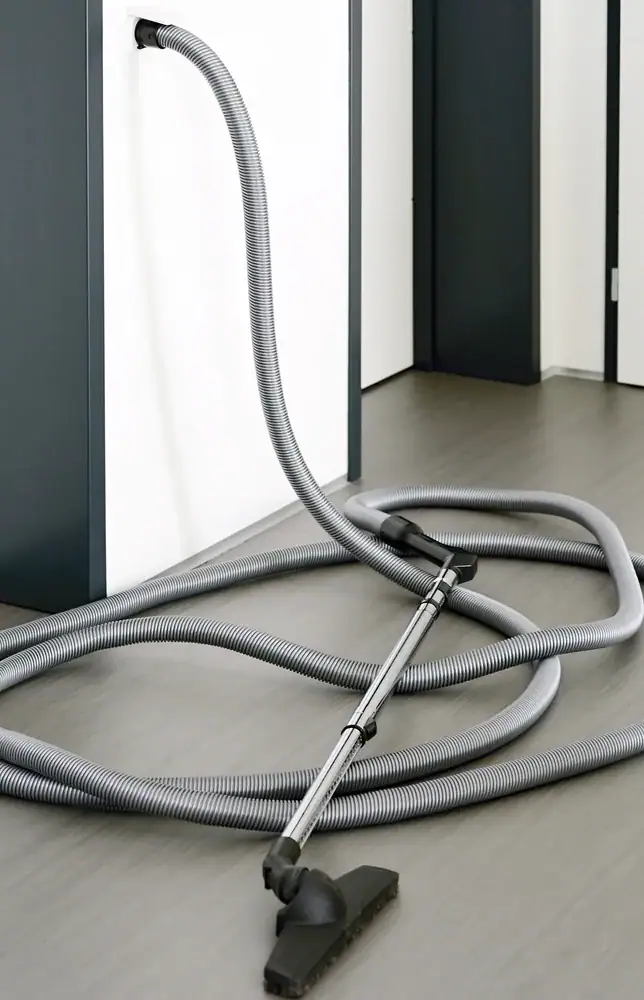
A central vac installation places a powerful motor unit in your garage or basement, connected to PVC pipes running through walls to inlet valves throughout your home. When you plug a lightweight hose into any inlet, the system activates automatically.
Dirt travels through the hose, into the pipes, and collects in a canister at the power unit. The motor stays remote, so you only hear gentle airflow—not the disruptive noise of a portable vacuum running beside you.
These motors deliver 3-5 times more power than portable units because they don’t need to be lightweight or portable. That translates to genuine suction that lifts embedded dirt, pet hair, and allergens traditional vacuums leave behind.

Central Vacuum System Installation Process
Professional central vacuum system installation in existing Nassau County homes doesn’t require tearing down walls. We work with your home’s structure, running pipes through accessible spaces like attics, basements, and wall cavities.
The process starts with assessing your layout. We determine optimal inlet placement based on room sizes, traffic patterns, and where you actually need cleaning access. Most Long Island homes need 3-6 inlets for complete coverage without unwieldy hose lengths.
The power unit mounts in your garage or basement with dedicated electrical connection. Lightweight PVC tubing then runs through existing wall cavities, attic spaces, or basement ceilings. Modern PVC is lighter and more durable than old metal systems, installing with minimal disruption to finished surfaces.
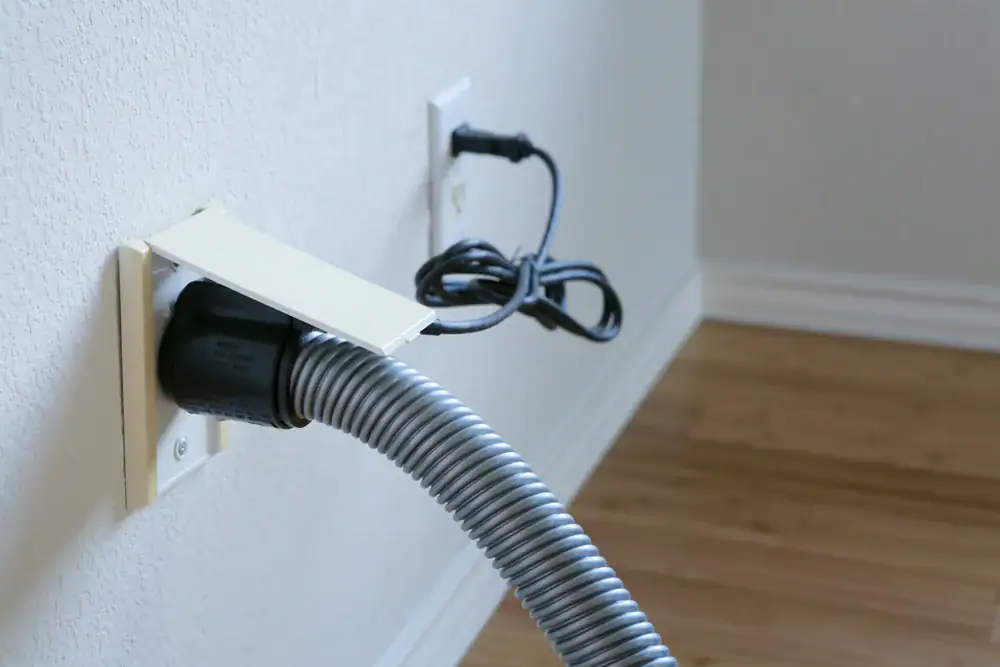
Each inlet needs pipe connection plus low-voltage wiring to activate the system when you plug in. The only visible change is the inlet valve itself—a clean, finished opening about the size of a standard outlet. Installation typically takes one day for most homes. You’ll have minor dust and disruption during work, but we minimize impact by understanding Long Island construction.
New construction makes the vacuum installation even simpler since pipes run before drywall goes up. The key is working with your home’s specific structure. Long Island properties range from traditional colonials to modern builds, each with unique considerations that we navigate efficiently.
Whole House Central Vacuum Benefits for Nassau County Homes
The cleaning power difference is immediate. Central vacuum motors deliver 185+ cubic feet per minute—often three to five times what premium portables manage. You’ll see it in how carpets look cleaner, hardwood floors stay dust-free longer, and you spend less time going over the same spots.
But the real advantage for Nassau County homeowners is indoor air quality. Traditional vacuums suck dirt through the front and blow some back out the exhaust. Even HEPA portables recirculate particles. A whole house central vacuum removes 100% of what you vacuum from living spaces entirely.
Studies show these systems remove up to 98% of airborne dust particles and reduce allergy symptoms by 61%. For families dealing with Long Island’s pollen seasons—tree pollen in April, grass in June, ragweed in September—this creates measurable daily relief.
The convenience changes how you clean. You’re carrying a lightweight hose and attachment, not a 15-20 pound machine. No avoiding rooms because stairs are too much hassle. No searching for outlets or dealing with cords that won’t reach. You clean your entire home without physical punishment.
These systems run whisper-quiet in living spaces since the motor stays remote. You only hear gentle airflow at the cleaning head. Vacuum while kids nap, take calls while cleaning, or tackle floors during early morning without disturbing anyone.
Long-term value is compelling. Quality systems last 20+ years with basic maintenance—emptying the canister a few times yearly and occasional filter changes. Compare that to replacing portable vacuums every 2-3 years, and the economics favor central systems dramatically.
Central Vacuum Installation Cost
Professional installation for a central vacuum system in Nassau County typically runs $1,200-$4,200 depending on home size and complexity. For a standard 2,000 square foot home, expect around $2,500 for a complete system with professional installation.
That includes the power unit, all piping, inlet valves, hose, and attachments. Larger homes requiring more inlets and longer pipe runs fall toward the higher range.
The biggest variable is new construction versus retrofit. New construction installations run $1,200-$2,000 since pipes install before walls finish. Retrofit installations in existing homes typically cost $1,500-$2,500 due to additional labor accessing wall cavities and routing pipes through finished spaces.
Central Vacuum System Cost Breakdown
Understanding cost drivers helps you make informed decisions. The power unit represents the largest expense, ranging $400-$2,000 depending on motor strength, filtration type, and brand quality.
System type affects cost significantly. Cyclonic units use centrifugal force to separate dirt without bags but need exterior venting. Filtered systems trap dust in replaceable bags or filters, making maintenance simpler with ongoing costs. Most Nassau County installations use filtered systems because they’re easier to maintain without requiring exterior venting.
Inlet valve quantity directly impacts total cost. Each inlet adds $130-$300 including the valve, pipe connections, and electrical wiring. Homes under 2,000 square feet typically need 3-4 inlets. Larger homes may require 5-6 or more to reach every area without excessive hose length.
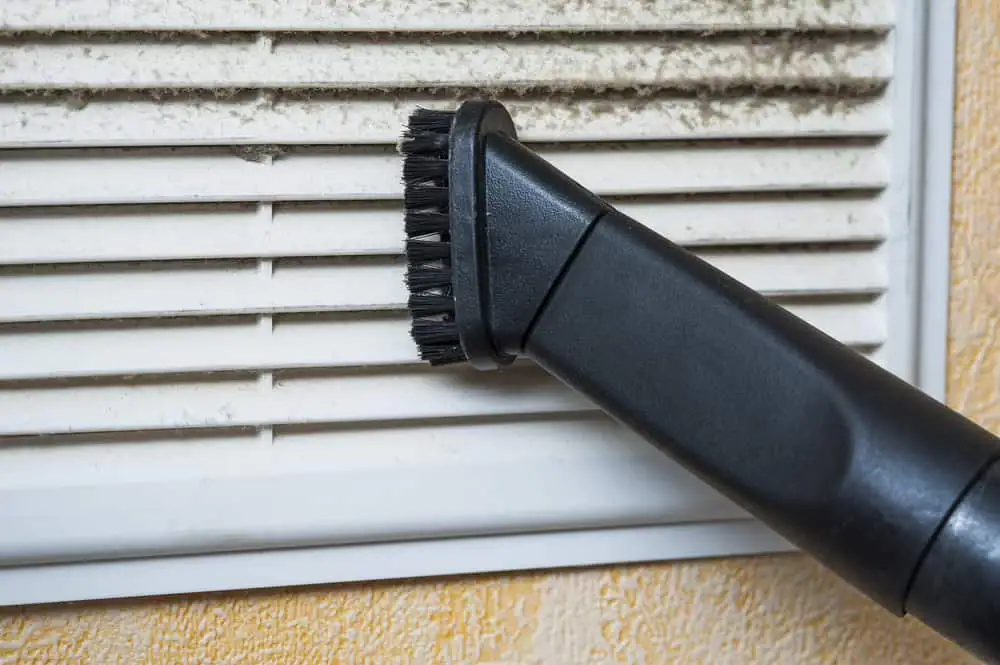
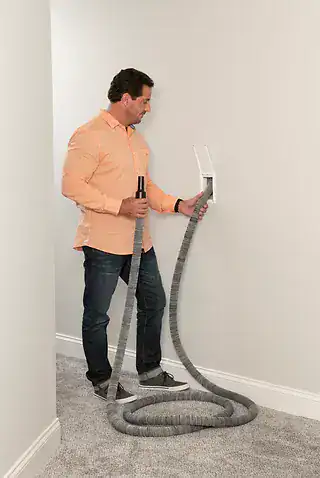
Hose and attachment packages run $350-$600 for quality kits including vacuum hose (typically 30-35 feet), powerhead for carpets, floor tools for hard surfaces, crevice tools, and upholstery attachments. Premium options like Hide-A-Hose retractable systems that store hoses inside walls add $175-$1,000 but deliver exceptional convenience.
Labor costs vary based on home size and complexity. Professional installers typically charge $50-$120 hourly, with most residential installations taking 6-8 hours. Single-story homes cost less than multi-story since installation is simpler with less vertical piping needed.
Electrical work is included in professional installations. Each inlet needs low-voltage wiring to activate the system when you plug in. The power unit requires a dedicated 110-volt circuit. Licensed installers handle all electrical connections to code.
Central Vacuum System Price vs. Long-Term Value
Upfront cost for central vacuum systems exceeds buying a portable vacuum. That’s reality. But total cost over time tells a different story.
Quality portable vacuums cost $300-$800 and last 2-3 years with regular use. Over 20 years, you’ll replace that vacuum 7-10 times, spending $2,100-$8,000 total. A central vacuum system installed for $2,500 lasts the entire 20+ years with minimal maintenance.
Maintenance expenses for central systems are surprisingly low. Empty the dirt canister 2-4 times yearly—a five-minute task. Filters need cleaning or replacement every 3-6 months, costing $20-$30 per filter. Bags for bagged systems run about $10 annually. Motor brushes might need replacement every few years at minimal cost. Total annual maintenance typically runs under $100.
Compare that to portable vacuums needing constant bag replacements, filter changes, belt replacements, and eventual motor failures. Ongoing costs add up quickly before factoring in the inconvenience of shopping for parts and dealing with breakdowns.
Property value is another consideration. Homes equipped with house vacuum systems command higher resale values. Real estate professionals report central vacuums as premium features buyers seek, particularly those with allergies, pets, or multi-story homes. Studies suggest 65-75% of installation costs recoup in increased home value.
For Nassau County homeowners where average property values exceed $550,000, a $2,500 investment in a feature improving daily life, health, and home value makes financial sense. You’re not just buying a vacuum—you’re making a home improvement serving your family for decades.
Central Vacuum System Repair
Even well-maintained systems occasionally need professional attention. Understanding common issues and when to call for repair keeps your system running at peak performance.
Reduced suction is the most frequent problem. This stems from several causes—full dirt canister, clogged filters, blockages in hose or pipes, or worn motor components. Before calling service, check obvious culprits. Empty the canister, clean or replace filters, and inspect your hose for visible blockages.
If suction remains weak after basic maintenance, the issue likely needs professional diagnosis. Clogs deep in piping, damaged pipe sections, or motor problems require expert attention. Attempting to clear major blockages without proper tools can damage the system.