Summary:
You’ve done some research. You’ve seen the roundups, skimmed the spec sheets, and you’re still not sure which central vacuum system is actually right for your home. That’s not a you problem — it’s a content problem. Most comparison guides are written to sell products, not to help you make a smart decision for your specific house.
The truth is, the brand on the power unit matters less than most buyers think. What determines whether a central vacuum system actually performs — day in, day out, for years — comes down to how the system was designed and installed. Here’s what to look at instead.
Top Central Vacuum Systems: What to Actually Compare
Walk into any conversation about central vacuum systems and someone will throw a brand name at you within thirty seconds. The problem is that brand loyalty in this category is mostly inherited from contractors, not earned by performance data. A well-known name installed poorly will lose to a lesser-known system installed by someone who actually knows what they’re doing.
The smarter approach is to evaluate systems against a framework — motor performance, filtration design, and how well the system is sized and routed for your specific home. Those three factors will tell you more about long-term performance than any brand comparison chart ever will.
Air Watts vs. Waterlift: Why You're Probably Looking at the Wrong Spec
Here’s something the product listings don’t make obvious: waterlift — that “inches of water” figure you’ll see on almost every spec sheet — measures sealed suction with no airflow. It tells you how hard a motor can pull against a completely blocked pipe. In real-world cleaning, your pipe is never fully blocked. What actually matters is how much air the system moves while it’s pulling, which is what air watts measures.
Air watts combine suction and airflow into a single number that reflects real cleaning performance. For a home under 3,000 square feet, you’re generally looking for a minimum of 500 to 700 air watts at the power unit. Larger homes, more floors, or longer pipe runs push that number higher — not because the rooms are bigger, but because every foot of pipe and every elbow the air travels through reduces effective suction at the cleaning head.
This is where a lot of buyers get burned. They see a high waterlift rating, assume it means strong suction, and end up with a system that underperforms because the motor wasn’t sized for their actual pipe layout. Waterlift is easy to inflate in marketing materials. Air watts is harder to fake because it reflects real operating conditions.
The other spec worth understanding is CFM — cubic feet per minute — which measures airflow volume. Think of air watts as the combination of force and volume. A system with high waterlift but low CFM is like a garden hose with the nozzle pinched: intense pressure, but not much actually moving. You need both, and air watts is the number that captures both at once.
When we design a system for a Nassau County, NY home, air watts relative to the actual pipe run length is one of the first calculations we work through. It’s not a one-size-fits-all number, and any installer who quotes you a system without knowing your home’s layout is guessing.
Bagged, Bagless, or Cyclonic: Which Filtration Type Is Right for Your Home
Filtration is the second piece of the puzzle, and it’s where your household’s specific situation — pets, allergies, flooring types — should drive the decision.
Bagged systems have one significant advantage that often gets overlooked: they maintain more consistent suction as they fill. Because debris is contained in the bag, airflow through the motor stays relatively stable until the bag is full and needs replacing. For households with allergy sufferers, there’s another benefit — when you remove a full bag, you’re not opening a chamber full of fine dust. The bag stays sealed. That matters if someone in your home is sensitive to airborne particulates.
Bagless systems offer the convenience of not buying replacement bags, but they require more attention to maintain performance. As the collection container fills, suction can drop noticeably. They’re a reasonable choice for homes where the system gets light to moderate use and the container gets emptied regularly.
Cyclonic filtration separates debris from the airstream before it reaches the filter, which extends filter life and keeps suction more consistent over time. Many higher-end systems use a cyclonic pre-separation stage combined with a secondary filter — sometimes HEPA — for maximum particulate capture. HEPA filtration, when properly implemented, removes 99.97% of fine particles, including the kind of microscopic allergens that trigger symptoms in sensitive households.
One thing worth understanding about all central vacuum systems — regardless of filtration type — is that they exhaust air outside the living space rather than recirculating it through a portable filter back into the room. That’s the mechanism behind the EPA-cited allergen reduction benefit. Your portable vacuum, even with a HEPA filter, is still pushing exhaust air back into the room. A central vacuum system routes it outside entirely. For Nassau County, NY homeowners dealing with Long Island’s oak pollen in the spring and ragweed in the fall, that distinction is more than a marketing point.
If you have dogs or cats, filtration type becomes even more important. Pet dander is fine enough to pass through lower-grade filters, and it’s one of the most persistent allergens in a home. A multi-stage system with cyclonic pre-separation and a quality secondary filter is worth the investment if pet hair and dander are part of your daily reality — which, based on what we hear from Nassau County homeowners, they very often are.
Central Vacuum Systems for Nassau County Homes: Why Installation Is the Variable That Matters Most
Nassau County’s housing stock is overwhelmingly post-WWII construction — Capes, Colonials, and split-levels built between the 1940s and 1970s. These homes were designed before central vacuum was a residential consideration, which means retrofitting one requires a technician who understands how to route PVC through existing wall cavities, finished basements, and plaster walls without turning your renovation into a demolition project.
This is the part that most product review sites never address. They evaluate the unit. They don’t evaluate the installation. And in central vacuum systems, the installation determines at least half of what you’ll actually experience day to day.
Can a Central Vacuum System Be Installed in an Older Nassau County Home?
This is the question we hear most often from homeowners in communities like Levittown, NY, Hicksville, NY, Great Neck, NY, and Massapequa, NY. The short answer is yes — and it’s something we’ve been doing in Nassau County homes for decades. But the longer answer is that it requires someone who has actually done it, not someone who installs central vacuum systems as an occasional add-on to a broader contracting business.
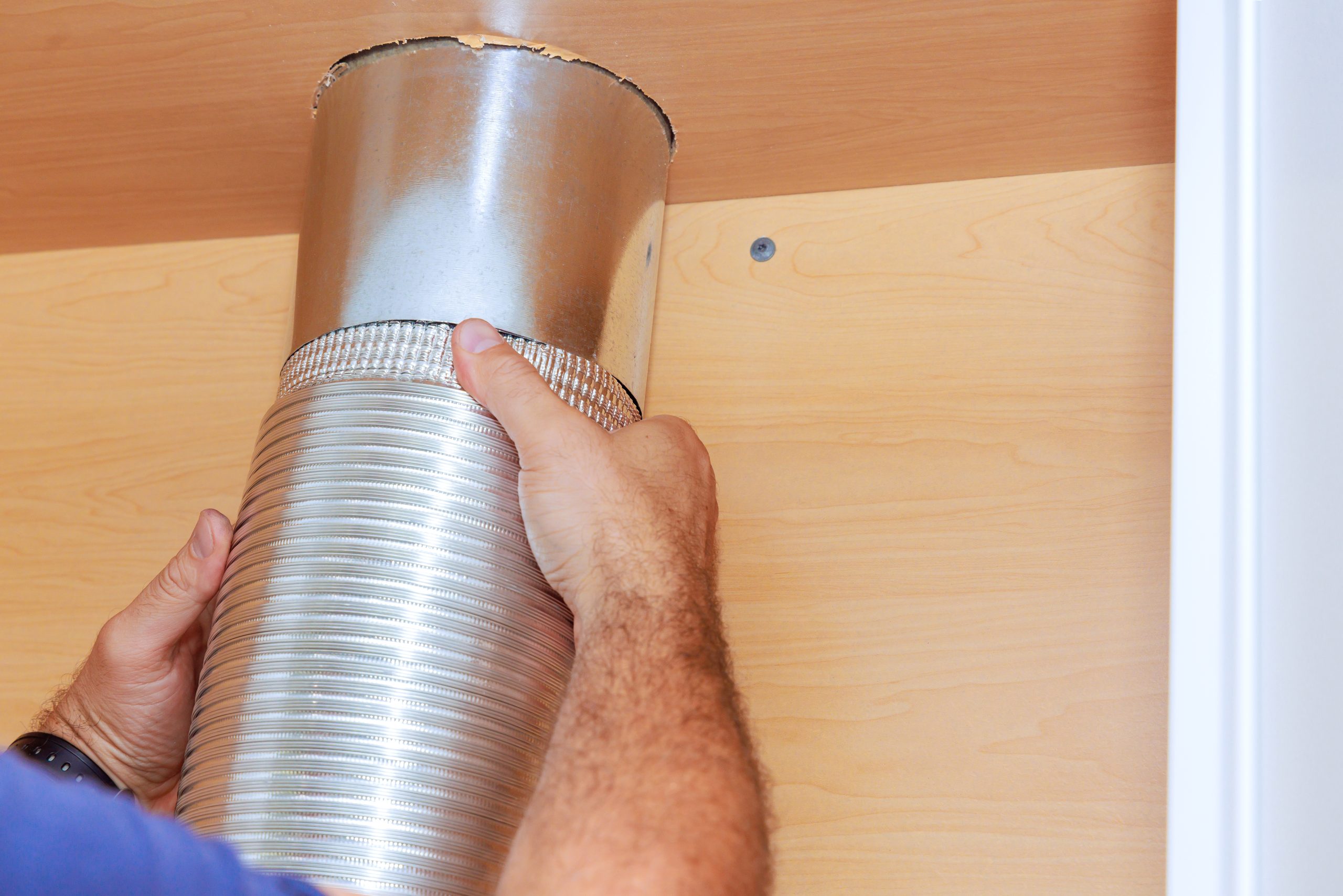
The challenge with older Long Island homes isn’t the system itself. It’s the routing. Post-WWII Capes and Colonials often have finished attics, plaster walls, and basement layouts that weren’t designed with pipe runs in mind. Getting PVC from the power unit to each inlet location — without opening up walls that were just renovated, or running exposed pipe through finished spaces — takes experience and problem-solving that comes from having done it hundreds of times.
We frequently work alongside homeowners who are mid-renovation on a kitchen or bathroom and want to add central vacuum while the walls are already open. That’s actually the ideal scenario — it simplifies the routing considerably. But we also retrofit systems into homes where nothing is being renovated, and the work gets done cleanly, without disrupting finishes. Customers regularly comment that they were worried about the mess and were surprised by how little disruption there was.
Inlet placement is another piece of this that most buyers don’t think about until after installation. Inlets placed too far apart mean you’re still dragging a hose across the room. Inlets placed in illogical locations mean you’ll avoid using them. Proper inlet placement is a design decision, not a default — and it’s one of the things a consultation is specifically meant to address before any pipe gets run.
What Is Hide-A-Hose and Is It Worth It for Nassau County Homes?
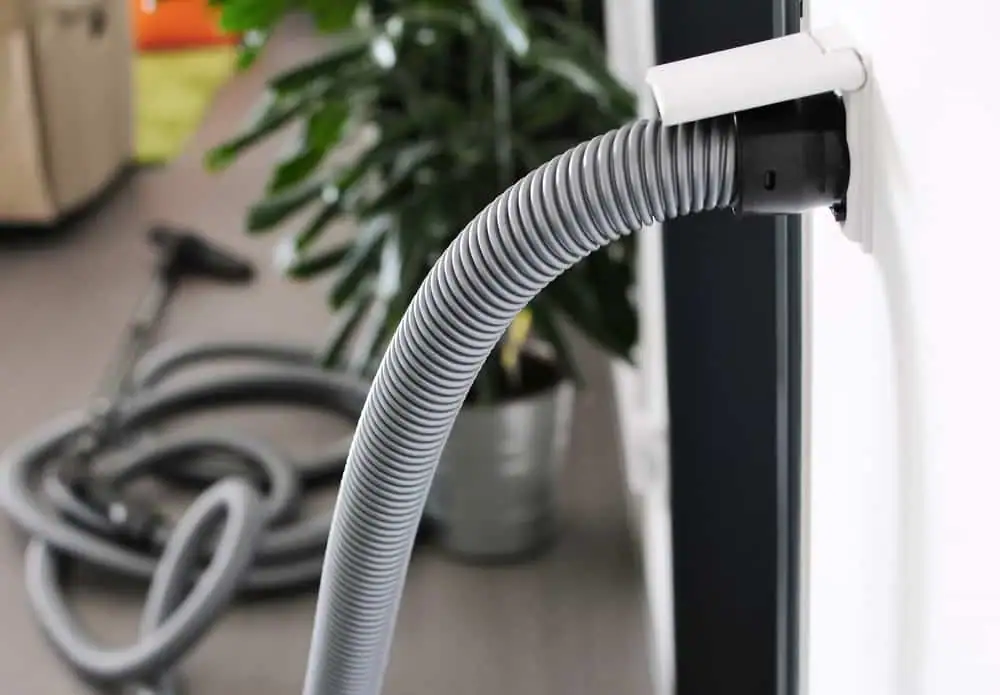
If you’ve looked into central vacuum systems at all, you’ve probably encountered the most common pushback: “You still have to carry the hose around.” Hide-A-Hose is the answer to that objection.
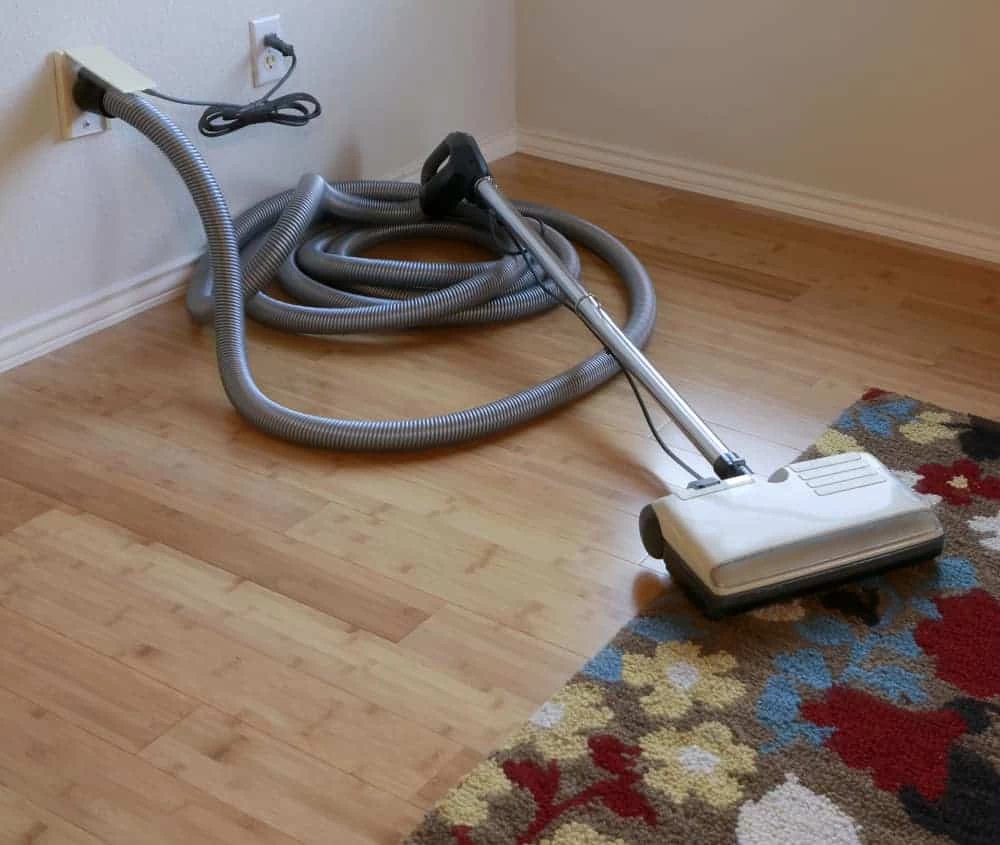
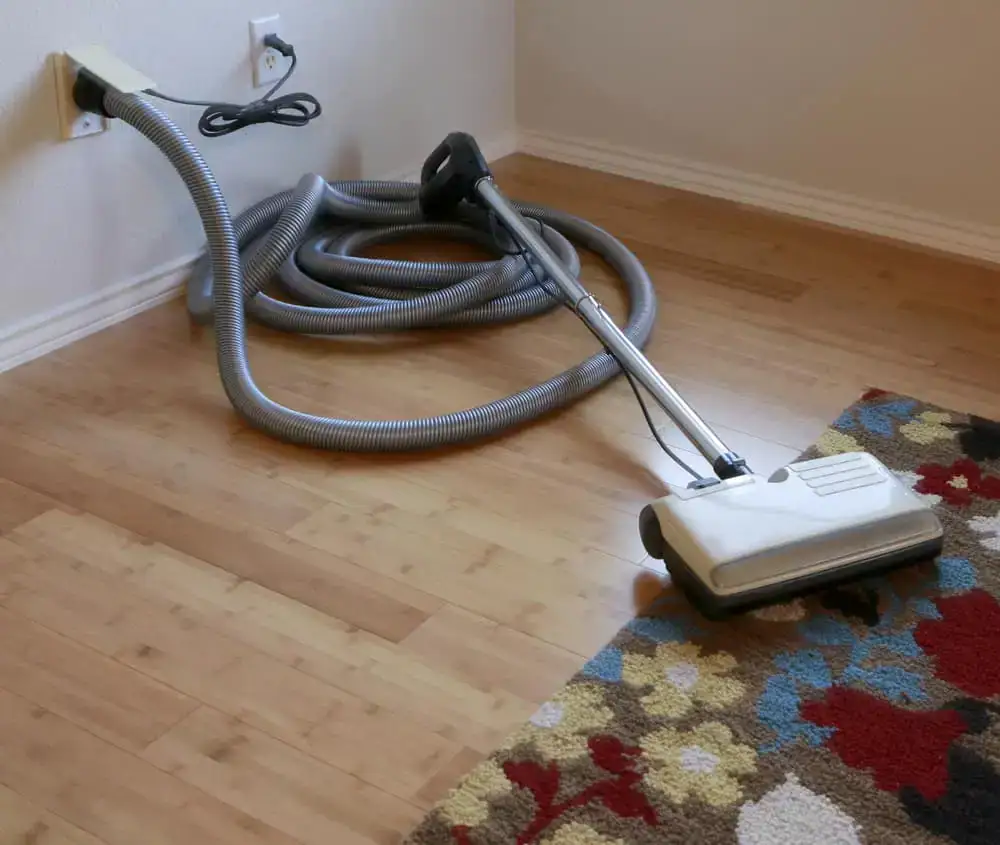
With a standard central vacuum setup, you plug a hose into the inlet valve, clean the area, and then store the hose somewhere — a closet, a cabinet, wherever you’ve designated. It’s still significantly more convenient than a portable vacuum, but the hose is still a physical object you’re managing. Hide-A-Hose changes that. The hose stores inside the wall, coiled within the pipe run itself. When you need it, you pull it out from the inlet. When you’re done, suction retracts it back into the wall automatically.
For Nassau County, NY homes where storage space is often at a premium — especially in the older Capes and split-levels that dominate communities like Valley Stream, NY and Levittown, NY — the appeal is real. There’s nothing to store, nothing to trip over, and nothing to carry between floors.
What most buyers don’t realize is that Hide-A-Hose installation requires more precision than a standard central vacuum setup. The hose has to retract cleanly through the pipe run, which means the routing, the pipe diameter, and the number of bends all have to be calculated with the retraction mechanics in mind. A general contractor who installs central vacuum systems occasionally isn’t going to have the experience to get that right consistently. Done incorrectly, the hose jams or fails to retract — which turns a convenience feature into a frustration.
We specialize in Hide-A-Hose installation, and it’s one of the more common upgrades we add to existing systems in Nassau County homes. If you’re already considering a central vacuum system, it’s worth asking about during a consultation — because adding it later is possible but more involved than incorporating it from the start.
How to Choose the Best Central Vacuum System for Your Nassau County Home
The best central vacuum system isn’t the one with the most recognizable name or the highest waterlift number on the spec sheet. It’s the one that was sized correctly for your home, routed by someone who knows what they’re doing, and designed around how you actually live — whether that means HEPA filtration for allergy season, a Hide-A-Hose setup for a busy household, or a system built to handle three dogs and a finished basement.
For Nassau County, NY homeowners, the retrofit question is usually the first hurdle. Once you know it’s feasible for your specific home — and in most cases it is — the rest of the decision becomes much more straightforward.
If you’re ready to move past the brand comparison stage and want a real assessment of what makes sense for your home, we offer a free consultation. No pressure, no guesswork — just a conversation about your home and what a well-designed central vacuum system would actually look like in it.