
Summary:
There’s a version of this story that plays out constantly across Nassau County. A homeowner spends $40,000 on a kitchen renovation. The contractors are in and out for weeks. Walls are open, pipes are being rerouted, electricians are already on-site. And somewhere around the time the drywall goes back up, a neighbor mentions central vacuum — and the homeowner realizes they just missed the easiest, most cost-effective window they’ll ever have.
It’s not a dramatic mistake. But it’s a real one. And it’s almost entirely avoidable if you know what to look for before the renovation starts.
Why the Renovation Window Changes Everything for Central Vacuum Installation
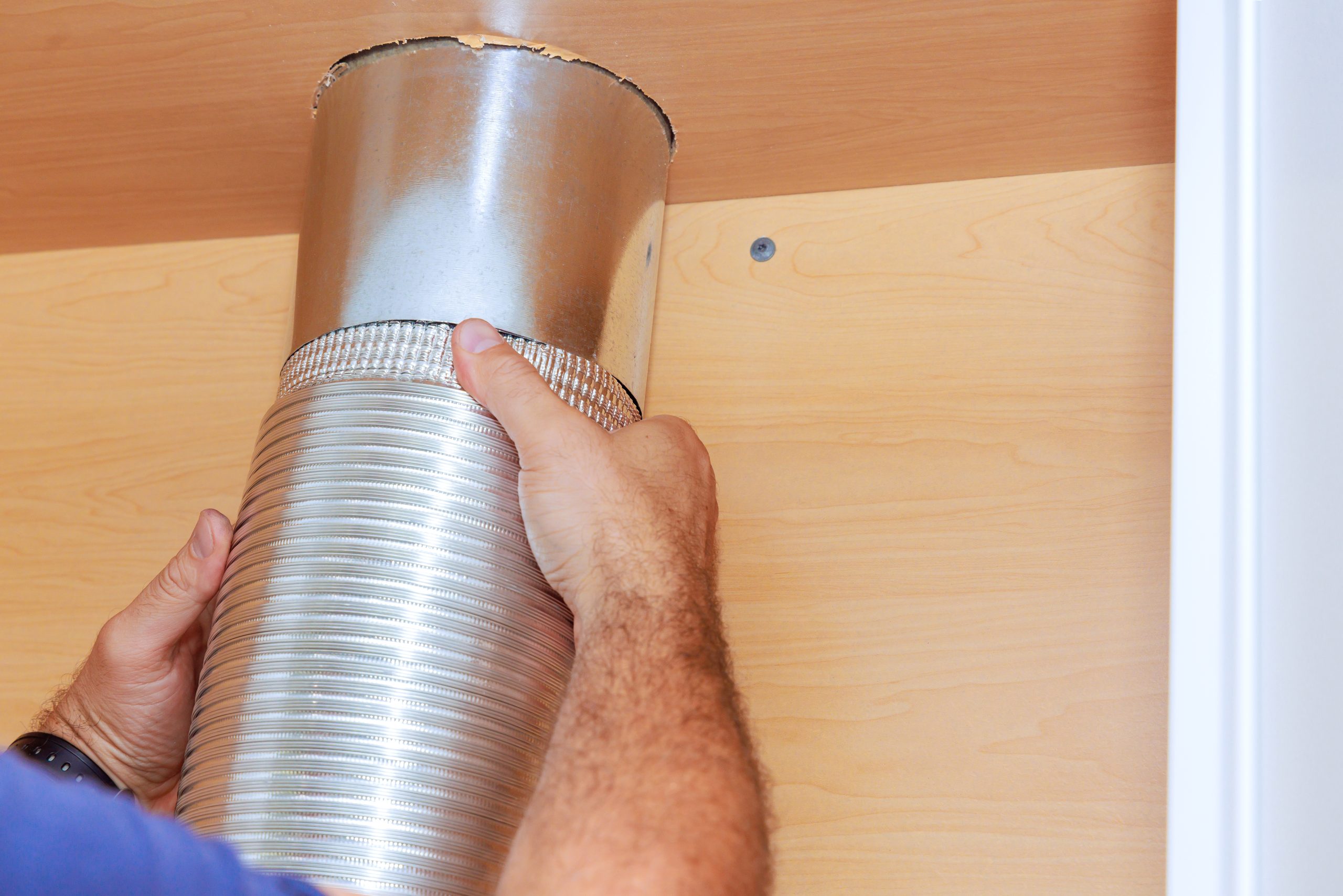
When walls are open, running PVC tubing through a home takes hours, not days. We route the system through the structural voids that are already exposed, and the whole thing gets sealed up when the rest of the renovation does. The incremental cost of adding central vacuum during an active renovation is a fraction of what a standalone retrofit costs once those walls are closed.
That’s the core of the timing argument — and it’s the thing most homeowners don’t find out until it’s too late. The system itself isn’t complicated. The installation is straightforward. What creates cost and complexity is working around finished walls, ceilings, and floors after the fact.
Central House Vacuum System Installation: New Construction vs. Existing Home
There’s a widespread assumption that a central house vacuum system is something you plan for during new construction and miss out on forever if you didn’t. That’s not accurate — and it keeps a lot of homeowners from ever looking into it seriously.
Nearly one-third of all central vacuum systems sold in the United States are installed in existing homes. The process for a retrofit is different from a new build, but it’s far less invasive than most people picture. In a typical Nassau County, NY home — a post-war Cape Cod in Wantagh, a split-level in Massapequa, a ranch in Merrick — we route the installation through the basement ceiling and attic floor, with small inlet valve openings cut into the walls at strategic points. Most installations complete in a single day.
New construction is still the ideal window, and if you’re building an addition or doing a gut renovation, that’s the moment to act. But if you’re in an existing home, the door isn’t closed — it’s just a different kind of installation, and the result is the same.
What does change between new construction and retrofit is cost and disruption. In new construction, the tubing gets roughed in during framing, before insulation and drywall, so there’s essentially no extra labor involved in accessing the walls. In a retrofit, we have to find paths through existing structure — which is very doable in Nassau County’s housing stock, but does require more planning and some additional work. The renovation window sits in between: walls are already open, but the home is existing, so you get most of the new-construction advantage without waiting for a ground-up build.
If you’re planning any project that opens walls — kitchen, bathroom, addition, HVAC replacement — that’s your window. It doesn’t need to be a full gut renovation. Even a partial wall opening in the right location can make a meaningful difference in installation scope and cost.
Whole Home Vacuum Systems in Nassau County's Older Housing Stock
Nassau County’s housing character is worth understanding here, because it directly affects how whole home vacuum systems get installed and why these homes are actually well-suited for it.
The county’s residential core is largely post-World War II construction — the Cape Cods, split-levels, and ranches that filled communities like Levittown, Hicksville, Garden City, and Valley Stream starting in the late 1940s. These homes are typically 1,200 to 2,500 square feet, one to two stories, and almost always have either a basement or attic space — sometimes both. That structural reality is exactly what makes central vacuum retrofit practical here. The power unit sits in the basement or garage, and the tubing runs through the basement ceiling and attic floor to reach inlet valves throughout the home. In most Nassau County homes, that routing is accessible without touching a single finished wall.
There’s also an air quality dimension that’s specific to this area. Long Island’s fall ragweed season is severe, and the South Shore communities — Massapequa, Wantagh, Merrick, Long Beach — deal with coastal humidity that encourages mold and dust mite growth year-round. Older homes, which tend to have less airtight construction than modern builds, let more of those outdoor allergens in. A central vacuum system that exhausts air completely outside the living space — rather than filtering and recirculating it — removes allergens from the home permanently rather than redistributing them.
The EPA has noted that indoor air can be two to five times more polluted than outdoor air, and occasionally more than a hundred times higher. Research from the University of California, Davis School of Medicine found that central vacuum systems reduced nasal allergy symptoms by as much as 47% and eye allergy symptoms by as much as 61%. For Nassau County homeowners who have tried every portable vacuum brand on the market and still suffer through ragweed season, that’s not a minor upgrade — it’s a meaningful change in daily life.
What Nassau County Homeowners Actually Ask Before Installing
Most of the hesitation around central vacuum comes down to a handful of questions that never quite get answered clearly. Here are the questions we hear most often — and the honest answers.
Will Installing a Central Vacuum System Damage My Walls or Require Major Demolition?

This is the objection that stops more buyers than any other, and it’s based on a picture of installation that doesn’t match what actually happens in most Nassau County homes.
A professional retrofit installation creates small openings for inlet valves — roughly the size of a standard electrical outlet — and routes the PVC tubing through existing structural voids. In a typical Nassau County, NY home with basement and attic access, the vast majority of the tubing run happens in spaces that are already accessible. We’re not cutting open your living room wall; we’re working in the basement ceiling and attic floor, drilling through top and bottom plates to drop tubing into wall cavities where the inlet valves will sit.
The finished result is a set of inlet valve covers on your walls — clean, flush-mounted, and barely noticeable — connected to a power unit in your basement or garage. Most homeowners are surprised by how little evidence there is of the installation once it’s done.
That said, the complexity does vary. A home that’s mid-renovation with open walls is genuinely easier to work in than a fully finished home. A two-story split-level in Massapequa has different routing considerations than a single-story ranch in Merrick. That’s exactly why we start every project with a consultation — not to upsell, but because the routing plan really does depend on your specific floor plan, and getting it right the first time matters. A poorly planned inlet layout means you’ll be repositioning the hose constantly to reach corners, which defeats the purpose of having the system.
For Nassau County’s older homes specifically, there’s often more accessible space in the basement ceiling than homeowners realize. Unfinished basements — common in the county’s post-war housing stock — make the power unit installation and tubing runs significantly more straightforward than in a home with a fully finished lower level.
Is a Retractable Hose System Worth It for an Existing Nassau County Home?
The Hide-A-Hose system comes up in almost every conversation we have with homeowners who researched central vacuum years ago and decided against it. The reason they passed? The hose. A 30-foot vacuum hose that you carry from room to room, coil up after use, and find somewhere to store is a genuine inconvenience — and for a lot of buyers, it was enough to tip the decision back toward a portable vacuum.
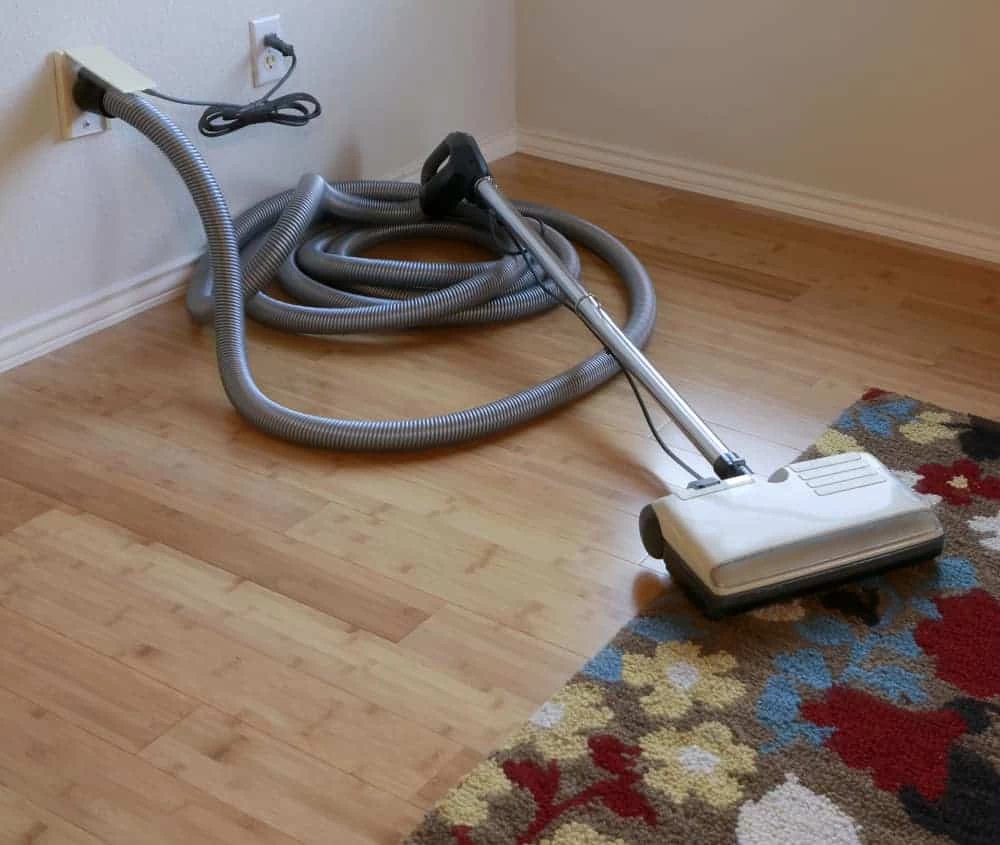
Hide-A-Hose solves that problem directly. The hose stores inside the wall tubing itself. When you need it, you pull out however much length you need. When you’re done, the system’s own suction retracts it back into the wall automatically. There’s nothing to coil, nothing to store, and nothing to trip over.
For existing homes, this matters more than it does for new construction. In a new build, homeowners tend to plan around the hose — dedicated storage closets, hose management hooks, that kind of thing. In an existing home, there’s rarely a natural place for a 30-foot hose to live, and the workarounds get old quickly. Hide-A-Hose makes the retrofit feel like the system was always part of the home.
Central vacuum systems deliver three to five times more suction than portable vacuums — not because of any single component, but because the power unit is significantly larger than anything portable and isn’t constrained by the need to be carried around. The motor sits in your basement, runs cooler, and lasts longer than a portable unit that heats up inside its own housing. System lifespans of ten to twenty years are typical with proper maintenance, compared to three to seven years for most portable vacuums.
For Nassau County homeowners with pets — and based on the conversations we have, that’s a significant portion of our customers — the combination of stronger suction and outside exhaust makes a real difference. Pet dander is one of the most persistent indoor allergens, and a system that actually removes it from the home rather than recirculating it through an exhaust filter is a different category of solution than anything portable.
When Is the Right Time to Install a Central Vacuum in Your Nassau County Home?
The honest answer is: the best time is whenever your walls are already open. The second-best time is before that window closes on your next renovation. And if you don’t have a renovation on the horizon, a retrofit in Nassau County’s housing stock is more feasible than most homeowners assume — it just takes a proper assessment of your specific floor plan before anyone picks up a drill.
If you’re planning a kitchen or bathroom renovation, or if you’re simply tired of the portable vacuum cycle and want to understand what’s actually involved in a retrofit, DuraVac, Inc. offers a free consultation — no commitment, just a real assessment of your home and an honest answer about what installation would look like for your specific situation.