
Summary:
You already own a good vacuum. Maybe a Dyson you’ve had for years, one that’s done a decent job. So why does the question of central vacuum keep coming up?
For a lot of Nassau County homeowners — especially those with pets, kids, allergies, or older homes — the honest answer is that a portable vacuum, even a great one, starts to show its limits. The battery dies mid-clean. The allergy symptoms don’t quite go away. The pet hair keeps coming back.
This isn’t a takedown of Dyson. It’s a real comparison. By the end, you’ll know which system actually makes sense for your home — and why.
How Central Vacuum Cleaner Systems Work
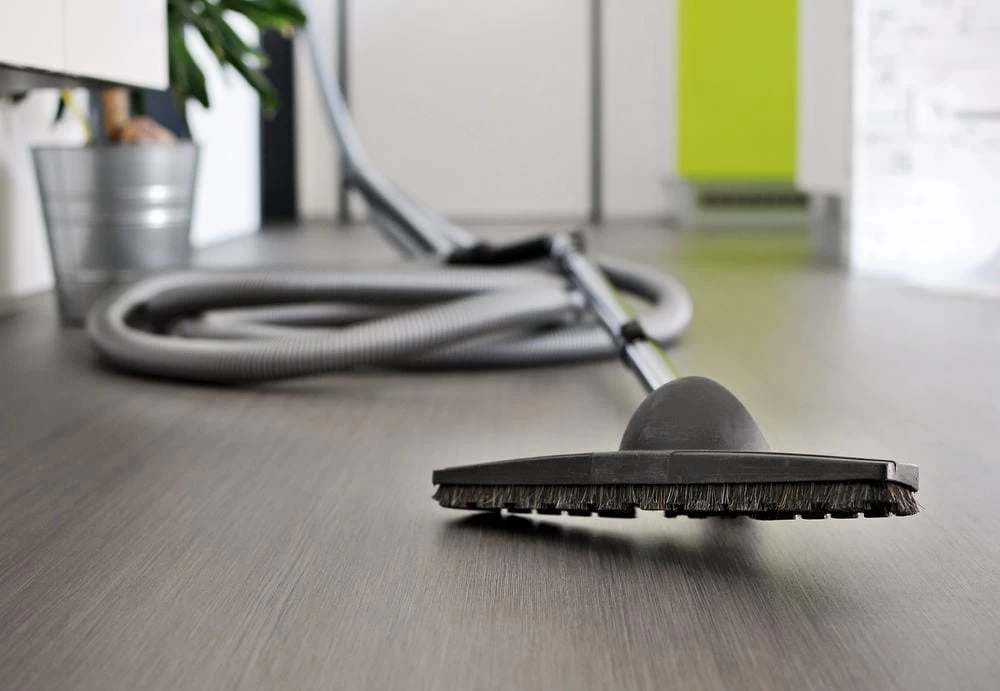
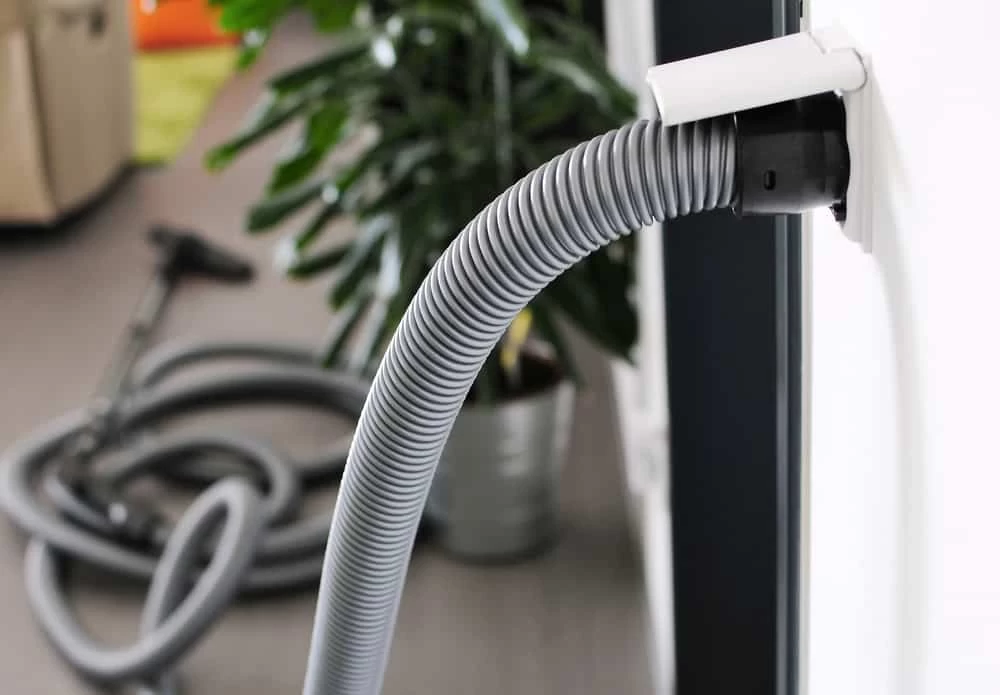
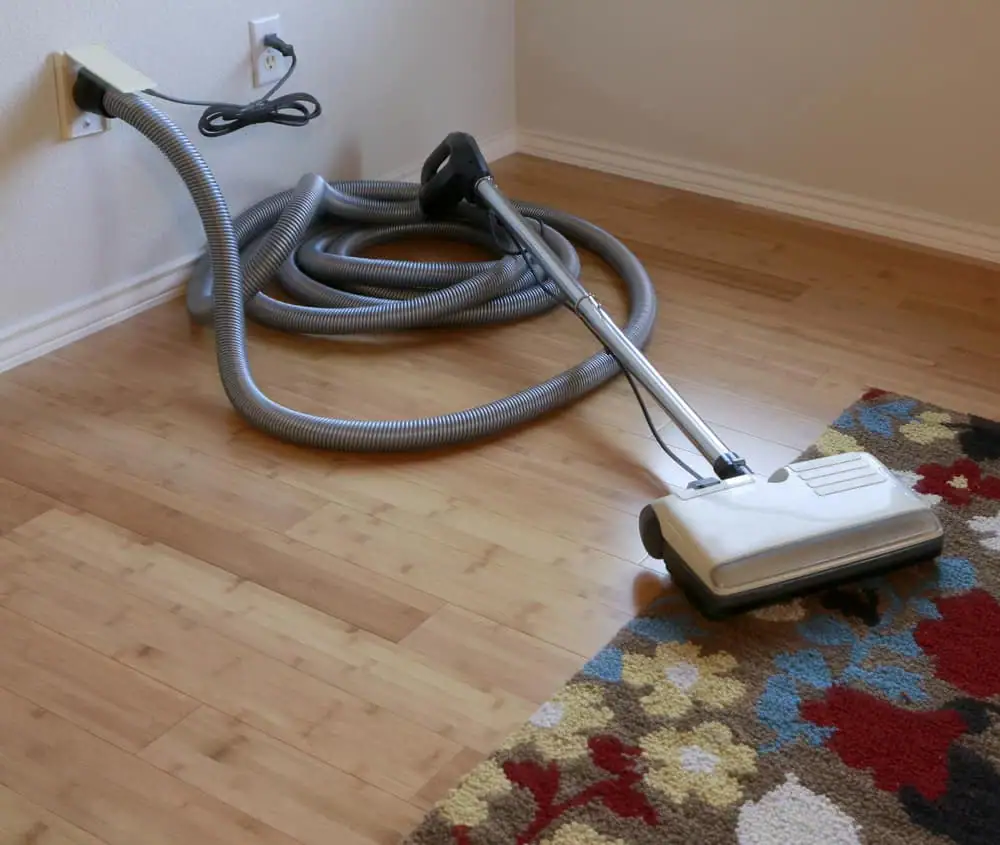
A central vacuum cleaner system is a built-in cleaning setup where the motor and collection canister are permanently installed in a utility area — typically a basement, garage, or mechanical room. Lightweight inlets are placed throughout the home at wall level, and you plug a hose directly into whichever one is closest to where you’re cleaning.
There’s no heavy machine to carry from room to room. No cord to manage. The motor runs in another part of the house entirely, which is why the sound level in your living space is dramatically reduced — you hear air moving through the hose, not a motor running next to you.
The other key difference: the exhaust goes outside your living space. Portable vacuums, including Dysons with HEPA filters, still push air back into the room. A central system removes what it picks up and keeps it out.
Suction Power: Central Vacuum vs. Dyson
Suction power in vacuums is measured in air watts, and this is where the comparison gets concrete. Central vacuum systems typically deliver between 500 and 700 air watts of suction. The Dyson V15 — one of the most powerful cordless vacuums on the market — maxes out at 240 air watts. The Dyson Ball Animal 3 Extra, their strongest corded upright, comes in around 290 air watts. That’s roughly a three-to-one difference at the top end.
What does that mean in practice? It means a central vacuum pulls embedded pet hair out of carpet fibers that a portable vacuum passes over. It means dust that’s worked its way into baseboards and upholstery actually gets removed, not just disturbed. For a post-WWII colonial in Levittown or a split-level in Merrick, where decades of household life have settled into every surface, that difference in pulling force is real.
The brands we install — NuTone, Beam, Vacuflo — are engineered specifically for whole-home performance. NuTone’s Pure Power series, for example, operates in the 550–700 air watt range. These aren’t numbers inflated by a single test mode. They’re the sustained suction the system delivers throughout your entire cleaning session.
And that’s the other thing worth saying: there’s no battery in a central vacuum. The Dyson V15 advertises 60 minutes of runtime, but on the suction setting that actually cleans effectively, you’re looking at 15 to 20 minutes before it needs a rest. For a two-story home in Garden City or a larger ranch in Massapequa, that means stopping mid-clean, waiting for a recharge, and starting again. A central system runs as long as you need it to, at full power, start to finish.
Allergen Removal: Why Central Vacuum Outperforms Portable Systems
This is the question that matters most for a significant portion of Nassau County homeowners. Long Island’s fall ragweed season is serious — it’s one of the heaviest pollen periods in the Northeast. Spring brings tree and grass pollen from Eisenhower Park, Bethpage State Park, and the dense tree canopy across the North Shore. Along the South Shore in Oceanside, Long Beach, Rockville Centre, and Freeport, coastal humidity accelerates mold growth and dust mite proliferation year-round.
Dyson’s HEPA filtration is genuinely good. It captures particles down to 0.3 microns, which includes most common allergens. The problem isn’t the filter — it’s what happens to the exhaust. Even a well-filtered portable vacuum pushes air back into the room after it passes through the machine. Fine particles that made it through, or that were stirred up during vacuuming, end up back in the air you breathe.
Central vacuum systems work differently. The exhaust is vented outside the living space entirely — to the collection unit in your basement or garage, and from there out of the home. Allergens don’t recirculate. The EPA has specifically cited central vacuum systems as a method for reducing dust mites, pollens, and animal dander in the home environment. One of our customers who made the switch put it plainly: “I suffer from allergies. I’m so happy I did — my breathing and symptoms are noticeably better.”
Central vacuum use has been shown to improve allergy symptoms by up to 61 percent. For a household where someone wakes up congested every morning or dreads vacuuming season, that outcome is the whole argument.
Installing Central Vacuum in an Existing Nassau County Home
The most common hesitation we hear from Nassau County homeowners isn’t about performance — it’s about installation. People assume retrofitting a central vacuum into an existing home means torn-up walls, a week of disruption, and a bill that doesn’t make sense for a house they’re not sure they’ll stay in forever.
None of that is accurate. Most Long Island home installations complete in six to eight hours. Our team routes the ductwork through walls and between floors, places inlet valves at strategic points so the hose reaches every area of the home, tests each inlet for proper suction and airflow, and walks you through how the system works before we leave. The walls stay intact. The process is clean.
Nassau County’s housing stock — much of it built in the 1940s through 1970s — is actually well-suited for retrofit installations. These homes have accessible wall cavities and standard construction that makes routing straightforward.
Hide-A-Hose: The Solution to Central Vacuum Storage
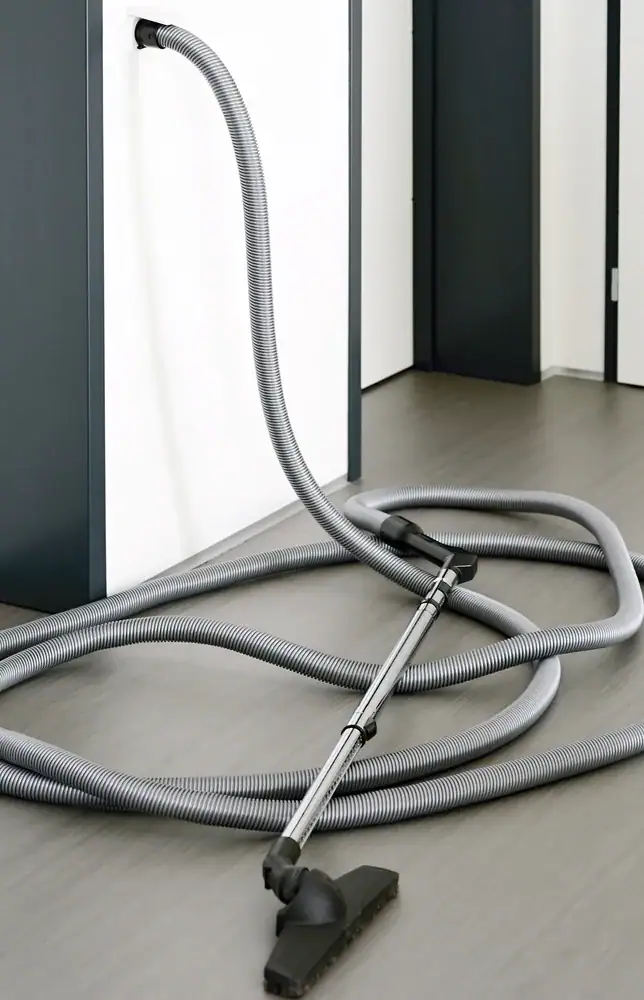
The single most common objection to central vacuum — even from people who are sold on the performance — is the hose. A traditional central vacuum hose runs 30 feet or more. After cleaning, you’re coiling it up, finding somewhere to store it, and dealing with it again next time. For homeowners managing busy households in East Garden City or Hicksville, that friction is enough to keep them with a Dyson.
Hide-A-Hose is the answer to that objection, and it’s one of our specialties. With this system, the hose lives inside the wall. When you’re ready to clean, you pull out only as much hose as you need for the area you’re working in. When you’re done, you hold the hose near the inlet and the system’s own suction pulls it back into the wall automatically. There’s nothing to coil, nothing to store, nothing to trip over.
It’s the version of central vacuum most people don’t know exists. And once they see it, the hose concern disappears entirely. One of our customers described their experience after installation: “My kids even want to vacuum the house.” That’s not a small thing. When a system is genuinely easy to use, the whole household engages with it differently.
We’ve installed Hide-A-Hose systems throughout Nassau County — in two-story colonials, cape cods, and ranch homes alike. The system adapts to the home’s layout, not the other way around.
When a Dyson Still Makes Sense
Honest answer: sometimes it does.
If you’re renting, a central vacuum system isn’t the right call. You’re not investing in a home you own, and built-in systems don’t move with you. A high-quality portable vacuum makes far more sense in that situation.
If you live in a very small space — a studio or a one-bedroom apartment — the convenience advantage of central vacuum shrinks considerably. A Dyson in a 600-square-foot apartment is genuinely easy to manage. The case for a whole-home system gets stronger as square footage increases and floors multiply.
And if you’re someone who moves frequently or isn’t sure how long you’ll stay in your current home, the calculus changes. Central vacuum systems last 10 to 20 years with proper maintenance, which is significantly longer than the 8 to 10 years you’d expect from a portable vacuum. In Nassau County, where 82 percent of households are owner-occupied and the median home price sits at $775,000, most homeowners are in it for the long term — and the investment makes sense. But if your situation is different, it’s worth being honest about that before committing.
What we’d say to anyone genuinely on the fence: the performance difference is real, the installation is less disruptive than people expect, and the health outcomes for allergy households are well-documented. But the right system is the one that fits how you actually live. If you want to talk through your specific home and situation, that’s exactly what a free consultation is for — no pressure, just a real conversation about whether it makes sense.
Which Vacuum System Is Right for Your Nassau County Home?
For most Nassau County homeowners — particularly those with pets, allergies, multiple floors, or older homes that have been accumulating dust for decades — a central vacuum system outperforms a portable vacuum in every category that matters day to day. More suction, better allergen removal, no battery limitations, and quieter operation throughout the house.
Dyson makes excellent vacuums. But there’s a reason homeowners who’ve had both consistently say the same thing: once you have central vacuum, going back doesn’t make sense. One of our customers described it as “like having central air” — a permanent upgrade that just becomes part of how your home works.
If you’re curious whether your home is a good candidate, DuraVac Central Vacuum Specialists, Inc. is happy to take a look. We’ve been doing this on Long Island for over two decades, and a free consultation costs you nothing but a conversation.