Summary:
Most people assume a vacuum is a vacuum. You buy one, you use it until it dies, you buy another. But a central vacuum system isn’t an appliance — it’s built-in home infrastructure, the same category as your plumbing or electrical. It doesn’t sit in a closet. It lives inside your walls. And once you understand how it works, the portable vacuum you’ve been lugging up and down the stairs starts to feel like a workaround. This page explains what a central vacuum system actually is, how it works, and why Nassau County homes — most of them built before 1960 — are some of the best candidates for one.
What Central Vacuum Systems Are and How They Work
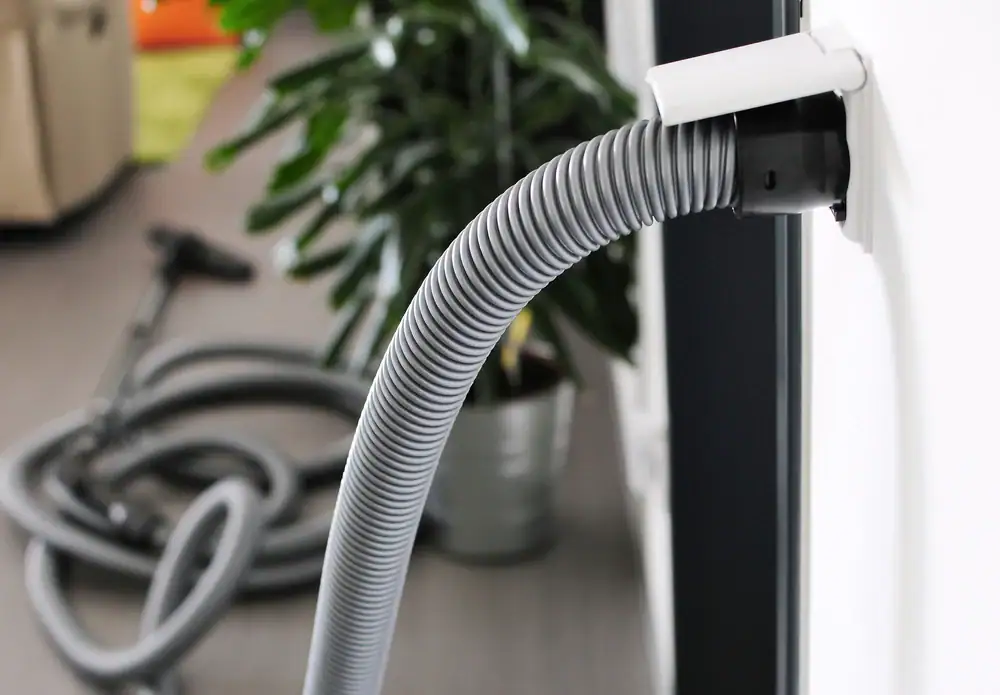
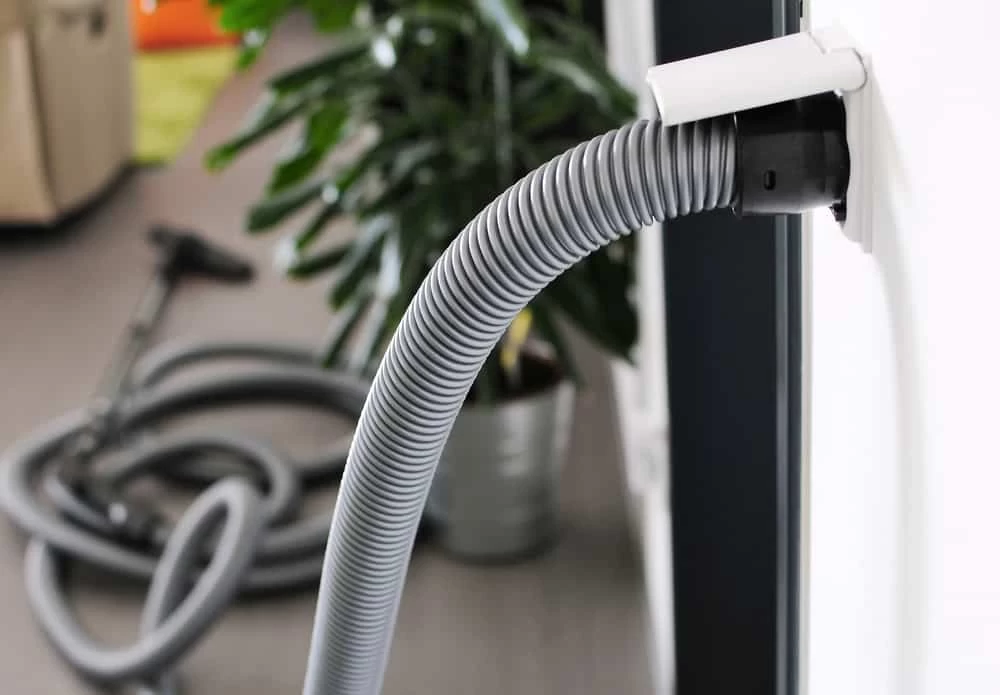
A central vacuum system is a permanently installed cleaning system built into the structure of your home. A powerful motor unit sits in a utility space — usually a basement, garage, or utility room — and connects to a network of PVC tubing that runs through your walls. Inlet valves are mounted at convenient points throughout the house, and when you plug in a hose and turn the system on, suction is generated from that central motor and delivered directly to wherever you’re cleaning.
The key difference from a portable vacuum isn’t just convenience. It’s what happens to the air. A portable vacuum filters exhaust air and blows it back into the room — along with fine particulates and allergens it didn’t fully capture. Our central vacuum systems exhaust that air through the in-wall tubing to the canister, which is located far from your living space and in many cases vents outside entirely. The room you’re cleaning stays cleaner during the process, not just after it.
How Much More Powerful Is a Central Vacuum Than a Portable?
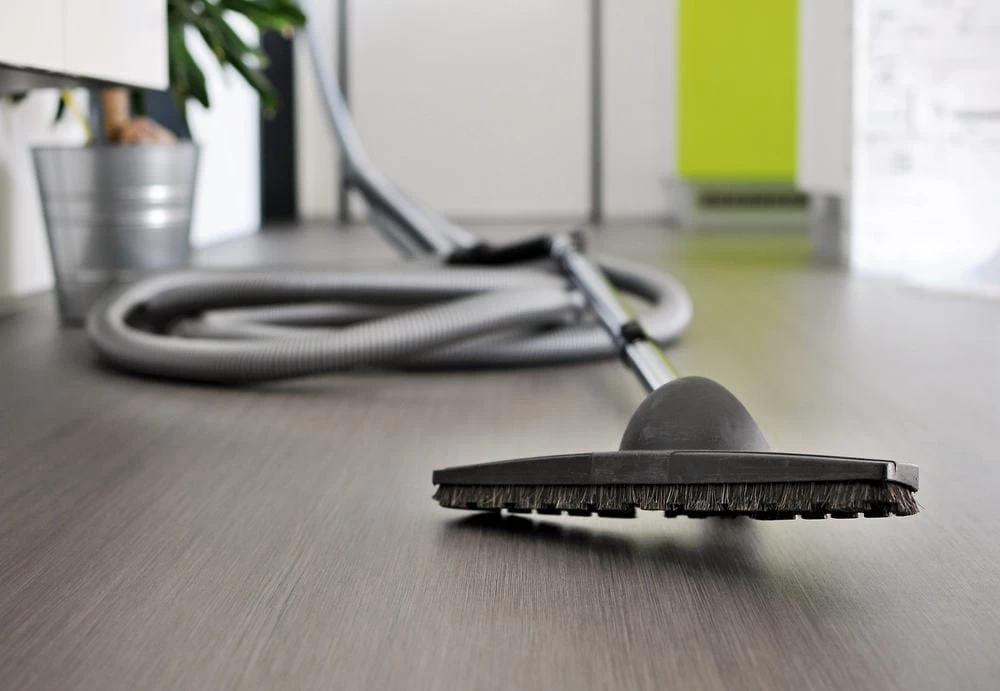
Central vacuum systems generate up to five times more suction power than conventional portable vacuums — including the premium brands most people compare them against. The reason is straightforward: when a motor doesn’t need to be portable, it doesn’t need to be small. The power unit in a central vacuum system is a full-size motor that doesn’t have to compromise on performance to fit inside a lightweight housing you can carry around.
What does that actually mean in practice? It means deeper cleaning in carpet fibers, better pickup on hard floors, and more effective removal of the fine particulates that a portable vacuum stirs up but doesn’t fully capture. For anyone dealing with allergies, asthma, or respiratory sensitivity, that gap in performance matters more than it might seem on paper.
A clinical study at the University of California at Davis found that central vacuum systems reduce allergy symptoms by as much as 61%. A separate market study found that 58% of users report significant improvements in indoor air quality and allergen reduction after installation. Those aren’t marketing claims — they’re the result of a system that actually removes debris from your living space rather than filtering it and sending it back.
The suction advantage also holds up over time. Because the motor isn’t exposed to the dust and debris it’s pulling in — that all goes to the canister — central vacuum motors tend to last significantly longer than portable units. A quality system, properly maintained, lasts well over 20 years. The in-wall piping is essentially permanent. Compare that to the average consumer-grade portable vacuum, which typically lasts three to five years before performance degrades or the unit fails entirely.
Smart Central Vacuum Systems and Home Integration
Central vacuum technology has kept pace with the rest of the home — and then some. Smart central vacuum systems integrate with home automation platforms, offer app-based controls, and in some cases include Wi-Fi-enabled monitoring that lets you check system status, receive maintenance alerts, or control operation remotely. According to industry data, 52% of central vacuum products introduced in 2023 included smart features of some kind.
For Nassau County homeowners who’ve already invested in smart thermostats, lighting systems, or security platforms, this matters. A central vacuum system doesn’t have to be the one part of your home that operates on a separate logic. Modern systems can be part of the same ecosystem — not an outlier from a different era.
That said, smart features aren’t the primary reason most people install a central vacuum system. They’re a bonus. The core value is still the same: a permanently installed, high-powered cleaning system that removes allergens from your living space rather than redistributing them, runs quietly enough that you can use it while someone is sleeping in another room, and doesn’t require you to drag anything heavy up a flight of stairs.
If you’re planning a home renovation or building out a more connected home environment, smart integration is worth knowing about — especially in Nassau County, where many homes are being updated with modern systems. The infrastructure you install now can support features that may become standard within the next decade. It’s one more reason a central vacuum system fits the category of home investment rather than home purchase.
Why Nassau County Homes Are Built for Central Vacuums
Nassau County’s median home was built in 1955. The Cape Cods, split-levels, and ranch homes that define the county’s housing stock weren’t designed with modern indoor air quality in mind — they were built fast, built to last, and built close together. Decades later, those same homes have accumulated layers of dust in carpets and flooring, older insulation materials that shed particulates over time, and the kind of settled indoor environment that portable vacuums were never really equipped to address.
The coastal geography doesn’t help. Long Island’s position between the Sound and the Atlantic creates a humid environment that promotes dust mite proliferation and mold growth — both of which are made worse by vacuums that recirculate air rather than exhaust it. Combine that with seasonal pollen and the foot traffic that comes with the family-heavy demographics of most Nassau County towns, and you have a cleaning challenge that most appliances aren’t built to handle.
Can a Central Vacuum System Be Installed in an Existing Nassau County Home?

This is the question most homeowners ask first — and the hesitation is understandable. If you’ve ever had any kind of in-wall work done, you know the disruption it can cause. The assumption is that running tubing through the walls of a finished home means significant drywall damage, and for a lot of people, that’s a dealbreaker before the conversation even starts.
The reality is different. Our skilled installers route PVC tubing through walls with precision, creating only the small openings needed to mount each inlet valve. In most cases, the finished result looks like a standard wall outlet — nothing more. Nassau County’s older housing stock actually works in favor of this process in some ways: finished basements are common in the Cape Cods and split-levels that dominate towns like Levittown, Merrick, Rockville Centre, and Massapequa, and a finished basement is the ideal location for the power unit. Attic access, also common in these home styles, provides useful routing paths for tubing runs to upper floors.
Retrofit installations — meaning systems installed in existing homes rather than new construction — represent 40 to 50% of the central vacuum market. This is not a niche application. It’s what the majority of installations actually are. The process is well-established, the techniques are refined, and our VDTA-certified installers know how to work with the specific quirks of older Long Island homes without turning the project into a renovation.
If your home was built between 1945 and 1975, which covers a significant portion of Nassau County’s housing stock, it is almost certainly a viable candidate for a central vacuum installation. The age of the home isn’t the obstacle most people assume it is. What matters more is the layout, the available utility space, and our installer’s experience with homes like yours.
Hide-A-Hose Systems: Why They Matter for Nassau County Homes
One of the oldest complaints about central vacuum systems is the hose. Traditional setups require a 30-foot hose that you carry from room to room, plug into an inlet valve, use, and then store somewhere. For some people, that’s no different from the portable vacuum they were trying to get away from — just louder at the motor end and quieter where you’re standing.
Hide-A-Hose solves this. Instead of storing the hose separately, the system stores it inside the wall — coiled within the tubing itself. When you need to vacuum, you pull the hose out of the inlet valve, drawing only as much length as you actually need for the space you’re working in. When you’re done, you let the system’s own suction retract the hose back into the wall automatically. There’s nothing to coil, nothing to store, and nothing to trip over.
For multi-level homes — and Nassau County has plenty of them, given the prevalence of split-levels and two-story Colonials in towns like Garden City, Great Neck, and Hicksville — this matters in a practical, daily-use way. You’re not carrying anything between floors. You’re not untangling 30 feet of hose in a hallway. You walk to the nearest inlet, pull out what you need, and clean.
We specialize in Hide-A-Hose installations, and it’s the system we recommend most often for existing homes where convenience is a priority alongside performance. It’s not a gimmick — it’s a meaningful improvement to how the system actually gets used day to day, and for most households, that’s what determines whether a central vacuum becomes a permanent part of how the home runs or ends up being used twice a year.
Is a Central Vacuum System Worth It for Nassau County Homeowners?
If you live in a detached single-family home in Nassau County, NY — which describes about 76% of the county’s housing stock — a central vacuum system is one of the few home improvements that delivers on every axis at once. It performs better than a portable vacuum, lasts longer, improves the air quality in your home, adds measurable resale value, and after the first week of use, most homeowners wonder why they waited.
The age of your home is not a barrier. The size of your home is not a barrier. The fact that you already own a vacuum is not a barrier. The question is really just whether the permanent infrastructure of your home should include a cleaning system that’s built to match it — or whether you’d rather keep replacing appliances every few years.
If you’re ready to find out what the right system looks like for your specific home, DuraVac, Inc. offers free consultations and has been installing and servicing central vacuum systems across Nassau County, NY and Long Island for decades. A real person answers the phone.