Summary:
If you’ve bought two or three vacuums in the last few years and your house still smells like dog, or your allergies still flare up even though you vacuum every day, you’re not doing anything wrong. The vacuum category itself is the problem. Portable vacuums — even expensive ones — are not designed to fully remove pet hair and dander from your home. They pick up what they can and push the rest back into the air through their exhaust.
A central vacuum system works differently. This guide explains exactly what to look for, what actually matters for pet owners, and why the right system for a Nassau County home might be different from what you’d find in a generic buying guide.
Top Rated Central Vacuum System Features for Pet Hair Removal
When people search for the best central vacuum for pet hair, they usually end up on product roundups that compare brand names and price tiers. What those guides rarely explain is which specific features inside the system are responsible for the results — and which ones are mostly marketing.
For pet owners, three things matter above everything else: the motor type, the filtration grade, and the power head. Get those three right and the system will outperform any portable vacuum you’ve ever owned. Get them wrong and you’ve spent real money on something that doesn’t solve the actual problem.
What Consumer Reports Won't Tell You About Central Vacuum Systems
Consumer Reports does a solid job rating portable vacuums, but their coverage of central vacuum systems is limited — and the criteria they use for portables don’t translate cleanly to central systems. Suction power, filtration grade, and motor durability work differently when the unit is mounted in your garage or utility room rather than rolling across your floor.
The metric that actually tells you how much cleaning power a system delivers is air watts — a calculation that combines airflow (CFM) and suction strength (water lift). For most Nassau County homes under 3,000 square feet, 500 to 600 air watts is the right range. Larger homes in the 3,000 to 5,000 square foot range need 600 to 700 air watts. Going bigger than you need doesn’t help — it just costs more.
Motor type matters just as much as the number. For a home with pets, a tangential bypass motor is the right call. In this design, the dirty air path and the motor’s cooling air are kept separate, which means pet hair and debris never pass through the motor itself. That extends the motor’s life significantly and keeps suction consistent over time. A quality tangential bypass motor with a 7.2-inch or larger fan diameter is the configuration we’d recommend for most pet households on Long Island.
Then there’s filtration. This is where a lot of buyers get misled. “HEPA-style” and “HEPA-like” are marketing terms — they don’t mean the filter meets the true HEPA standard, which captures 99.97% of particles down to 0.3 microns. Pet dander particles are small enough that a non-certified filter will let them pass through and back into your air.
True HEPA filtration in a central vacuum system is different from a portable vacuum with a “HEPA-type” filter for another reason too: the central system carries that air to a remote canister — often exhausted outside the living space entirely — so the dander leaves your home rather than recirculating through it. That distinction is why clinical research has found central vacuum systems can reduce allergy symptoms by up to 61% in affected households.
Electric vs. Air-Driven Power Heads: Which One Actually Picks Up Pet Hair?
The power head — the cleaning attachment that contacts your floor — is where a lot of central vacuum setups fall short for pet owners, and it’s the detail that gets glossed over most often in buying guides.
There are two types: electric (motorized) power heads and air-driven (turbine) power heads. An electric power head has its own motor that drives the brush roll independently of airflow. An air-driven head spins the brush roll using the vacuum’s suction to turn a turbine.
Pet hair works its way down into carpet fibers over time. Surface suction alone won’t pull it out consistently. An electric power head’s rotating brush roll agitates the carpet pile and brings embedded hair to the surface where the suction can grab it. Air-driven heads are less aggressive — they work fine on hard floors and for light surface pickup, but in a carpeted bedroom or on a staircase with a dog that sheds heavily, they’ll leave hair behind that an electric head would catch.
For Nassau County homes with carpeted bedrooms, hallways, or finished basements — which describes a large portion of the Cape Cods, colonials, and split-levels built across communities like Massapequa, Levittown, and Merrick during the postwar decades — an electric motorized power head is the right choice. It’s not the cheapest option, but it’s the one that actually solves the problem you’re trying to solve.
One more thing worth knowing: if anyone in your household has allergies or asthma, the combination of a true HEPA filtration system and an electric power head is what the EPA and the American Lung Association both point toward when they talk about reducing indoor allergens. The EPA has specifically cited the benefit of vacuum systems that exhaust air outside the living space — which is exactly how a properly installed central vacuum works.
Wet Dry Central Vacuum Options for Pet Owners
Most central vacuum conversations focus on dry debris — hair, dander, dust. But if you have pets, you already know the job isn’t always dry. Water bowl spills, accidents on the floor, muddy paw prints that haven’t dried yet — these are real situations that come up in any pet household, and a standard central vacuum isn’t designed to handle liquids.
A wet dry central vacuum unit changes that. These systems are built to handle both dry pickup and liquid cleanup without damaging the motor or the filtration system. For pet owners who want a single whole-home solution that covers every type of mess, it’s worth knowing the option exists.
Is a Wet Dry Central Vacuum Worth It for a Nassau County Home?
Whether a wet dry system makes sense depends on how you use your home and what your pets actually put you through on a regular basis. For households with dogs that come in from outside wet, or with cats that occasionally miss the litter box, or with any pet that’s had health issues — the ability to handle liquid pickup without hauling out a separate shop vac is genuinely useful.
That said, wet dry central vacuum systems aren’t the right fit for every home. They require a different canister configuration and specific maintenance procedures to keep the motor protected after liquid pickup. If your primary concern is pet hair and dander, and liquid messes are occasional rather than routine, a high-performance dry system with true HEPA filtration will likely serve you better.
The conversation worth having is about your actual day-to-day — not just the worst-case scenario. That’s the kind of thing we work through during a free in-home consultation, because the right answer genuinely depends on your home’s layout, your pets, and how you use the space.
Nassau County’s coastal humidity adds a layer to this worth mentioning. Communities along the South Shore — Wantagh, Seaford, East Atlantic Beach — and the bays off the North Shore see elevated indoor humidity levels in summer. Higher humidity accelerates dust mite reproduction, which compounds the allergen load that pet dander already creates. A sealed, true HEPA system that exhausts outside is particularly well-suited to these conditions, because it removes both the pet dander and the fine particulate matter that humid environments tend to stir up.
Small Central Vacuum Systems for Nassau County's Compact Homes
One of the most common assumptions we hear from Nassau County homeowners is that central vacuum systems are designed for large homes or new construction — and that their 1,400-square-foot Cape Cod or split-level doesn’t qualify. That assumption is wrong, and it’s costing people a genuinely better cleaning experience.
Nassau County’s housing stock is dominated by homes built between the 1940s and 1970s — Levittown-era construction that spread across communities from Hicksville to Valley Stream to Rockville Centre. These are compact, well-built homes with finished basements, carpeted bedrooms, and floor plans that make dragging a portable vacuum from room to room a genuine inconvenience. They’re also homes where pet hair accumulates in corners, on stairs, and in carpet pile that hasn’t been deep-cleaned in years.
Compact central vacuum systems exist specifically for homes in this size range. A properly sized unit for a home under 2,500 square feet delivers full central vacuum performance — strong suction, true HEPA filtration, motorized power head compatibility — without the cost or complexity of a system designed for a 5,000-square-foot house. Oversizing a system for a small home doesn’t improve performance; it just increases the price.
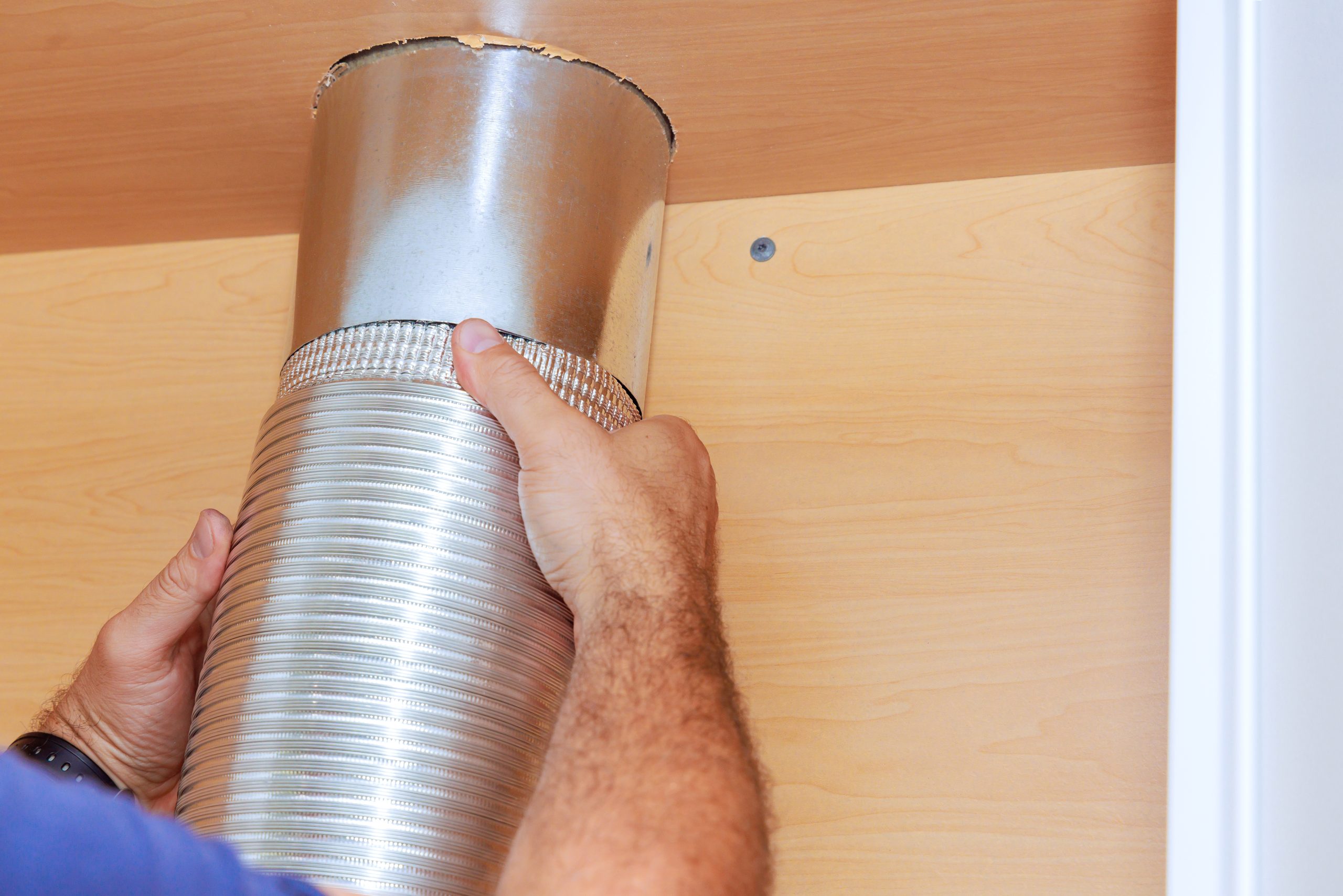
Retrofit installation in older Nassau County homes is something we’ve done across the county for decades. The process involves routing tubing through closets, utility chases, and behind cabinetry — not tearing open walls. In most cases, installation is completed in a single day. The inlet valves are flush-mounted and unobtrusive, and the motor unit sits in a garage, basement, or utility room where it runs quietly out of the way.
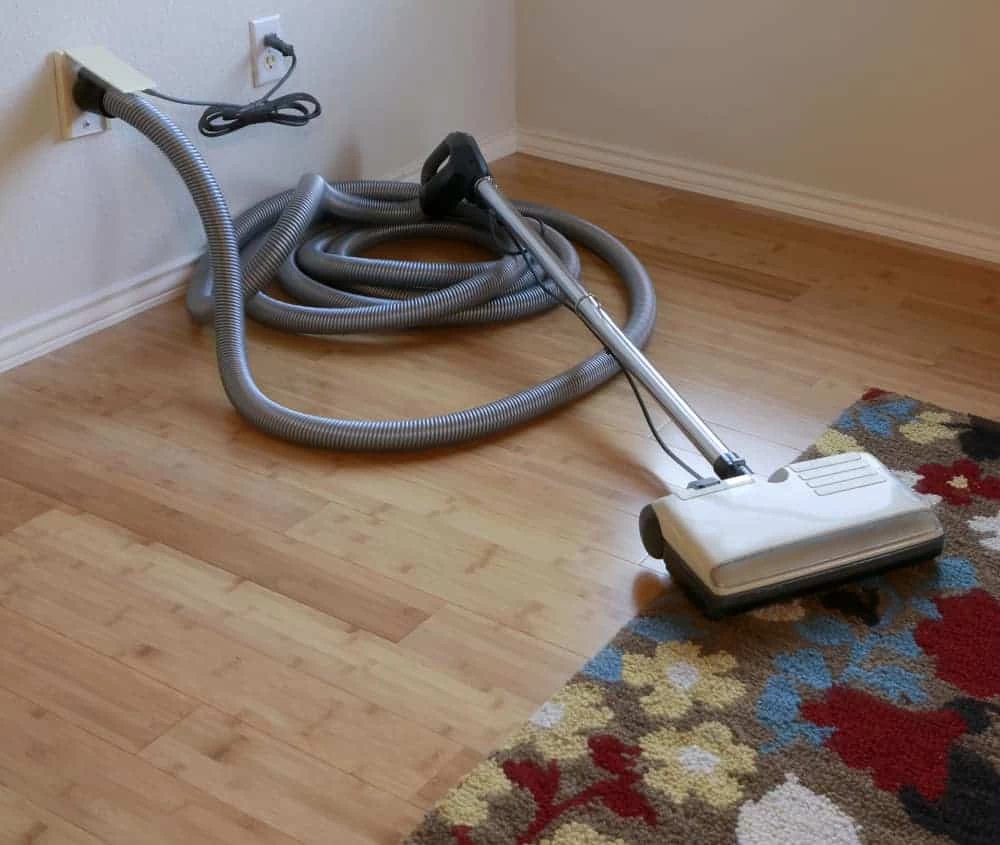
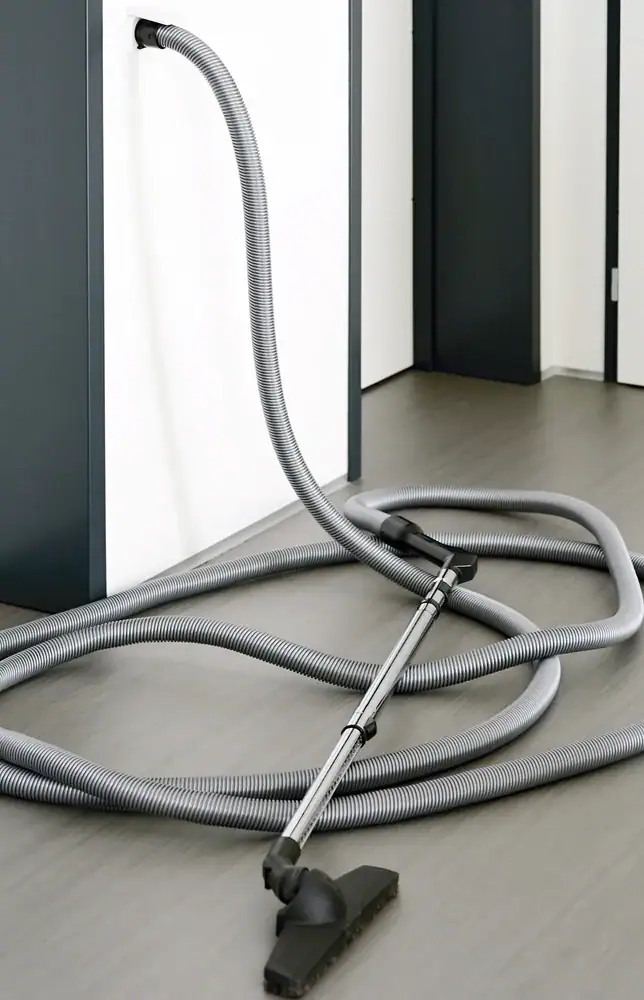
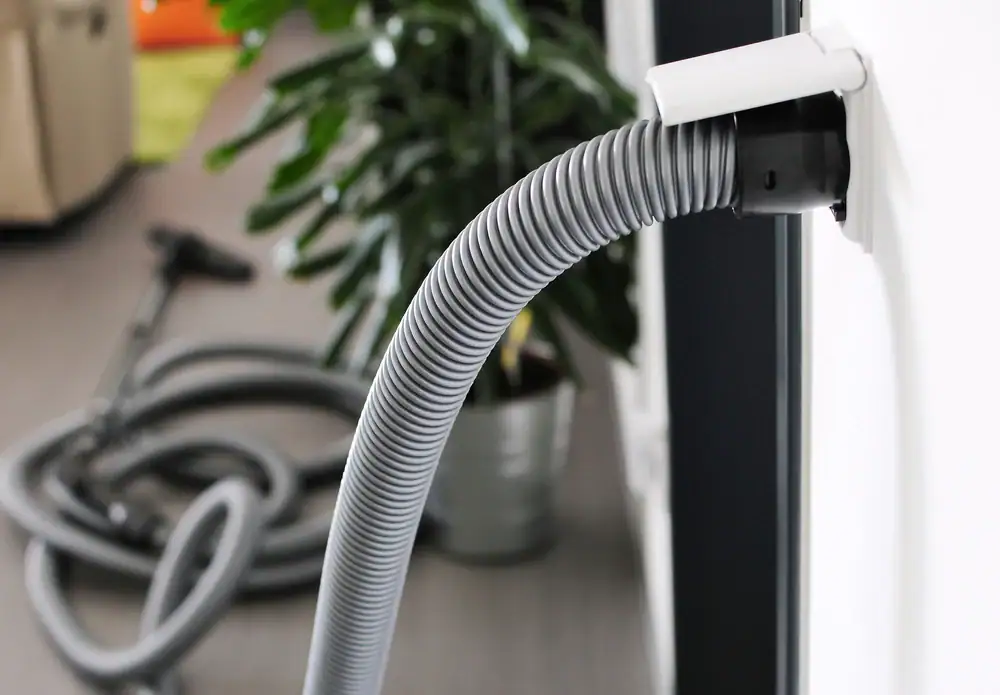
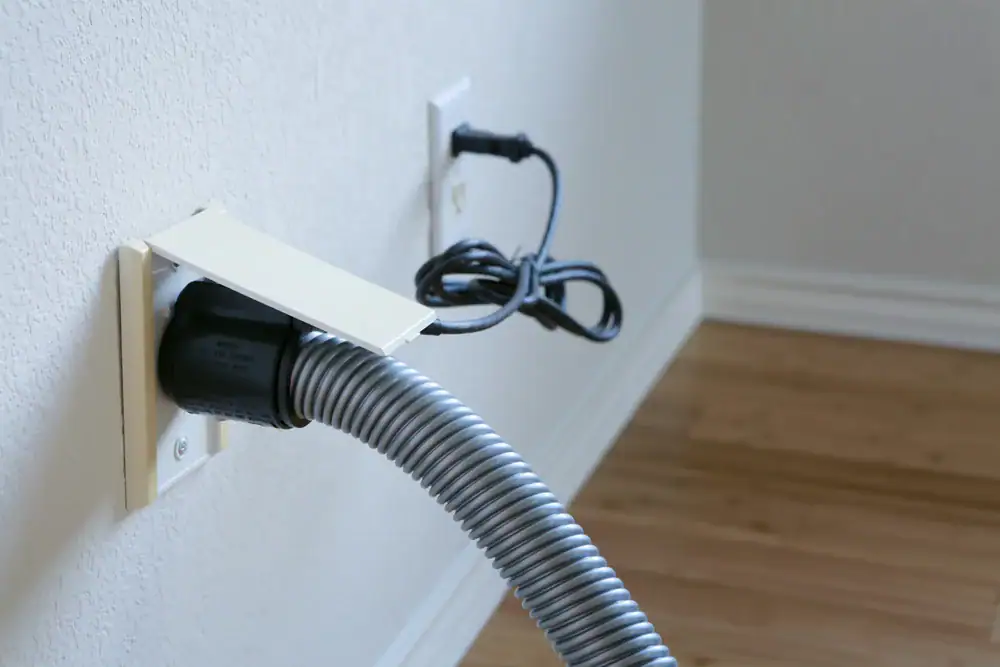
For pet owners in these homes, the Hide-A-Hose retractable system is worth knowing about. It stores the hose inside the wall itself — you pull out what you need, clean, and the system retracts it automatically when you’re done. No coiling, no storage, no dragging a hose through the hallway. For households that vacuum frequently because of shedding, that convenience factor is significant. It removes the biggest friction point between you and actually getting the job done.
Finding the Right Central Vacuum for Pet Hair in Nassau County
The short answer to “what’s the best central vacuum for pet hair” is: it depends on your home, your pets, and what you’re actually trying to fix. But the features that matter are consistent — a tangential bypass motor, true HEPA filtration, and an electric motorized power head. Get those right and you’ll notice the difference immediately, both in how clean your floors look and how the air in your home feels.
For Nassau County homeowners dealing with compact Levittown-era floor plans, coastal humidity, and pets that shed year-round, the right system isn’t the most powerful one on the market — it’s the one sized and configured for your specific home.
We offer free in-home consultations across Nassau County. Call 516-822-3060 and we’ll assess your home, your situation, and what will actually work — before you spend a dollar.