
Summary:
If you’ve been calling it a “built-in vacuum” or a “whole house vacuum” your entire life, you’re not wrong — that’s just what it was called when it was installed. The technical term is a central vacuum system, but the name doesn’t change what it does or what it needs when something goes wrong. What matters is that it’s built into your home, it’s supposed to make your life easier, and right now, it isn’t. This guide is for Nassau County homeowners who want straight answers: what breaks, what it costs to fix, when it’s worth repairing, and what to look for in a technician.
Built-In Vacuum Systems in Nassau County: Why Repair Matters More Than Replacement
Nassau County has a lot of older homes — Cape Cods, split-levels, and ranch houses built in the postwar decades when Levittown was going up and the rest of the county was filling in fast. Many of those homes were fitted with built-in vacuum systems as premium upgrades in the 1960s, 70s, and 80s. Some of those systems are still running today. Some aren’t.
The good news is that a built-in vacuum system is one of the most durable home systems ever installed. These things are built to last 20 to 30 years or longer with basic maintenance. The bad news is that most of them in Nassau County haven’t seen a technician in decades, and when they finally stop working, homeowners assume the worst. Usually, the problem is far more manageable than it looks.

Why Older Built-In Vacuum Systems Break Down — and What's Usually Wrong
The most common complaint we hear is weak suction. It’s also the easiest to misread. Homeowners often assume gradual suction loss means the motor is dying, but the actual cause is usually a clog somewhere in the pipe network, a worn-out hose, or a cracked joint in the in-wall piping. These are fixable problems — and none of them require opening your walls.
Motor failure does happen, especially in systems that are 30 or 40 years old and have never been serviced. When a motor goes, you’ll typically hear it before it stops entirely — a high-pitched whine, a burning smell, or a system that runs for a few minutes and then cuts out. That’s the motor telling you it’s on its last legs. Replacing a motor is a straightforward repair for a qualified technician, and it’s almost always cheaper than putting in a new system.
Inlet valves are another common failure point. These are the wall ports you plug the hose into, and they take a lot of mechanical wear over the years. A single inlet that won’t hold suction doesn’t mean your whole system is broken — it usually means that one valve needs to be replaced, which is a quick fix.
Older homes in Nassau County also have a specific challenge: many of them have been modified over the years. Finished basements, added dormers, enclosed garages — all of that DIY work can affect how the vacuum piping runs through the house, sometimes creating kinks, blockages, or disconnected joints that were never caught because the system seemed to keep working. It might have been working around the problem for years. A good diagnostic visit catches all of that.
One thing that surprises a lot of homeowners: the brand doesn’t need to be identifiable for us to repair it. If the label on your power unit is faded, the manual is long gone, and you have no idea who made the system, that’s fine. We work on all brands, including older and discontinued models. The system in your basement isn’t a mystery to us — we’ve seen most of them before.
Is It Worth Repairing a Built-In Vacuum, or Should You Replace It?
This is the question we get most often, and the honest answer is: repair is almost always the smarter move. A new central vacuum system installed in an existing home costs anywhere from $800 to $3,500, depending on the size of the home and the system you choose. Most repairs fall well below that range.
The national average for a central vacuum repair is around $322, with most jobs landing somewhere between $129 and $561. Even a motor replacement — one of the more expensive repairs — typically comes in well under the cost of a new system.
The math is pretty clear, but there’s also a practical argument. The in-wall piping in your home is already there. It’s already routed through your walls, connected to every room, and installed correctly — or at least it was when it went in. Replacing the whole system means keeping that piping anyway and just swapping out the power unit and inlets. If the piping is in good shape, there’s no reason to pay for a full replacement when a targeted repair does the same job.
The case for replacement is narrower than most people think. If the piping itself has deteriorated significantly — which can happen in very old systems with certain types of pipe — or if the home has been so heavily modified that the original layout no longer makes sense, then a full system evaluation might point toward replacement. But that’s not the starting assumption. It’s a conclusion you reach after a proper diagnosis, not before.
For Nassau County homeowners dealing with high property taxes and the ongoing cost of maintaining an older home, keeping a working system running is almost always the better financial decision. A built-in vacuum system that’s repaired and properly maintained can easily last another decade or more. That’s a lot of value for a repair call.
If you’ve recently bought an older home in Levittown, Hicksville, Merrick, or anywhere else in Nassau County and you’re not sure whether the system works or what shape it’s in, a diagnostic visit is the right first step. We can assess the full system — motor, piping, inlets, hose — and give you a clear picture of what you have and what it needs.
What Happens During a Built-In Vacuum Repair Service Call
A lot of homeowners put off calling for repair because they imagine it’s going to be complicated — technicians pulling up floors, cutting into drywall, making a mess. In practice, that’s rarely what happens. Most whole house vacuum repair is clean, contained, and completed in a single visit.
The process starts with a full system diagnosis. Before anything gets fixed, we figure out exactly what’s wrong. That means checking the power unit, testing suction at each inlet, inspecting the hose and attachments, and evaluating the overall system performance. A symptom like weak suction can have several different causes, and the right repair depends on finding the right one.
The Built-In Vacuum Diagnostic Process
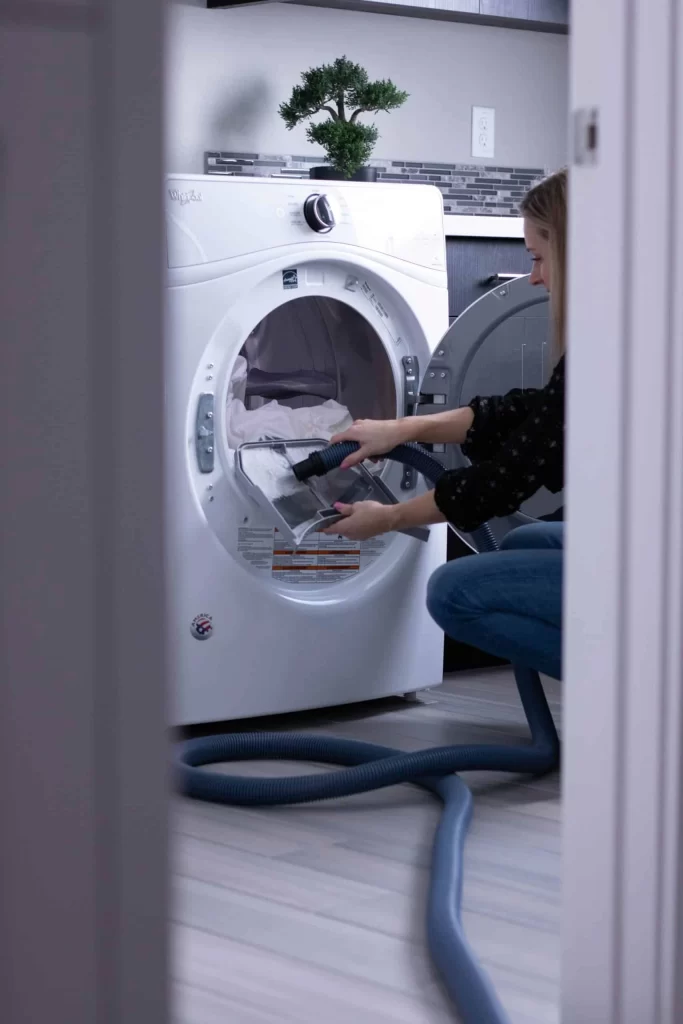
When one of our technicians arrives for a service call, the first thing they’re doing is listening — to you, and to the system. What you’ve noticed, when it started, whether there’s a smell or a sound, which inlets work and which don’t — all of that information helps narrow down the diagnosis before a single tool comes out.
From there, we work through the system methodically. We’ll test the motor for proper function and temperature, check the filter and collection unit, test each inlet valve for suction and seal, and run the hose through its full range to check for cracks or blockages. If there’s a clog in the piping — a common issue in older Nassau County homes where the system has been used for decades without a cleanout — we’ll locate it and clear it without opening any walls.
Inlet valve replacement, hose replacement, filter changes, and motor servicing can all be done on-site in a single visit. Motor replacement, if needed, is also typically completed the same day. We come prepared for the most common repairs, which means you’re not waiting on a return visit for parts.
A thorough diagnostic visit often uncovers issues beyond the immediate problem — a valve that’s starting to wear, a hose that’s cracking at the connection point, a filter that’s overdue for replacement. You don’t have to act on all of it at once, but knowing the full picture helps you make better decisions about your system going forward.
How to Find a Built-In Vacuum Repair Technician You Can Trust
The central vacuum repair market on Long Island isn’t huge, which means your options are limited — and the difference between a good technician and a bad one matters more than it would in a larger market. Here’s what to look for before you book anyone.
First, look for a technician who specializes in central vacuum systems, not a general appliance repair shop that happens to take these jobs on the side. The systems are specific enough that experience with them matters. A technician who works on central vacuums every day is going to diagnose your system faster, fix it more accurately, and catch problems that a generalist would miss.
Second, check for VDTA certification. The Vacuum Dealer’s Trade Association certifies technicians who have been evaluated against industry standards and who complete ongoing continuing education to stay current with system types and repair methods. It’s not a rubber-stamp credential — it requires real evaluation and ongoing commitment. Not every company in the Nassau County market holds it, and it’s worth asking before you schedule.
Third, pay attention to how easy it is to reach them. If you’re calling around and getting voicemails, automated menus, or callbacks that never come, that’s a preview of what the service experience will look like. A company where a real person answers the phone is genuinely rare in this industry, and it matters when your system breaks down on a Tuesday morning and you need to get someone out before the week is over.
Finally, ask whether we service all brands. If you don’t know what brand your system is — which is common in older Nassau County homes — you need a technician who can work with whatever they find. A company that only services a short list of current brands is going to turn away a significant portion of the older Long Island housing market.
Experience with the specific character of Nassau County homes is also worth considering. Postwar Cape Cods, split-levels, and heavily modified older homes present repair challenges that are different from newer construction. A technician who has been working in this market for years has seen those configurations before and knows how to work within them.
Getting Your Built-In Vacuum Working Again in Nassau County
Most built-in vacuum problems in older Nassau County homes are fixable. The system that’s been sitting unused in your Levittown Cape Cod or your Merrick split-level is probably not as far gone as you think. A diagnostic visit is usually all it takes to find out what’s wrong and what it costs to make it right — and in most cases, the answer is less complicated and less expensive than homeowners expect.
The right technician will assess the full system, give you an honest read on what it needs, and complete most repairs in a single visit without making a mess of your home. DuraVac Central Vacuum Specialists, Inc. has been doing this work on Long Island for over 50 years. If you’re ready to find out what’s going on with your system, give us a call — we’ll take it from there.