Summary:
If you’ve been trying to figure out what a central vacuum system costs, you’ve probably run into the same wall most Nassau County homeowners hit — a national range that tells you almost nothing. “$1,094 to $3,000” sounds helpful until you realize it’s averaged across the entire country and doesn’t account for Long Island labor rates, your home’s age, or the fact that your colonial in Garden City is nothing like a new build in Arizona. We’ve put together this guide to give you the actual numbers for Nassau County, explain what drives the price in either direction, and help you figure out whether now is the right time to move forward.
Central Vacuum System Cost: What Nassau County Homeowners Actually Pay
The honest answer is that a central vacuum system in Nassau County typically runs between $1,200 and $4,200, depending on your home’s size and how complicated the installation is. For a standard 2,000 square foot home, most homeowners land on around $2,500 for a complete system with professional installation — power unit, inlet valves, piping, hose, and attachments included.
That’s higher than the national average, and for good reason. New York metro labor costs run above the national baseline, and Nassau County’s housing stock — heavily weighted toward post-WWII colonials, Cape Cods, and split-levels — often requires more careful pipe routing than a newer build with open framing. You’re not paying more because someone is taking advantage of you. You’re paying more because the work is genuinely more involved here than it is in most of the country.
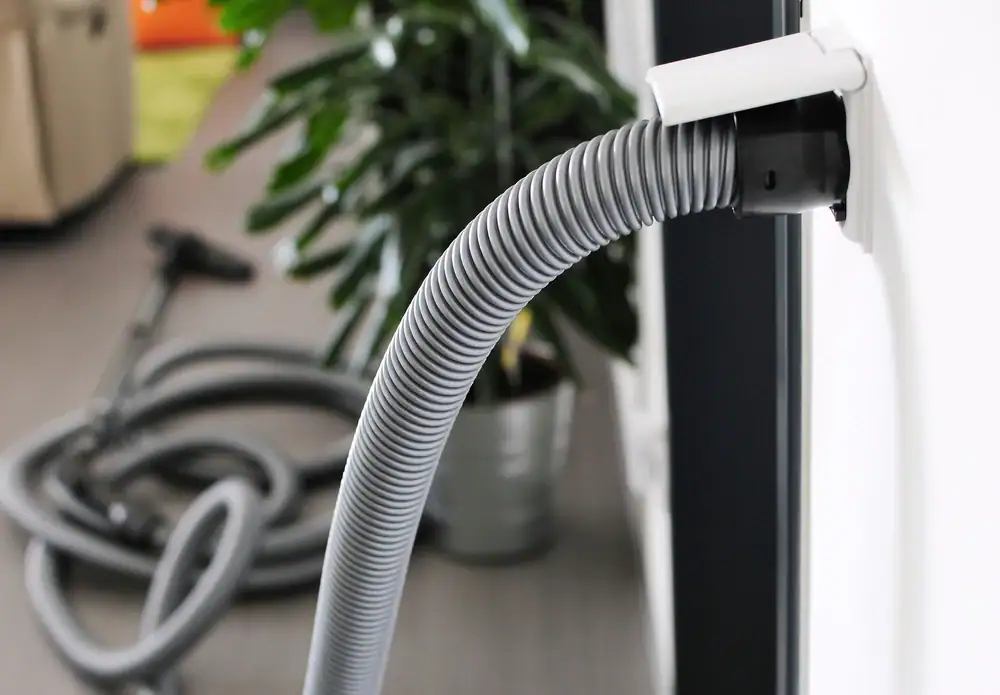
Cost of Built In Vacuum System by Home Size and Complexity
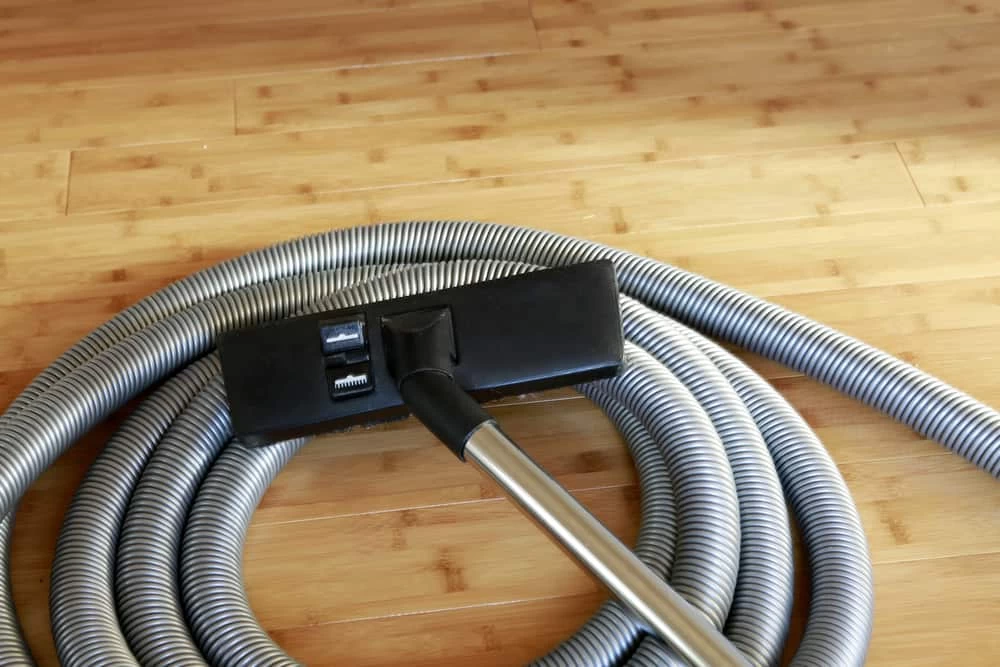
Home size is the single biggest variable in what you’ll pay. Larger homes need more inlet valves — typically one or two per floor — and more linear footage of pipe running through walls, attics, and basements. A 30-foot hose should reach every corner of the home from each inlet, so proper placement matters.
Get it wrong and you’re either adding extra inlets later or living with dead zones. For most Nassau County homes, three to six inlets covers the full footprint. A smaller Cape Cod in Levittown might need three. A larger two-story colonial in Manhasset or a multi-level home in Great Neck could need five or six, which adds both materials and labor time.
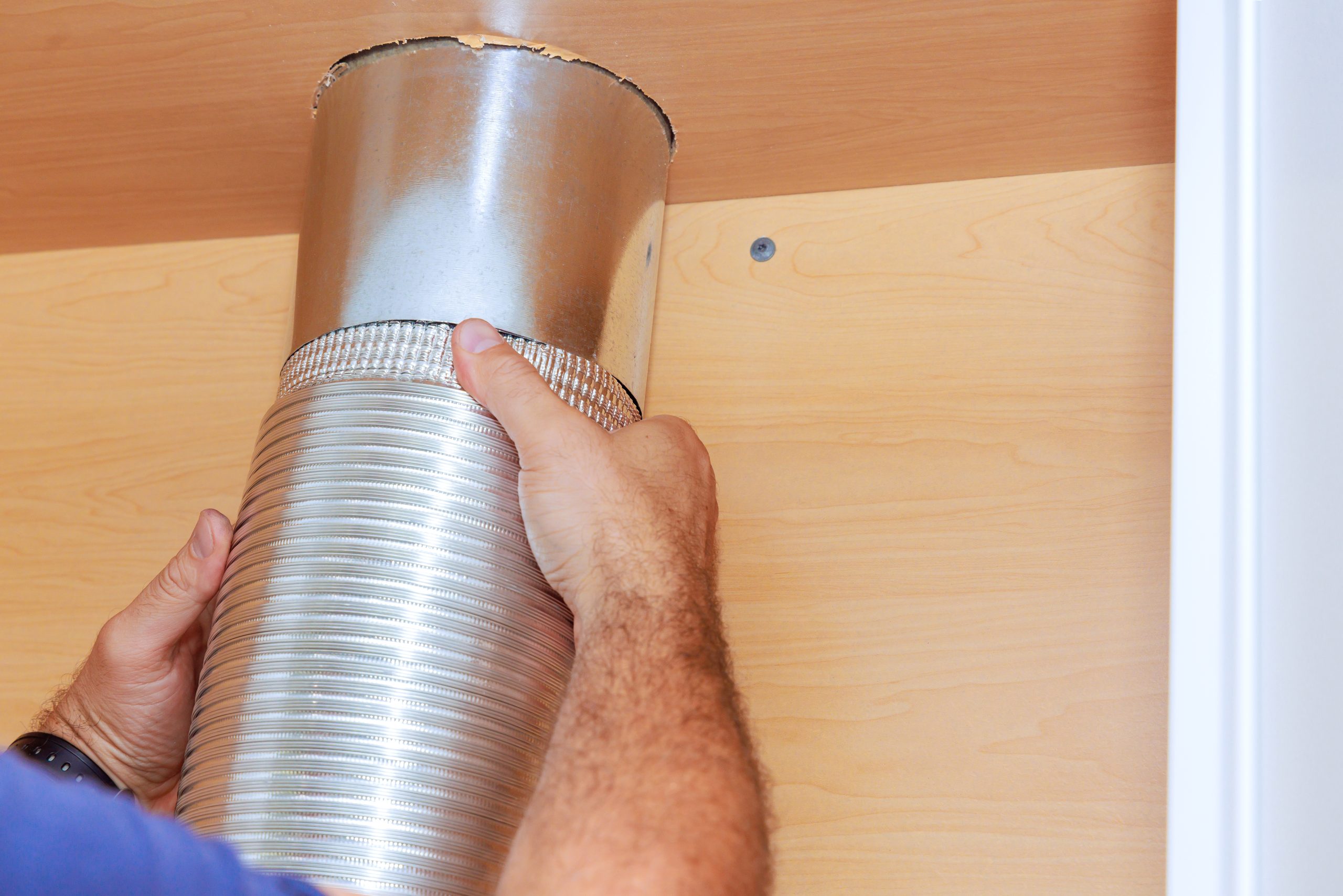
The power unit itself — the motor and canister that typically lives in a garage or basement — runs between $500 and $1,500 depending on brand and performance tier. Premium units from brands like Beam, NuTone, or Vacuflo sit at the higher end of that range. Inlet valves, piping, and fittings add roughly $300 to $800. A hose and attachment kit runs another $150 to $600.
Labor is where the regional difference really shows up. In Nassau County, professional installation labor typically falls between $400 and $2,000 depending on the complexity of the job. A straightforward install in a home with easy attic and basement access lands toward the lower end. A retrofit in a fully finished home with limited access points takes more time and skill — and costs accordingly.
One thing worth knowing: retrofitting an existing home costs $400 to $1,000 more than installing during new construction. That’s not a surcharge — it’s the actual additional labor involved in routing pipe through finished spaces without tearing anything apart. The good news is that Nassau County’s older housing stock, despite its age, often has accessible attic and basement runs that make clean retrofits more achievable than homeowners expect.
Is a Hide-A-Hose System Worth the Extra Cost?
The most common complaint about central vacuum systems — even from people who love them — is managing the hose. A standard 30-foot hose does the job, but pulling it out, dragging it room to room, and coiling it back up gets old. If that’s your hesitation, it’s a legitimate one, and it’s worth knowing there’s a direct solution.
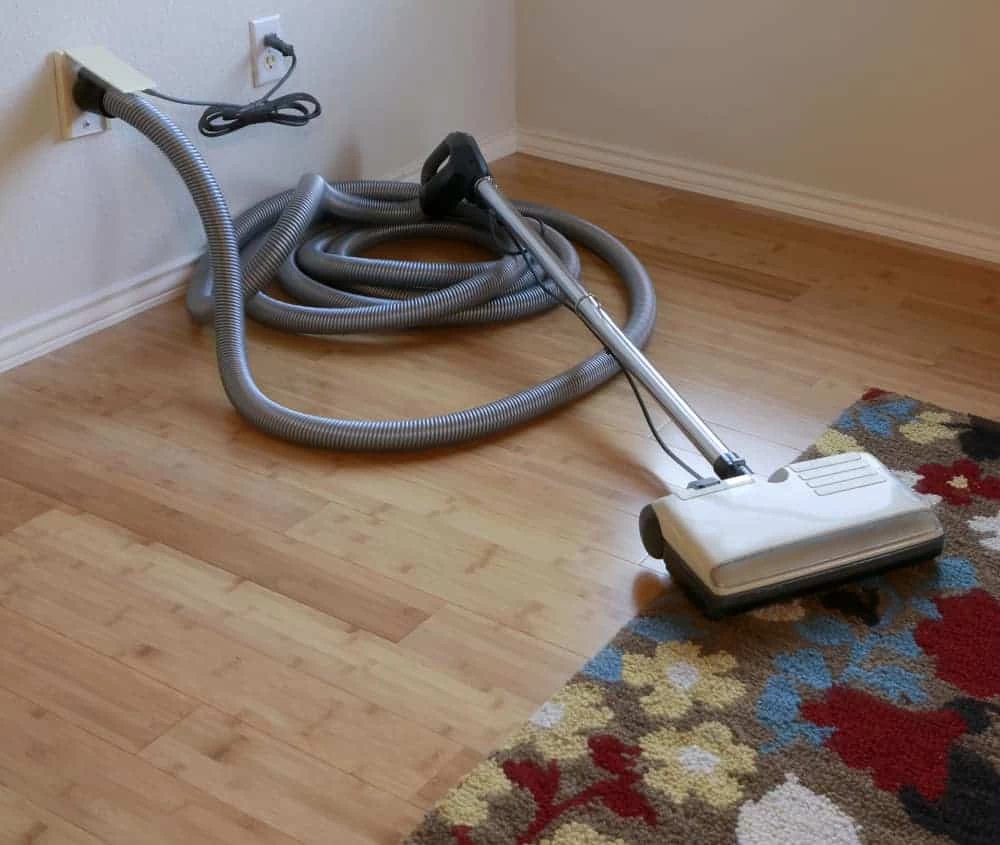
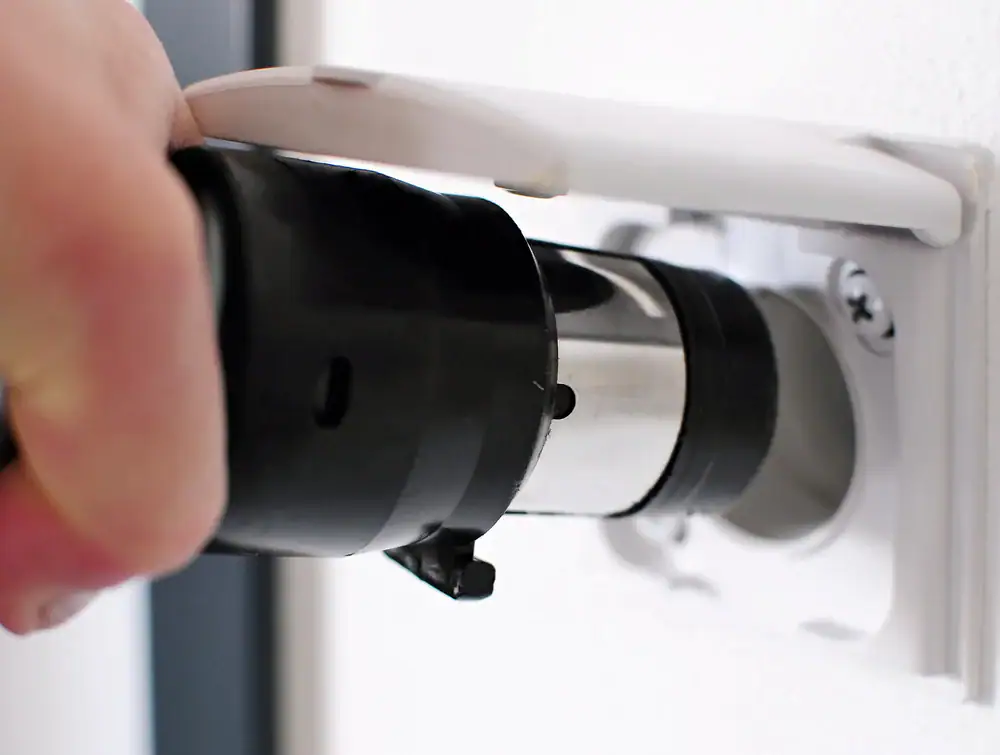
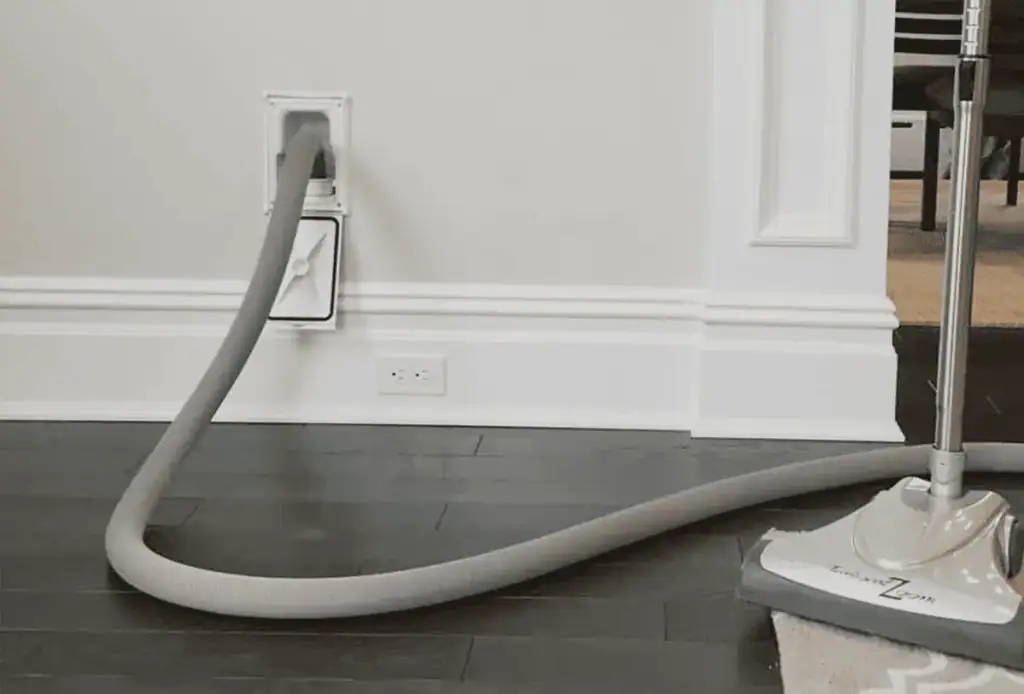
Hide-A-Hose is a retractable in-wall hose system that stores entirely inside the wall cavity. When you need it, you pull it out from the inlet. When you’re done, the system’s own suction retracts it automatically. No coiling, no storage, no hose sitting in a closet. It’s a meaningful upgrade over a standard system, and it’s one of the features we specialize in at DuraVac, Inc.
The tradeoff is cost. Hide-A-Hose installation runs at a premium above a standard system — the exact difference depends on your home’s layout and how many inlets you’re outfitting. It’s not a minor add-on, but for homeowners who want the system to be as seamless as possible, it’s often the feature that takes a central vacuum from “nice to have” to something the whole household actually uses every day. More than one of our customers has told us their kids started vacuuming after we installed it. That’s not a coincidence.
If you’re on the fence about whether the upgrade is worth it for your home specifically, that’s exactly the kind of question we walk through during a free consultation. The answer depends on your layout, your habits, and how you use the space — not a one-size-fits-all recommendation.
What Actually Moves Central Vacuum System Cost in Nassau County
Beyond square footage, a few specific factors tend to push Nassau County installations toward the higher or lower end of the $1,200 to $4,200 range. Understanding them helps you have a more informed conversation with any installer — and makes it easier to spot a quote that doesn’t add up.
The motor type matters more than most buyers realize. Tangential bypass motors — the premium standard — use a separate cooling fan that operates independently from the vacuum airstream. This keeps the motor running cooler, extends its lifespan significantly, and is worth paying for. Thru-flow motors are cheaper upfront but run hotter and wear out faster.
Filtration type also affects both price and performance. HEPA filtration, which captures particles as small as 0.3 microns at 99.97% efficiency, costs more than basic filtration but makes a real difference for allergy sufferers — which, given Long Island’s ragweed season, is a relevant consideration for a lot of Nassau County households.
How Nassau County's Older Homes Affect Installation Cost
Nassau County’s housing stock is predominantly post-WWII construction — the Levittown-era colonials, split-levels, and Cape Cods that define so much of the county’s residential landscape. These homes were built between roughly the 1940s and 1970s, and while they’ve been renovated and updated in countless ways over the decades, their bones are consistent: accessible attics, full basements, and standard wall cavities that professional installers know how to work with.
The age of these homes doesn’t make central vacuum installation harder in most cases — it actually makes it more predictable. An experienced installer knows where the runs will go before the first pipe is cut. What does add complexity is when a home has been heavily renovated, has finished ceilings that limit attic access, or has an unusual floor plan that requires extra inlets to achieve full coverage. Those situations push toward the higher end of the labor range, and any honest installer will tell you that upfront after walking the home.
Where Nassau County’s older stock does create a meaningful variable is in homes that have already had central vacuum systems installed — and haven’t been serviced in years. If you’re buying a home in Rockville Centre, NY, Merrick, NY, or Plainview, NY and it already has a central vacuum rough-in, it’s worth having a technician assess the existing system before assuming it’s functional. Older motors and valves may need replacement, and in some cases a full system upgrade makes more financial sense than repairing aging components. The general rule: if repair costs exceed half the price of a new system, especially on a unit more than ten years old, replacement is usually the smarter call.
One more thing specific to Nassau County: the county’s coastal position — bordered by Long Island Sound to the north and the Atlantic Ocean and bays to the south — creates elevated indoor humidity levels that encourage mold growth in older homes. A central vacuum system vented to the outside removes mold spores from the living environment rather than recirculating them. That outside-venting configuration also qualifies for LEED for Homes certification points and up to five Indoor Environmental Quality points under the NAHB Green Building Standard — a detail that matters to homeowners thinking about long-term resale value.
Why August Is the Smart Time to Install in Nassau County
Timing an installation isn’t something most people think about, but in Nassau County it actually matters. Spring is the busiest season for home services across the board — new homebuyers are moving in, renovation projects are starting, and installer schedules fill up fast. By contrast, late summer tends to be a window where scheduling is more flexible and the process moves more quickly from consultation to completed job.
There’s also a practical reason to move in August specifically: Long Island’s ragweed season peaks in late August through October, and it’s one of the more intense ragweed environments in the Northeast. If allergy symptoms are part of why you’re considering a central vacuum system — and for a lot of Nassau County homeowners, they are — installing before the season peaks means you’re protected when it matters most, not scrambling to book an appointment after the worst of it has already hit.
The real estate angle is worth mentioning too. Nassau County’s housing market has been moving fast — homes selling at or above asking price, with a median closed sale price for single-family homes around $840,000 as of late 2025. Homeowners who purchased in the spring or early summer buying season are often in the home improvement phase by August, making decisions about upgrades before fall routines lock up their schedules. A central vacuum system on an $840,000 home represents a fraction of the property’s value — less than 0.3% at the $2,500 benchmark — but it’s a permanent feature that improves daily life and holds real appeal at resale.
Professional Builders Magazine has ranked indoor air quality as the second most important factor for homebuyers, right behind energy efficiency. That’s not a niche concern. It’s a mainstream priority that a central vacuum system directly addresses. The combination of better scheduling availability, the approaching allergy season, and the post-move upgrade window makes late summer the most practical time to act — not because of any artificial urgency, but because the timing genuinely lines up in your favor.
Getting a Straight Answer on Central Vacuum System Price in Nassau County
Most homeowners who research central vacuum systems go through the same frustrating cycle — national ranges that don’t apply locally, vague estimates from providers who haven’t seen the home, and a general sense that nobody will just give them a real number. The actual range for Nassau County is $1,200 to $4,200, with $2,500 being the realistic benchmark for a standard 2,000 square foot home. What moves the price is your home’s size, its layout, the system components you choose, and whether you’re adding features like Hide-A-Hose.
If you’re past the research phase and want to know what it would cost for your specific home, that’s a conversation worth having. We at DuraVac, Inc. have spent over two decades installing, servicing, and designing central vacuum systems across Nassau County — and we’re the kind of company where a real person answers the phone. Reach out for a free consultation and we’ll give you a straight answer.