Summary:
Most Nassau County homeowners don’t think about their central vacuum system until something goes wrong. The suction drops, a room stops responding, or the motor starts making a sound it didn’t used to make — usually in the middle of February, when the last thing you want is a service call.
Fall is the window to get ahead of that. Before heating season locks your home down tight and your system starts working overtime, a quick pre-winter inspection can catch small problems before they become expensive ones. Here’s what to look at, what it means, and what’s worth handing off to someone who does this every day.
Central Vacuum Maintenance: Why Fall Is the Right Time in Nassau County
There’s a specific rhythm to how Nassau County homes change in October. Windows that stayed open through September get shut for good. The heating system fires up. Everyone spends more time inside. And the central vacuum system — which may have run lightly all summer — suddenly becomes the workhorse it was designed to be.
The timing matters because a system under strain reveals its weaknesses fast. A filter that’s borderline in September becomes a real problem in November, when the motor is running harder and the home is fully sealed. Catching it now costs far less than catching it after the damage is done.

Central Vacuum System Maintenance: What a Full Inspection Actually Covers
Here’s where a lot of homeowners get tripped up: emptying the canister is not the same as servicing the system. It’s the most visible step, so it feels like maintenance. But the canister is just one piece of a much larger picture.
A thorough central vacuum system maintenance visit covers the power unit, the in-wall tubing, the inlet valves at each wall port, the hose, and all the attachments. Each of those components can degrade independently, and a failure in one doesn’t always make itself obvious right away.
The filter is the most commonly neglected item. For most households, filters should be cleaned or replaced every three to six months. If you have pets — especially multiple dogs — you’re probably closer to the three-month end of that range. When a filter gets packed tight, it creates back-pressure that forces the motor to work harder than it was designed to. Over time, that thermal stress shortens the motor’s life significantly. A filter replacement that costs almost nothing can prevent a motor replacement that costs considerably more.
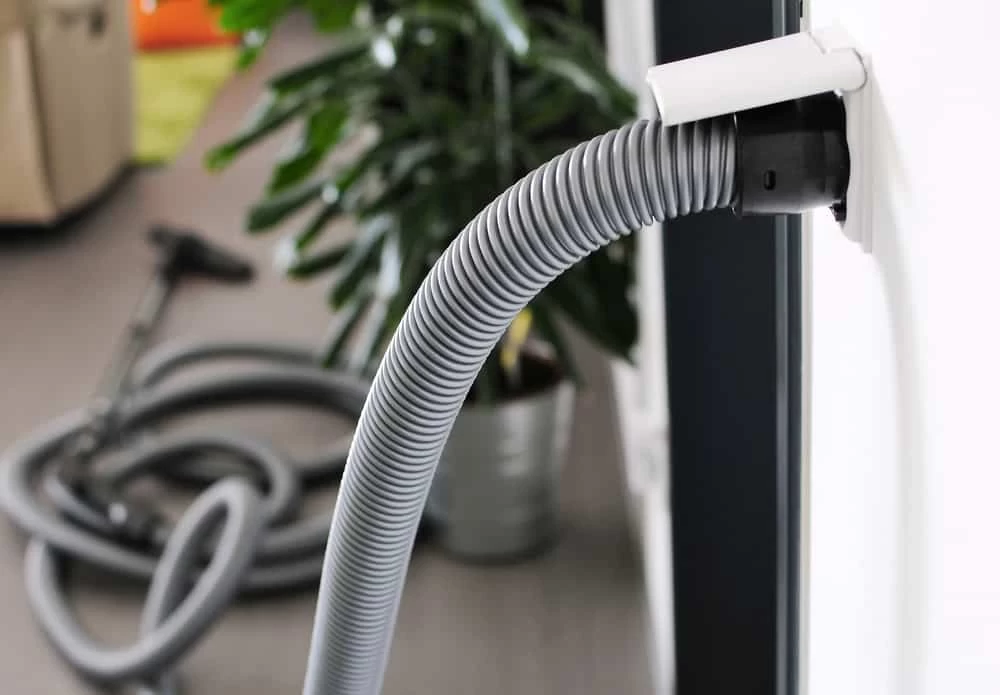
The inlet valves are worth checking too. These are the wall ports you plug the hose into throughout your home. The rubber gaskets inside them wear out over time, and when they do, air bypasses the hose connection instead of pulling through it. The result is a noticeable drop in suction at the cleaning head — the exact opposite of what you want. If you’ve noticed dust accumulating around the edges of your wall ports, that’s a sign the gaskets are no longer sealing properly.
The hose itself is easy to overlook because it looks fine from the outside. Run your hand along the full length of it and feel for soft spots, kinks, or areas that flex more than they should. A cracked hose loses suction the same way a cracked garden hose loses water pressure — gradually, then noticeably.
Central Vacuum Unit Health: What the Power Unit Is Telling You
The power unit — the motor canister mounted in your garage, utility room, or basement — is the most expensive component in the system and the one most homeowners interact with least. Which is exactly why it tends to get ignored until something goes wrong.
There are a few things you can assess yourself without any tools. Turn the system on and listen. A healthy motor runs with a consistent hum. If you’re hearing a higher-pitched whine, a grinding note, or an intermittent change in tone, those are early signs of bearing wear. Catching bearing wear early is the difference between a service visit and a full motor replacement.
While the system is running, walk to each inlet in your home and test the suction. If one room pulls strong and another feels weak, you likely have a blockage or a leak somewhere in the in-wall tubing between those two points. That kind of diagnostic requires someone who can pressure-test the lines — it’s not something you can resolve with a visual inspection.
Also check the canister itself. The rule of thumb across the industry is that bags should never exceed about 75% capacity. A fully packed bag doesn’t just reduce suction — it creates the same back-pressure problem as a clogged filter, and the motor pays the price. If your system uses a bagless cyclonic canister, rinse it out and let it dry completely before reinstalling. A damp canister can introduce moisture into the system.
For Nassau County homes along the South Shore — Long Beach, Oceanside, Massapequa, Freeport — there’s an additional consideration that doesn’t apply everywhere else: salt air. The coastal humidity and salt content accelerate wear on mechanical components, including motor seals and internal parts. If your home is within a mile or two of the water, a more frequent service schedule isn’t overcaution — it’s just the reality of where you live.
Central Vacuum Maintenance: Questions Nassau County Homeowners Ask
After two decades of working on central vacuum systems across Nassau County, we’ve heard the same questions come up again and again. Not because homeowners aren’t paying attention — but because central vacuum systems are genuinely different from any other appliance in the house, and most people were never told how they work.
These are the questions worth knowing the answers to before winter arrives.
How Often Does a Central Vacuum System Actually Need Professional Service?
The honest answer is: it depends on the household, but most systems benefit from a professional inspection every one to two years at minimum. Homes with pets, children, or high foot traffic — which describes a lot of Nassau County households — are better served by annual visits.
Central vacuum systems are often marketed as low-maintenance, which is true compared to portable vacuums. But “low maintenance” doesn’t mean “no maintenance,” and many homeowners have taken that to mean they never need professional service. Systems installed during Nassau County’s renovation wave in the 1990s and early 2000s are now 20 to 30 years old. Many have never had a professional look at them beyond the occasional canister empty. That’s a long time for gaskets to wear, filters to degrade, and motors to accumulate stress.
The EPA estimates that indoor air can be up to five times more polluted than outdoor air. A central vacuum system in good working order exhausts all of that captured debris outside the living space — which is exactly what the EPA recommends for households with allergy or asthma sufferers. Research from the University of California at Davis found that a properly functioning central vacuum system can reduce nasal allergy symptoms by up to 47% and improve indoor air quality by 52%. Those numbers assume the system is actually working. If yours hasn’t been looked at in a few years, it’s worth finding out where it stands before winter locks you in.
One practical note for Nassau County specifically: fall is the busiest season for central vacuum service calls. If you’re thinking about scheduling something, September and early October are the right window. By November, availability gets tight.
Can I Service My Central Vacuum System Myself, or Do I Need a Technician?
Some of it, yes. Emptying the canister, rinsing it out, checking and replacing the filter, inspecting the hose for cracks, and testing suction at each inlet are all things a homeowner can do with no special tools. If you find uneven suction between rooms, a hose with a soft spot, or a filter that’s well past due, you’ve already gotten useful information.
What you can’t do yourself is diagnose what’s happening inside the walls. The in-wall tubing in a central vacuum system runs through your home’s framing — behind drywall, through floors, into the garage or utility room. If there’s a blockage, a cracked joint, or a leak in that tubing, finding it requires pressure testing the lines. That’s a job for someone with the right equipment and the experience to interpret what the readings mean.
Motor assessment is the other area where professional eyes matter. A technician who has worked on hundreds of central vacuum units can hear things in a motor that a homeowner wouldn’t recognize as a warning sign. Bearing wear, for example, often presents as a subtle change in pitch that’s easy to miss if you don’t know what you’re listening for — until the bearing fails entirely and takes the motor with it.
Our technicians are certified by the Vacuum Dealer’s Trade Association (VDTA), which is the professional credential body for this industry. That certification matters because central vacuum systems are a specialized category. The in-wall tubing, the inlet valve mechanics, and the integrated electrical systems require specific training — it’s not the same as servicing a portable upright. When you call DuraVac Central Vacuum Specialists, Inc., you’re getting someone who works on central vacuum systems specifically, not a general appliance repair technician who handles them occasionally.
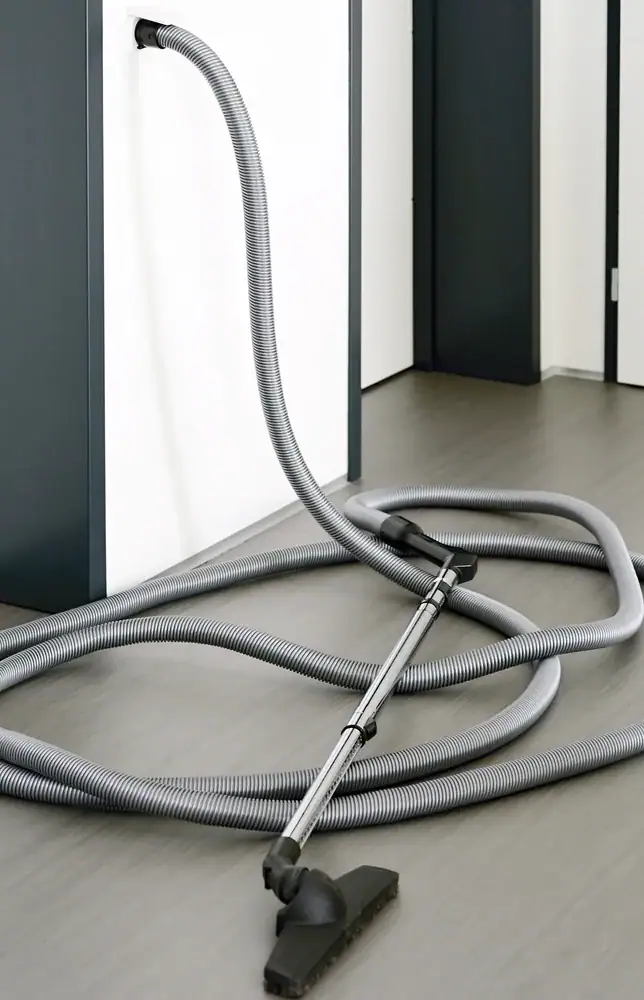
If your system is a Hide-A-Hose retractable setup — where the hose stores inside the wall and retracts automatically after use — we’re a certified Hide-A-Hose dealer, which means we know that system’s specific maintenance requirements and have access to the right parts if something needs replacing.
Schedule Central Vacuum Service in Nassau County Before Winter
The checklist isn’t complicated: check the filter, empty and rinse the canister, inspect the hose, test suction at every inlet, listen to the motor. If everything checks out, you’re in good shape. If something feels off — or if you genuinely can’t remember the last time a technician looked at the system — fall is the right time to find out.
Nassau County winters mean sealed homes, heating systems running full-time, and a lot of hours spent indoors. Your central vacuum system is going to be doing real work from October through April. Getting it inspected now, while there’s still time to address anything before the season starts, is just good timing.
If you want a professional set of eyes on your system before winter, DuraVac Central Vacuum Specialists, Inc. offers free consultations for Nassau County homeowners. Give us a call at 516-822-3060 and we’ll take it from there.