Summary:
You’ve probably already looked up central vacuums at least once. Maybe a friend mentioned theirs, or you stumbled across one while researching allergy solutions, or you’re just tired of dragging your vacuum up and down the stairs every weekend. Whatever brought you here, you’re not ready to call anyone yet — you want to understand what you’re actually getting into first.
That’s a reasonable place to be. Whole house vacuum system installation is a real investment, and the honest answer to whether it’s worth it depends on your home, your household, and what’s been frustrating you about cleaning. We’ll cover all of it here.
What Does Whole House Vacuum System Installation Actually Cost?
The installed cost for a central vacuum system typically runs between $800 and $3,500, with most homeowners landing somewhere in the middle — around $1,585 all-in for a standard setup. That range reflects differences in home size, the number of inlets needed, and whether you’re adding any upgrades like a Hide-A-Hose retractable hose system.
On Long Island, labor costs tend to push toward the higher end of that range. Nassau County’s older housing stock — mostly post-war ranches, Cape Cods, and split-levels — means most installations are retrofits, which adds some complexity compared to new construction. That said, our installers can route tubing through existing wall cavities, attic spaces, and basement ceilings without opening up your walls.

How Does the Cost of Central Vacuum Compare to Replacing Portable Vacuums Over Time?
Here’s the part most people don’t think about until someone lays it out for them. A quality portable vacuum costs somewhere between $200 and $600 and lasts roughly five to eight years. That means over a 20-year period, the average homeowner buys two or three of them — spending anywhere from $600 to $1,800 in total — and still ends up with a machine that loses suction over time, needs belts and filters replaced, and has to be carried between floors every single time you clean.
A central vacuum system, installed properly, is designed to last more than 20 years. The power unit sits in your basement or garage. The tubing is built into the walls. The only ongoing maintenance is replacing the filter bag about every six months and swapping motor brushes every three years. That’s it.
When you look at it that way, the upfront cost of whole house vacuum system installation isn’t really an addition to your cleaning budget — it’s a replacement for the cycle of portable vacuum purchases you’d be making anyway, with a product that’s significantly more powerful and doesn’t have to be dragged up a flight of stairs.
Central vacuums also deliver up to five times more suction than a standard portable unit. That matters more than it sounds. The power unit doesn’t have to be compact enough to carry, so it can be built around a much larger motor. The result is deeper cleaning — particularly in carpets, where embedded allergens and fine particles get pulled out rather than just moved around on the surface.
For Nassau County homeowners who’ve been through two or three vacuums in the past decade, the long-term math tends to land differently than the sticker price suggests. It’s not a luxury upgrade for people who already have a perfectly good vacuum. It’s a different category of product with a very different lifespan.
Is a Central Vacuum System Worth It for Allergy Sufferers on Long Island?
This is where the conversation shifts from convenience to something more significant. Nassau County, NY’s environment is genuinely hard on people with respiratory sensitivities. Ragweed peaks in fall. Coastal humidity along the South Shore encourages mold growth. And because most homes here were built in the postwar era — before modern insulation and ventilation standards — allergens that get inside tend to stay inside.
Most portable vacuums make this worse, not better. The motor exhaust blows fine particles — dust mite debris, pet dander, pollen fragments — back into the air while you clean. If you’ve ever noticed your allergies flaring up right after vacuuming, that’s likely why.
A central vacuum system removes allergens from your living space entirely. The exhaust vents outside. Nothing gets recirculated through the room. The EPA has specifically cited central vacuum systems as effective for reducing household allergens, and peer-reviewed research backs that up — one widely cited study found that central vacuum use improved allergy and asthma symptoms by up to 61 percent across multiple measures, including sleep quality, nasal symptoms, eye symptoms, and even emotional wellbeing.
For families in Nassau County managing seasonal allergies, pet dander, or chronic respiratory conditions, this is one of the more meaningful improvements you can make to your home environment. It’s not a replacement for medication or air purifiers, but it removes a major source of ongoing allergen exposure at the point of generation — every time you clean. And for older residents who are aging in place in their Long Island homes, the physical relief of not carrying heavy equipment between floors is a genuine quality-of-life improvement on top of the air quality benefit.
Wiring a Central Vacuum System: What Actually Happens During Installation
One of the most common questions we hear before someone commits is some version of: “What does the installation actually involve?” Specifically, people want to understand the wiring — whether it’s a complicated electrical project, whether it requires opening walls, and how long the whole thing takes.
The short answer is that it’s less involved than most homeowners expect. There are two separate circuits in a central vacuum installation, and understanding what each one does makes the whole process a lot less mysterious.
How the Low-Voltage Wiring in a Central Vacuum System Works
The wiring that runs from the power unit to each inlet valve throughout your home operates at 24 volts — low-voltage, the same class of wiring used in thermostats and doorbells. This circuit is what allows the system to activate automatically when you plug the hose into an inlet. It’s not a high-voltage electrical project, and in most cases it doesn’t require a licensed electrician to run.
This low-voltage wiring gets routed at the same time as the PVC tubing during installation, running through the same wall cavities and ceiling spaces. In a retrofit situation — which describes nearly every installation in Nassau County, since most of the county’s homes were built without central vacuum infrastructure — we route everything through existing accessible spaces: basement ceilings, attic floors, interior wall cavities between floors. The goal is to reach every inlet location without opening finished walls.
The power unit itself connects to a standard 120-volt grounded outlet, which is a normal household electrical connection. It’s typically mounted in the basement or garage, at least 18 inches off the floor and 12 inches below the ceiling, to allow proper motor cooling. In most Nassau County homes — where a finished basement or attached garage is common — there’s usually a natural location that works without any special electrical work.
What this means in practice is that a professional retrofit installation in an existing home is a contained, predictable process. It’s not a renovation. Your walls don’t get opened up. The finished surfaces in your home stay intact. We hear this concern often from Nassau County homeowners who have recently renovated or have hardwood floors and finished basements they don’t want disturbed — and we can offer the reassurance that a well-executed installation leaves no visible trace other than the inlet valves themselves, which are flush-mounted and unobtrusive.
Can a Central Vacuum Be Installed in an Existing Nassau County Home?
Yes — and this is one of the most persistent misconceptions in this space. A lot of homeowners assume central vacuums are only practical during new construction, when walls are open and tubing can be run before drywall goes up. That’s not the case. Nearly one-third of all central vacuum systems sold in the United States are installed in existing homes.
Nassau County’s housing stock is actually well-suited to retrofit installation. The postwar ranch, Cape Cod, and split-level homes that dominate the county — the kinds of homes that defined suburban Long Island from Levittown outward — typically have accessible basement ceilings, open attic spaces, and interior wall cavities that give our installers plenty of routes to work with. We’ve completed retrofits across dozens of Nassau County communities, and the vast majority of homes present no unusual obstacles.
Inlet placement matters more than most people realize. Inlets are typically positioned on interior walls in hallways, near stairwells, and close to doorways — locations where a standard hose can reach every corner of the room without stretching. For smaller homes, two or three inlets are usually sufficient. Larger homes with multiple floors need more, and the layout gets planned specifically around your floor plan rather than a generic template.
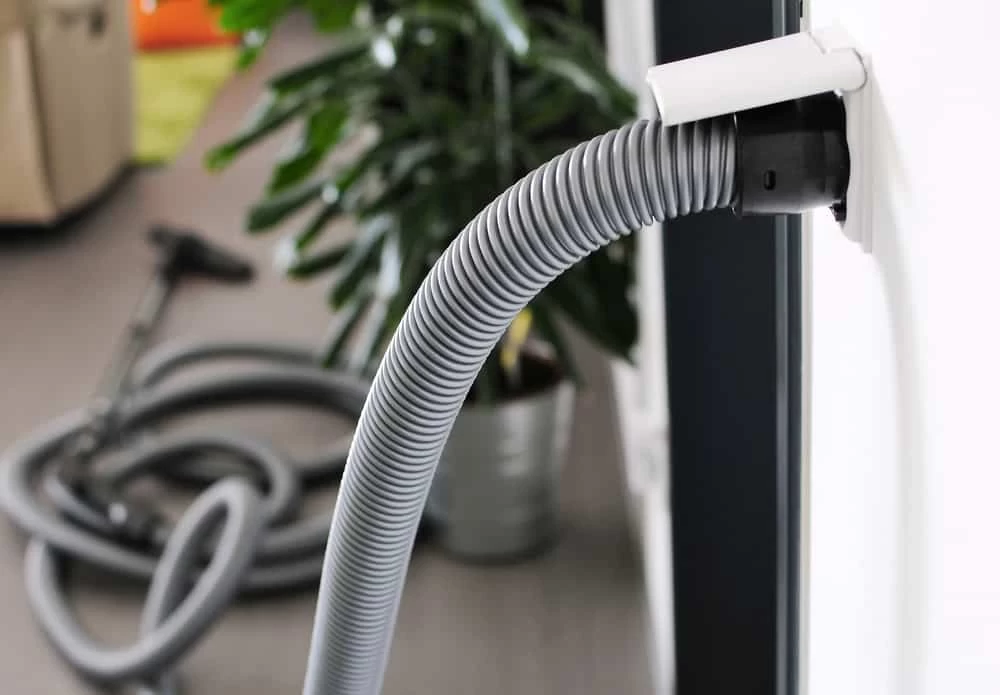
If you’re interested in a Hide-A-Hose system — which stores the retractable hose inside the wall itself, so you never have to carry or manage a long hose — that gets factored into the installation plan from the start. It adds roughly $1,000 to the cost of a standard setup, but it eliminates the one complaint that comes up most often in real-world central vacuum discussions: managing the hose between rooms. For homeowners who want the full convenience of a built-in system without any of the hose-handling friction, it’s worth understanding as an option before you decide.
So Is Whole House Vacuum System Installation Worth It for Nassau County Homeowners?
For most Nassau County homeowners — especially those in older single-family homes, those managing allergies, and those who are simply tired of the portable vacuum routine — the answer is yes. The 20-year lifespan changes the cost math. The clinical allergen data changes the health conversation. And the retrofit process is far less disruptive than most people expect going in.
That said, it’s a real decision and it deserves a real conversation. The right system for your home depends on your square footage, your floor plan, your household’s specific needs, and whether upgrades like Hide-A-Hose make sense for how you actually live.
If you’re at the point where you want to talk through the specifics — not a sales call, just a straightforward conversation about what would work for your home — we offer a free consultation. Give us a call at 516-822-3060 and we’ll give you a straight answer.