Summary:
Something’s off with your central vacuum. Maybe the suction dropped in one room, or the unit started making a noise you’ve never heard before. You’ve already emptied the canister. You’ve checked the obvious things. And now you’re wondering whether to call someone — but you’re not entirely sure what happens after you do.
That uncertainty is what keeps most people waiting longer than they should. So here’s a straightforward look at what a central vacuum service call actually involves, from the moment you pick up the phone to the moment our technician walks out the door.
What Happens Before the Technician Even Arrives
A good central vacuum service call starts before anyone sets foot in your home. When you call us, we’re not just scheduling a time slot — we’re already starting the diagnostic process. We’ll ask you to describe what you’re noticing: which inlets seem weak, whether the issue is in one room or throughout the house, any sounds or smells coming from the unit, and how long it’s been going on.
That intake conversation matters more than most people realize. It helps us arrive with a clearer picture of what we’re likely dealing with, and in many cases, we can walk you through a few simple checks over the phone at no charge. If it turns out to be something you can resolve yourself, we’ll tell you. If it needs a hands-on visit, we’ll set one up — and we’ll come prepared.

What Does a Technician Actually Check During a Central Vacuum Service Call?
Once we’re on-site, the process follows a logical sequence — and it’s more thorough than most homeowners expect. We start at the power unit, which is typically in your basement, garage, or utility room. That’s where we check the motor, inspect the filters, clean out the canister, and look for any signs of wear or overheating. A lot of suction problems trace back here, and a thorough cleaning alone can make a noticeable difference.
From there, we move through the house and test suction at every inlet — not just the one you reported. This matters because a single weak inlet usually means there’s a localized clog somewhere in the tubing between that inlet and the main unit, not a system-wide failure. Testing all of them gives us a complete picture of where the piping is clear and where something is blocking flow.
We also inspect the low-voltage wiring that connects your inlets to the power unit, check the condition of your hoses and attachments for cracks or air leaks, and examine the inlet valves themselves for damage or wear. Any of these can cause the kind of gradual suction loss that homeowners tend to chalk up to the system just “getting old.”
Before we do any repair work, we tell you what we found and what it will take to fix it. You won’t be surprised by anything at the end of the visit. Most service calls wrap up within one to two hours, which means you don’t need to clear your entire schedule to get this handled.
One thing worth knowing: you don’t need to know your system’s brand or model before you call. We can identify it on-site. If we need a specific part, we’ll let you know — and we carry common components on our service vehicle so that many repairs can be handled in a single visit.
How Do You Know If Your Central Vacuum Needs Repair or Replacement?
This is the question homeowners are most afraid to ask — because they’re worried the answer is going to be expensive. The honest answer is that it depends on the system’s age, the nature of the problem, and the cost of the repair relative to what a new system would cost.
A lot of central vacuum systems installed in the 1980s and 1990s are still worth repairing. The core components — the motor, the piping, the inlet valves — are built to last, and a system that’s been neglected for a few years isn’t necessarily a system that’s done. What we’re looking for during a service call is whether the repair addresses the root cause or just buys a little more time. If the motor is failing and the system is pushing 25 years old, we’ll tell you that honestly. If it’s a clogged line or a worn hose that’s causing the problem, that’s a straightforward fix.
Nassau County, NY has a lot of older housing stock — homes built in the postwar years in communities like Levittown, Valley Stream, and Uniondale, where central vacuum systems have been running for decades with minimal attention. We see this regularly. A system that hasn’t been serviced since it was installed isn’t automatically a lost cause. But it does need someone to actually look at it before you can make an informed decision.
We’re not going to recommend a new system if your current one doesn’t need it. And we’re not going to push a repair that won’t hold. Our goal is to give you an accurate picture of what you have and what makes sense — and then let you decide.
Common Questions Nassau County Homeowners Ask Before Booking
Most of the hesitation around scheduling a central vacuum service call comes down to a handful of the same questions. People want to know what it’s going to cost, how long it’s going to take, and whether they’ll have to deal with any disruption to their home. These are reasonable things to want to know before you commit to anything.
The short answers: most visits take one to two hours, we tell you what we find before any repair work begins, and the visit itself is clean and low-disruption. Let’s go deeper on the questions we hear most often.
Will the Technician Damage My Walls or Make a Mess?
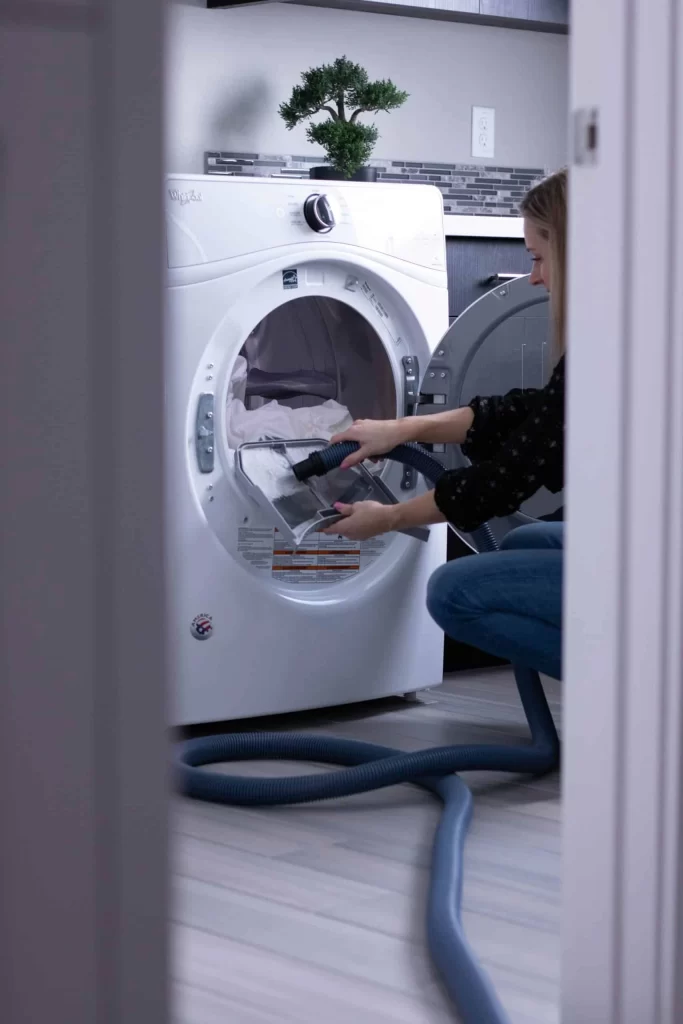
This comes up often, especially from homeowners who’ve recently had renovation work done or who’ve invested in their interiors. The concern makes sense — a central vacuum system runs through your walls, and if you’ve never had it serviced before, you might picture us cutting into drywall to find a clog.
That’s not how it works. The vast majority of central vacuum service calls involve no wall penetration at all. We access the system through the power unit, the inlet valves, and the hose connections — all of which are already accessible without opening anything up. Clogs are located by testing suction at each inlet and working backward through the system to identify where the blockage is. In most cases, we can clear it without touching your walls.
We also work cleanly. That means protecting your floors, keeping the work area tidy, and leaving the space the way we found it. Nassau County homeowners have told us this matters to them — and it matters to us too. A service call shouldn’t create a new problem while it’s solving an old one.
If there’s ever a situation where accessing the piping requires more significant work, we’ll explain exactly what that involves and why before we proceed. Nothing happens without your understanding and agreement.
Does It Matter Which Brand of Central Vacuum System I Have?
Not as far as booking a service call goes. We work on all makes and models — Beam, NuTone, Vacuflo, and everything else you’re likely to find in a Nassau County home, including systems from brands that have changed names or been absorbed by larger manufacturers over the years.
Where brand matters is in parts sourcing. Some older or less common systems require specific components that aren’t stocked everywhere. We carry common parts on our service vehicle, which means many repairs can be handled the same day. If something needs to be ordered, we’ll tell you upfront and give you a realistic timeline.
Long Island’s coastal environment adds a layer worth mentioning here. The humidity that comes with living near the water — combined with the fall ragweed season that hits Nassau County hard every year — means that central vacuum systems here deal with more particulate load than systems in drier climates. HEPA filtration, when it’s part of your system, captures particles as small as 0.3 microns at 99.97% efficiency, which matters for anyone dealing with seasonal allergies or asthma. Part of a thorough service call is making sure that filtration is actually functioning the way it should — not just checking the motor and calling it done.
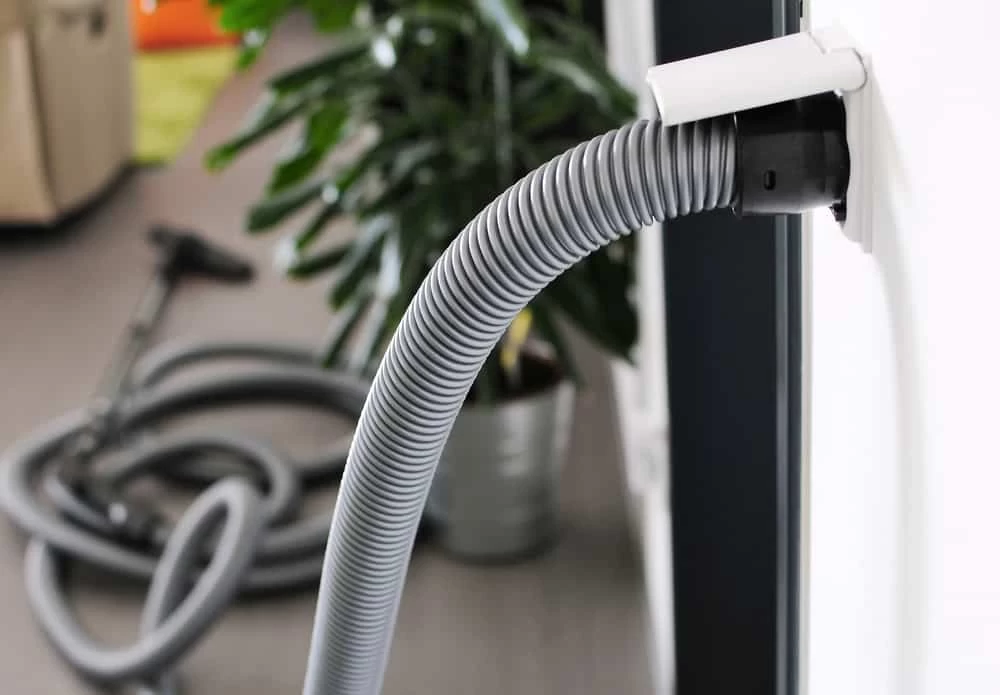
If your system is functional but dated, a service visit is also a natural opportunity to ask about upgrades. Our most popular is the Hide-A-Hose system, which retracts the hose back into the wall after use — no more dragging a hose from room to room or finding somewhere to store it. It’s the kind of thing that changes how you actually use the system day to day.
Ready to Schedule a Central Vacuum Service Call in Nassau County?
If your system has been underperforming and you’ve been putting off the call, the process is simpler than you might think. You describe what you’re seeing, we schedule a visit, and our technician walks through the system from the power unit to every inlet — telling you what we find before any work begins.
Most visits take one to two hours. Most repairs are handled in a single trip. And most of the anxiety around booking comes from not knowing what to expect — which is exactly what this walkthrough was meant to address.
If you’re in Nassau County, NY and your central vacuum system isn’t working the way it should, reach out to DuraVac Central Vacuum Specialists, Inc. We’ve been doing this work across Long Island for a long time, and central vacuum systems are the only thing we do. That focus makes a difference — and you’ll notice it from the first phone call.