
Summary:
Most people assume the answer is no. Central vacuum feels like something you plan for when you’re building a house — not something you retrofit into a pre-war co-op on the Upper West Side or a condo in Long Island City. But that assumption stops a lot of people from asking a question worth asking.
The real answer is: it depends. And the factors that determine feasibility are specific enough that a five-minute conversation with someone who’s actually done it — in brownstones, co-ops, condos, and commercial buildings across NYC — is worth more than an hour of searching. Here’s what you actually need to know before you make up your mind.
What Makes a NYC Apartment a Good Candidate for a Whole House Vacuum System?
The first question isn’t whether you want a central vacuum — it’s whether your building can accommodate one. And that comes down almost entirely to construction type and the layout of your specific unit.
Postwar buildings — generally those built after 1945, often steel-frame or mixed construction — tend to offer more accessible pathways for routing the PVC tubing that carries suction from your inlets to the power unit. Closets, soffits, and utility chases in these buildings give an experienced installer real options without touching finished walls.
Pre-war concrete and masonry buildings are more challenging, but not automatically disqualifying. Brownstones and townhouses — even old ones — often have accessible basement or cellar space, stud bays behind plaster walls, and enough vertical runs to make installation viable. High-rise concrete towers are the hardest cases, but even there, the answer depends on the specific unit layout, not the building’s age alone.

Where Does the Power Unit Go in an Apartment?
This is the question that stops most people before they ever pick up the phone. In a house, the power unit — the motor that does the actual work — goes in the basement or garage. In an apartment, neither of those options exists in the traditional sense. So where does it go?
The honest answer is that it depends on what your building offers, and a good installer will figure that out during an assessment rather than guess from the outside. In many NYC buildings, the power unit can be installed in a utility closet within the unit itself. In buildings with basement storage units assigned to individual apartments, that space can work well — the unit is tucked away, the tubing runs up through the building’s accessible chases, and the exhaust vents to an exterior-facing wall or building mechanical area.
In some co-op and condo buildings, the building super or management company can identify a mechanical room or utility space that the building controls access to. This requires coordination, but it’s not unusual for buildings that have seen central vacuum installed before.
What matters most is that the power unit is placed where the exhaust can vent properly — because the whole point of a central vacuum is that it exhausts air completely outside your living space, rather than filtering and recirculating it the way a portable vacuum does. Central vacuum motors are up to three times more powerful than portable units, and when the exhaust goes outside, allergens, dust, and fine particles don’t come back. For anyone dealing with allergies or asthma in a city environment, that’s a meaningful upgrade — not just a convenience.
The EPA has cited central vacuum systems for their ability to significantly reduce dust mites, pollens, animal dander, and other allergen-causing agents. In a dense urban environment where you can’t always control what comes in through the windows, controlling what circulates inside your own unit matters.
Does Installing a Central Vacuum Require Opening Walls?
This is the fear that makes most apartment owners stop the conversation before it starts. You’ve already renovated. The walls are done, the floors are refinished, and the last thing you want is someone cutting holes through everything you just paid to fix.
Here’s what’s actually true: roughly one in three central vacuum systems installed in the United States goes into an existing building without removing drywall or plaster. The routing happens through closets, soffits, and accessible cavities — spaces that are already there and don’t require demolition to reach. Low-voltage wiring runs alongside the PVC tubing during the same installation visit, so there’s no second round of work.
That said, some buildings and some unit layouts do require more access than others. A unit on the 14th floor of a concrete high-rise is a different situation than a two-story brownstone apartment with a basement. The only way to know what your specific situation requires is to have someone walk through it with you — not quote you from a distance.
We’ve installed central vacuum systems in NYC brownstones, co-ops, condos, and commercial buildings, and the installations that go smoothly are the ones where we’ve assessed the layout before anyone picks up a drill. Customers who were worried about damaging their recent renovation work have told us afterward that everything looked exactly the same as before — because it was.
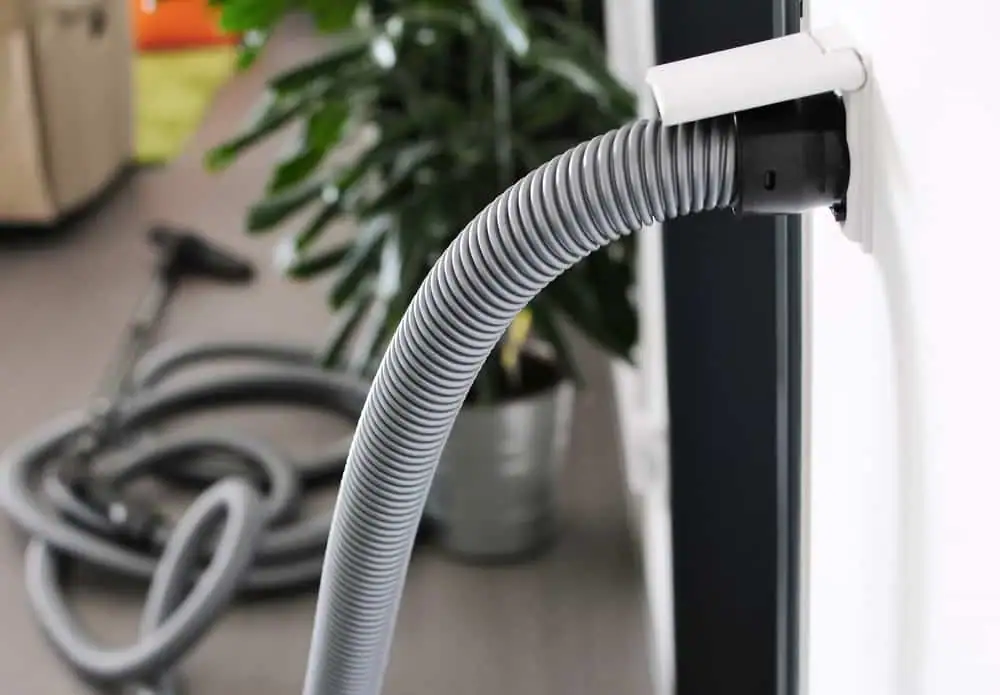
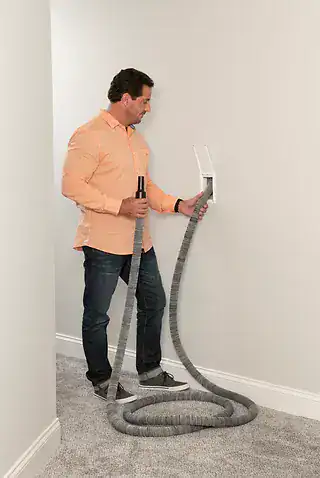
One more thing worth knowing: in apartment contexts, the Hide-A-Hose retractable system is particularly practical. The hose retracts into the wall tubing after each use, so there’s nothing to store. In a 700-square-foot co-op where closet space is already at a premium, not having to find a home for a 30-foot vacuum hose is a real advantage. We specialize in Hide-A-Hose installation across Long Island and NYC, and it’s one of the more common requests we get from apartment owners once they understand how it works.
What Nassau County, NY Homeowners Should Know About In-Home Vacuum Systems for NYC Properties
A lot of the people who call us about NYC apartment installation aren’t starting from scratch. They already have a central vacuum in their Nassau County, NY home — in Massapequa, Garden City, Plainview, or Rockville Centre — and they’re asking whether the same thing is possible for a co-op they own or are considering in the city.
The short answer is yes, often. And the same team that knows Nassau County’s postwar wood-frame homes also knows NYC’s building types — because we’ve worked in both for over two decades. The structural logic is different, but the installation expertise transfers.
Nassau County’s housing stock, with an average home age of around 73 years, is actually among the most installation-friendly you’ll find. Wood-frame construction, accessible basements, attics, and garages make routing straightforward. NYC apartments require more creative problem-solving — but the underlying system is the same, and so is the result.
Do You Need Co-op Board Approval to Install a Central Vacuum?

This is where a lot of co-op owners expect bad news. If you’ve been through a board approval process before — for a kitchen renovation, a washer/dryer installation, or anything structural — you know how involved it can get. Alteration agreements, certificates of insurance, contractor vetting, timelines. It adds up.
Central vacuum is genuinely different from most renovations that go through that process. The system stays entirely within your unit. There are no exterior penetrations, no refrigerant lines, no condensers mounted on the building’s façade, no increase in the building’s electrical load. Compare that to central air conditioning — which requires all of those things and regularly faces board resistance because of the impact on the building’s systems and structure. Central vacuum doesn’t touch any of that.
What most co-op boards care about is whether your renovation will affect other units, the building’s mechanical systems, or the building’s exterior. Central vacuum affects none of those things. In many cases, it falls into the category of interior improvements that require notification rather than formal approval — though this varies by building and alteration agreement, and you should always check your specific building’s rules before assuming.
We can provide documentation of the installation scope, the materials used, and the work process — the kind of paperwork a managing agent or board might request before signing off. We’ve navigated this process in NYC buildings before, and we understand what’s typically required.
Is an Inbuilt Vacuum System Worth It for a Smaller NYC Apartment?
The ROI question is fair, and it deserves a straight answer rather than a sales pitch.
The case for central vacuum in a smaller apartment isn’t the same as the case for a large suburban home. In a 1,200-square-foot house in Levittown or Hicksville, the convenience argument is obvious — you’re covering a lot of ground, you’re moving between floors, and dragging a portable vacuum around gets old fast. In a 650-square-foot co-op, the square footage argument is weaker.
But the reasons people in smaller apartments end up wanting central vacuum are usually different ones. Storage is the first. A portable vacuum — even a good one — takes up space you probably don’t have. A central vacuum system, especially one with a retractable hose, eliminates that entirely. The hose disappears into the wall. The power unit is in a closet or utility space. There’s nothing sitting in your living area.
The second reason is air quality. NYC apartments are not known for clean indoor air. Pollutants come in from the street, from adjacent units, and from the building’s own ventilation. A central vacuum system that exhausts completely outside your living space — rather than recirculating air through a portable filter — is a meaningful improvement for anyone sensitive to allergens, dust, or particulates. HEPA filtration in central vacuum systems can capture particles as small as 0.01 microns, including pollen, pet dander, bacteria, and certain viruses.
The third reason is durability and long-term value. Central vacuum systems are built to last — replacement cycles run 10 to 20 years. In a co-op or condo where you’re thinking about the unit’s long-term value, a built-in system is a documented improvement that differentiates your unit when you eventually sell or sublet. In a city where the rental vacancy rate sits around 1.4%, anything that makes your unit stand out carries real weight.
Whether the investment makes sense depends on your specific situation — your unit, your building, your health priorities, and how long you plan to stay. That’s a conversation worth having before you decide either way.
Central Vacuum in NYC: Getting a Real Answer for Your Specific Building
The question of whether you can install a central vacuum in a NYC apartment or co-op doesn’t have a universal answer — but it has a real one, and it’s usually more encouraging than people expect. Building type matters. Unit layout matters. Where the power unit can go matters. What your board or alteration agreement requires matters.
What doesn’t help is assuming the answer is no before you’ve talked to someone who’s actually done this work in NYC buildings — not just Nassau County, NY homes.
We specialize in central vacuum installation across Suffolk County, Nassau County, NY, Queens, and Manhattan. If you’re a Nassau County homeowner who’s also thinking about a NYC property, or you’re an apartment owner who’s been wondering whether this is even possible, reach out to DuraVac, Inc. for a free consultation. We’ll give you a straight answer based on your actual building — not a general one.